WTP Space @wtpspace
Independent Mission Operator (IMO) for Private Astronaut Missions (PAM). WTP-1 PAM, early access. PAM customer representation. PAM Consulting & Ops Services. wtpspace.com Houston, TX Joined January 2026-
Tweets94
-
Followers5
-
Following95
-
Likes209

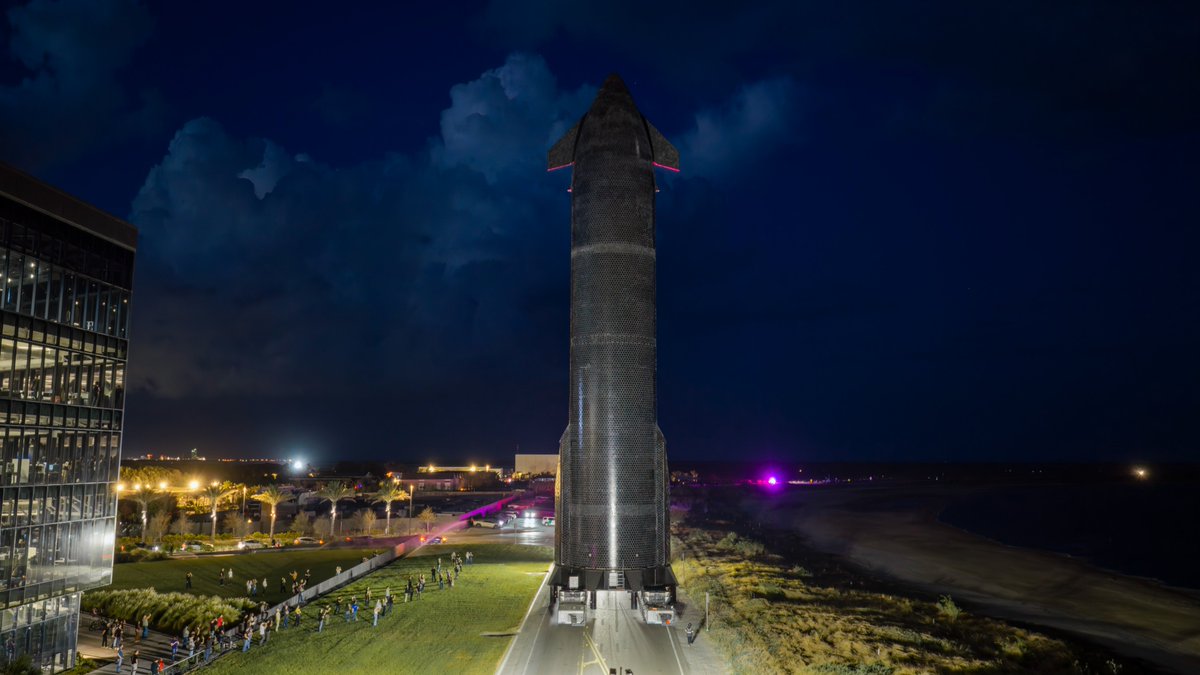
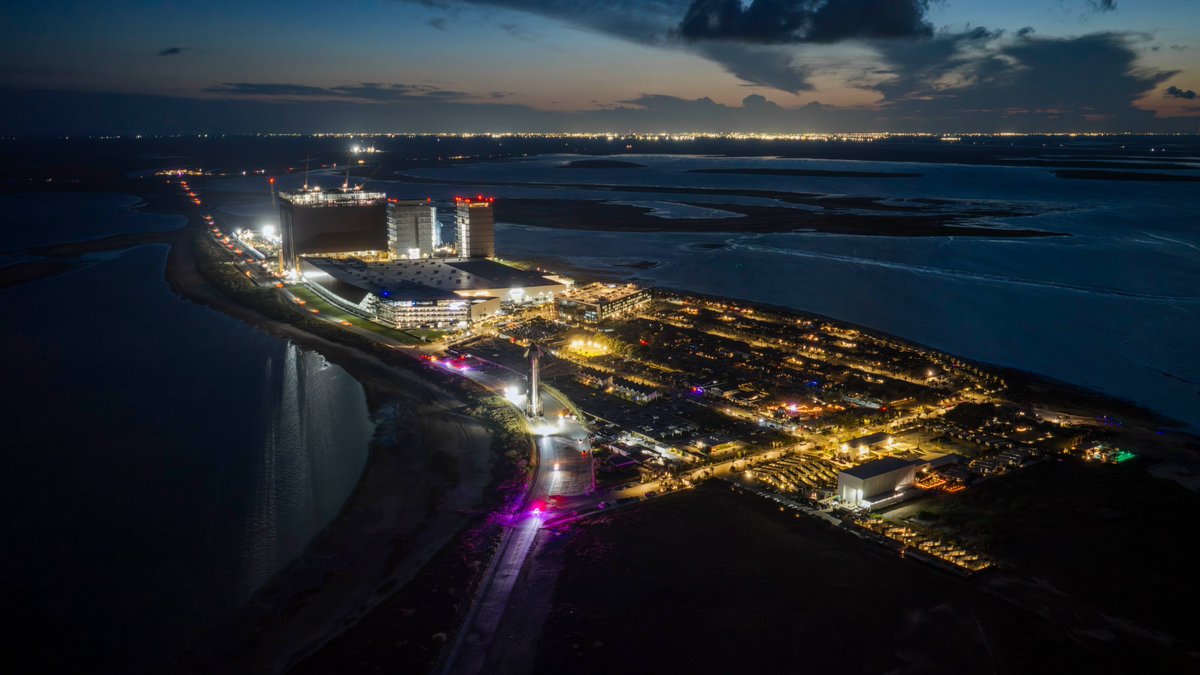
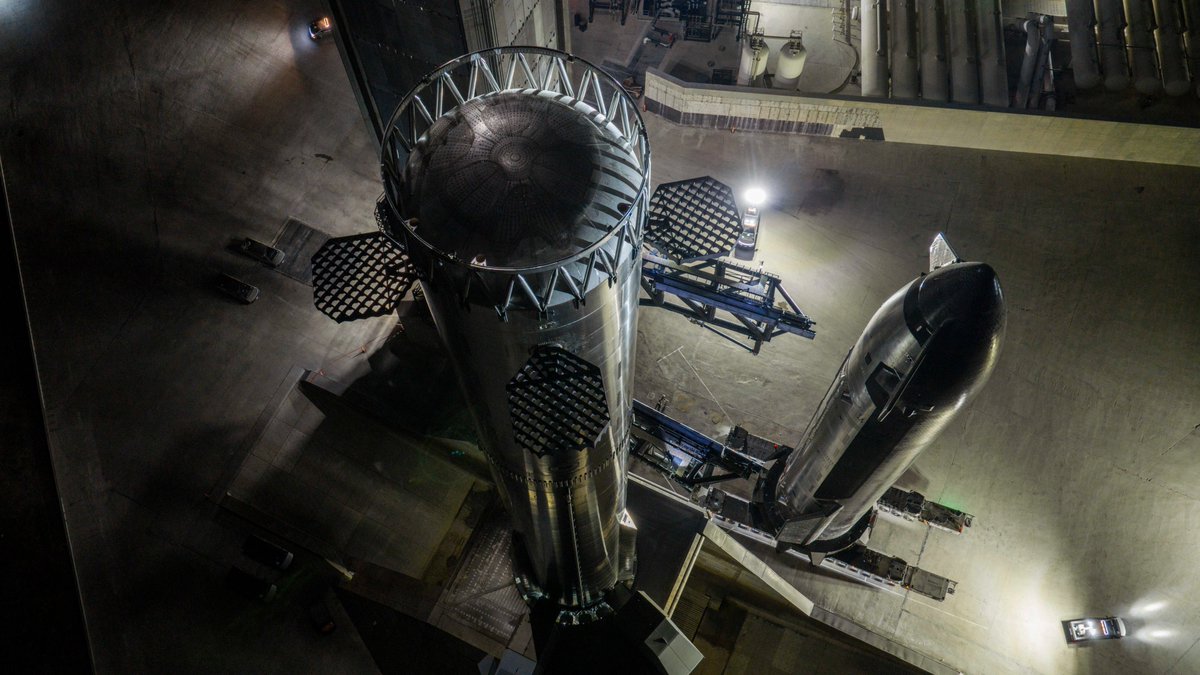
Ship 41 moved to the launch pad at Starbase

We have established a Lunar Programs division. By leveraging our commercial space station and satellite development capabilities, we are creating a scalable path toward lunar infrastructure to advance NASA’s vision for a permanent Moon Base. vast.news/4d1qWL9


BREAKING: NASA chief Jared Isaacman says SpaceX is incredible and the United States would be seriously challenged in space without SpaceX. “They’re our most important launch partner. We can’t send astronauts to and from the space station without them... We are fortunate.”

All-In Summit: NASA Administrator Jared Isaacman A New Era for NASA and American Space Exploration (0:00) NASA Administrator Jared Isaacman lays out the state and future of NASA (17:59) Moon base, creating new space industries, NASA's next chapter (23:29) How to make Mars
I think Phil's argument is that NASA should rethink which LEO capabilities it truly needs to provide or certify after ISS. Administrator Isaacman's response raises the question underneath it: what happens when the commercial market we are designing around is not actually large enough to support the capabilities we expect it to? I think that question goes beyond crew vehicles—and directly to how we are approaching the post-ISS architecture itself. Jared is right: calling something “commercial” does not create a market. Someone still has to pay, private capital needs a return, and we cannot assume that customers will materialize. But that logic has an important consequence: If the market is uncertain, we should be especially careful about prescribing the architecture before the market has revealed what it actually needs. A space station is an architecture. A crew vehicle is an architecture. Neither is the market. The market is the demand for outcomes: human spaceflight, research, manufacturing, national participation, training, technology development, and other activities customers are actually willing to fund. Yet much of the post-ISS discussion effectively begins with: We need commercial space stations. How do we create enough demand to support them? That reverses the commercial question. It should be: Here is a customer, an objective, and a willingness to pay. What is the lowest-cost, lowest-complexity architecture capable of delivering that outcome? Sometimes the answer may be a permanent station. Sometimes it may be a free-flyer, an autonomous platform, a temporary destination, or something the industry has not yet conceived. NASA built the ISS, crew/cargo vehicles, and the surrounding operational model to satisfy government objectives with government economics. Those were extraordinary achievements. But successfully commercializing LEO does not necessarily mean reproducing that architecture with private logos on it. Jared’s strongest point is that we should be “grounded in reality rather than pretending a market already exists when it does not.” I would extend that one step further: We should not pretend the market has already chosen an architecture when it has not. Maybe the central question of the post-ISS era isn't: 'How do we commercialize space stations?' It is: 'What architecture will the commercial market actually choose?' The market should choose the architecture—not the other way around. When viewed through that lens, the rapid emergence of autonomous orbital free-flyers is a great example, and it suggests the market is already beginning to make choices—and may actually be moving faster than the post-ISS strategy is adapting. This reinforces the larger point: commercial space should not be defined by preserving the architecture of the last era, but by allowing real demand to shape the architecture of the next one. That is how the commercial space economy of the next era emerges—not as we assumed it would, but as the market actually shapes it.

@NASAWatch Few thoughts in response: 1) NASA has not given up on LEO. Within weeks of being on the job, I publicly addressed the Starliner situation and the role NASA played in it, and we have since taken a very active role with Boeing in implementing the investigation recommendations and
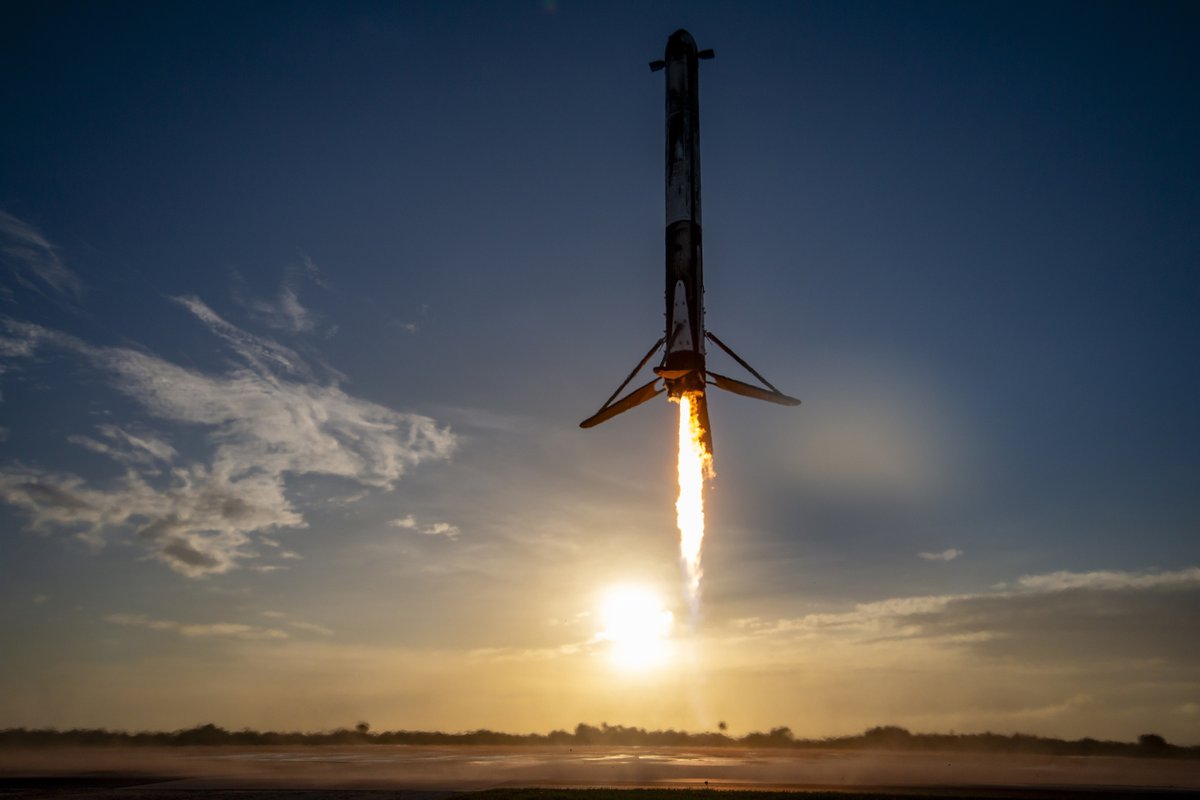
Over 600 autonomous rocket landings so far

Most people don’t realize how insanely autonomous Falcon 9 already is Once Falcon 9 lifts off, almost the entire mission is executed by the rocket itself And the crazy part is This autonomy does not depend on generative AI It comes from brutally refined flight software,

Phil is asking whether NASA should rethink how it acquires transportation, crew capability, and research in LEO. Jared’s response raises the harder question underneath it: what happens when the commercial market we are designing around is not actually large enough to support the capabilities we expect it to? I think that question goes beyond crew vehicles—and directly to how we are approaching the post-ISS architecture itself. Jared is right: calling something “commercial” does not create a market. Someone still has to pay, private capital needs a credible return, and NASA cannot simply assume that customers will materialize. But that logic has an important consequence: If the market is uncertain, we should be especially careful about prescribing the architecture before the market has revealed what it actually needs. A space station is an architecture. A crew vehicle is an architecture. Neither is the market. The market is the demand for outcomes: human spaceflight, research, manufacturing, national participation, training, exploration preparation, technology development, and other activities customers are actually willing to fund. Yet much of the post-ISS discussion effectively begins with: We need commercial space stations. How do we create enough demand to support them? That reverses the commercial question. It should be: Here is a customer, an objective, and a willingness to pay. What is the lowest-cost, lowest-complexity architecture capable of delivering that outcome? Sometimes the answer may be a permanent station. Sometimes it may be a free-flyer, an autonomous platform, a temporary destination, a transportation vehicle that also provides the mission infrastructure—or something the industry has not yet conceived. NASA built the ISS, crew vehicles, and the surrounding operational model to satisfy government objectives with government economics. Those were extraordinary achievements. But successfully commercializing LEO does not necessarily mean reproducing that architecture with private logos on it. Jared’s strongest point is that we should be “grounded in reality rather than pretending a market already exists when it does not.” I would extend that one step further: We should not pretend the market has already chosen an architecture when it has not. Maybe the central question of the post-ISS era is not how do we commercialize the space station? It is what architecture will the commercial market actually choose? The market should choose the architecture—not the other way around. That is how we move from preserving the shape of the last era to building the commercial space economy of the next one.
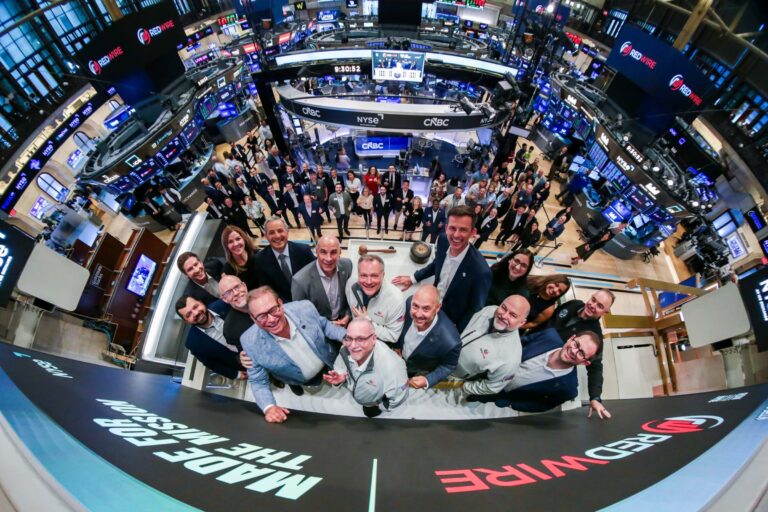
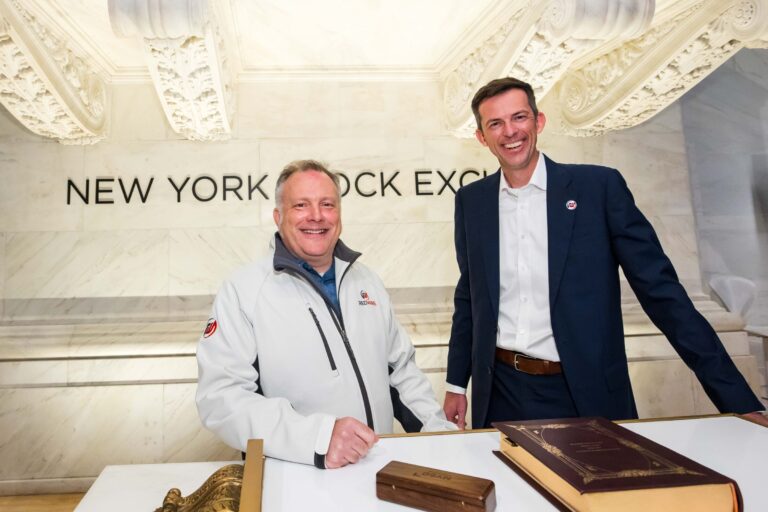
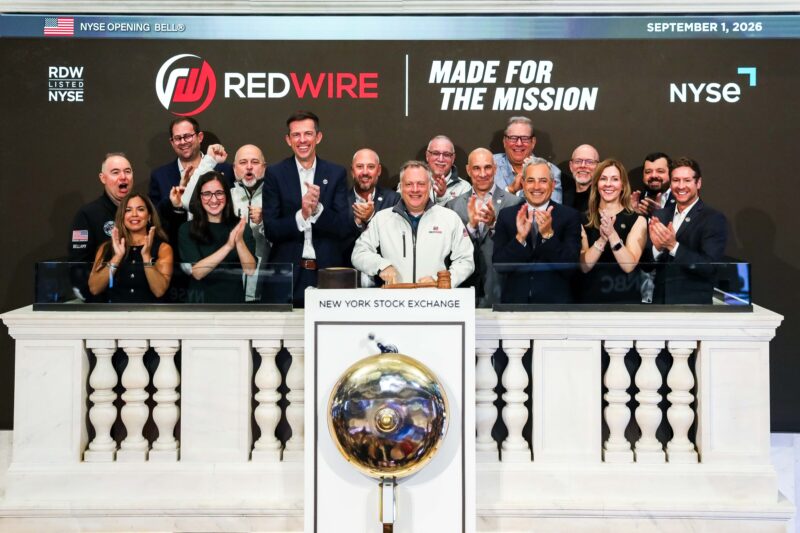
Celebrating five years on the public market with a landmark moment at the NYSE. 🗽 Earlier this week, Redwire Chairman & CEO Pete Cannito rang the @NYSE opening bell as we marked a major milestone in Redwire’s journey. The ceremony commemorated Redwire’s fifth year as a publicly traded company, highlighting Redwire’s exciting expansion from a pure-play space infrastructure company to an agile, multi-domain space and defense tech powerhouse that is supporting a variety of programs both in the U.S. and internationally. On NYSE Live, Pete highlighted how our strategic growth—including our recent acquisition of Edge Autonomy—is positioning Redwire for its next phase of innovation. Check out our recap blog for behind‑the‑scenes moments from our NYSE visit 👉rdw.com/newsroom/the-n…

The President of the United States called into the NASA press conference after the historic Roman Telescope launch. There is a reason nearly 70% of Americans support NASA's return to the Moon, compared with just 35% during the Kennedy era. The world’s most accomplished space agency, backed by @POTUS, bipartisan support in Congress, and an extraordinary workforce, can absolutely achieve the near impossible. We are returning astronauts to the Moon, building the base, getting underway on nuclear power in space, with many more exciting missions like Roman to follow!
Made on Earth by humans
Falcon Heavy's two side boosters land at LZ-2 and LZ-40



Amazing!
Scaling the Future of Pharmaceutical Development in Space. 💊 🚀 Today Redwire's SpaceMD announced its first commercial mission on @SpaceX Starfall Spacecraft, accelerating our ability to deliver pharmaceutical, biotech and other in-space microgravity manufacturing

"University of Texas grad student William Jo used a special physics simulation to model the collision. His team predicted that the debris column will have a central ejecta spike reaching between 47 miles and over 60 miles high." nypost.com/2026/07/31/sci…
The National Space Society Urges Greater Commercial Flexibility and Independence in NASA’s CLD Draft RFP. The NSS raises an important opportunity for NASA’s CLD strategy: serve as a strong anchor customer while giving industry the flexibility to innovate. In a fully developed commercial market, companies could simply pursue customer demand independent of NASA. The fact that NASA’s requirements remain so influential shows that the market is still being created. Meanwhile, the time required to bring CLDs into orbit is already encouraging alternative architectures Independent of NASA—including autonomous research vehicles—to address emerging demand. Greater flexibility now could help industry discover which architectures and business models can ultimately support a genuinely independent commercial LEO economy—and expand opportunities for commercial astronauts. einnews.com/article/927712… via @ein_news
Congratulations @Redwire
“Redwire’s grand opening is a testament to Indiana’s pro-business, pro-innovation environment,” said Indiana @GovBraun. “With this growth in Southern Indiana, Hoosiers will continue to be at the forefront of the economy of the future, advancing human spaceflight and leveraging

Voyager is an implementation partner for @ReditusSpace’s ENOS autonomous, reusable reentry vehicle. We’ll guide customers through payload dev, hardware qualification and mission integration. No matter the platform, our mission management service is station-agnostic and mission-ready. Read more: reditus.space/news/voyagerpa… $VOYG #AcceleratingtheAdvantage #MissionReady

Is NASA unintentionally regulating yesterday's architecture while tomorrow's market is already taking shape? As autonomous platforms continue to expand the range of missions once envisioned for commercial space stations, NASA's thousands of requirements risk making commercial space stations increasingly difficult and expensive to develop. NASA says it wants a commercial low Earth orbit economy, yet its draft RFP reportedly imposes more than 3,000 requirements while funding remains uncertain—a combination that could make commercialization far more difficult than intended. arstechnica.com/space/2026/07/…

Met a guy making $1.2 million a year as a prompt engineer. I asked him how he learned prompting so well. He sent me the exact video that that got him in. Anthropic's 2 hour prompting course. You won't find anything better about prompting Claude than this video. I watched it last night. Halfway through, I realized I have been prompting Claude completely wrong for years. Bookmark this and read the article below. • 00:00 - the prompting playbook • 33:30 - prompting class 1 • 1:01:16 - prompting class 2 • 1:26:10 - prompting class 3

BREAKING 🚨: NASA chief Jared Isaacman met with Roscosmos head Dmitry Bakanov in Kazakhstan today, ahead of tomorrow's Soyuz MS-29 launch The two are discussing extending US-Russia cooperation aboard the ISS through the station's final years


claire1s world 🩰�... @BrianGitonga_ke
357 Followers 3K Following your prettiest problem, apparently 🫶
Astronomy Vibes @AstronomyVibes
89K Followers 32K Following Your daily source for #astronomy news, cosmic breakthroughs, and wonders of the night sky.
Stephen @StephenR22231
2 Followers 33 Following
Freddy🇩🇪 @FreddyLA7
757K Followers 347 Following @fcmidtjylland x @alnassrfc 📸 Insta & FB: freddyla7
Astronomy Vibes @AstronomyVibes
89K Followers 32K Following Your daily source for #astronomy news, cosmic breakthroughs, and wonders of the night sky.
Vast @vast
41K Followers 230 Following Building next-generation space infrastructure. Ensuring America’s continuous human presence in space.
Thomas Pesquet @Thom_astro
1.3M Followers 302 Following Astronaute 🇪🇺🇫🇷, pilote, ingénieur, deux missions vers l'ISS, parrain @ONG_ASF / 🇫🇷 astronaut w/ESA back on Earth after #MissionAlpha and #MissionProxima

Redwire @Redwire
20K Followers 805 Following Redwire Corporation (NYSE:RDW) is an integrated aerospace and defense company focused on advanced technologies.
Redwire Space (Former... @MadeInSpace
12K Followers 1K Following The Space Manufacturing Company. Building the tools for an interplanetary reality. Founded in 2010.
US Tech Force @USTechForce
15K Followers 168 Following The US Tech Force is an elite corps of top engineering talent building the future of American government technology.

Sławosz Uznański-Wi... @astro_slawosz
33K Followers 215 Following 🇵🇱🇫🇷🇨🇭🇪🇺 ESA Project Astronaut. R&D Engineer. Mountaineer. Sailor.
Sara García Alonso @Astro_SaraG
55K Followers 286 Following 📕 «Órbitas» | 🔬 Spanish biomedical researcher | 🚀 Member of the European Space Agency (ESA) Astronaut Reserve |

Rosemary Coogan @Astro_Rosemary
3K Followers 100 Following Astronaut at the European Space Agency @esa 👩🚀; Astrophysicist 🌌
Dr. Amelie Schoenenwa... @ESAastro_amelie
537 Followers 61 Following Member of the ESA Astronaut Reserve 🌍🇪🇺🇩🇪
Satellogic @Satellogic
25K Followers 508 Following Building the satellites and infrastructure powering Persistent Global Intelligence | Nasdaq: SATL
Varda Space Industrie... @VardaSpace
39K Followers 57 Following Varda is designing and building the infrastructure needed to make low Earth orbit accessible, from in-orbit production equipment to reliable reentry capsules.
Noel de Castro @astronowi
25K Followers 661 Following
CONAE @CONAE_Oficial
30K Followers 564 Following Comisión Nacional de Actividades Espaciales (CONAE)

U.S. Space Command @US_SpaceCom
163K Followers 678 Following Official Twitter account of #USSPACECOM. (Follows, RTs and links ≠ endorsement)
Texas Space Commissio... @TXSpaceComm
745 Followers 294 Following Cementing Texas as a global leader in civil, commercial, and military aerospace.
X-energy @xenergynuclear
24K Followers 2K Following We build advanced nuclear energy solutions that empower the unprecedented.
Astra @Astra
129K Followers 103 Following Mobile, containerized launch on demand and flight-proven satellite propulsion for responsive access to space. On a mission to Improve Life on Earth from Space®
AstroAgency @theAstroAgency
2K Followers 441 Following Strategic communications & intelligence for the global space sector. Supporting 80+ organisations since 2019. 🚀

Matt Schlicht @MattPRD
254K Followers 6K Following creator of @moltbook, building at @meta superintelligence labs, talking to AI agents all day :) founded @octaneai @yesnoerror @zapchain, ycs12
York Space Systems @YorkSpaceSystem
3K Followers 104 Following
Michael L-A @CommanderMLA
62K Followers 501 Following A six-time astronaut, holds two NASA records for spacewalks; Commander of Ax-1, the first private spaceflight to the ISS (4-8-22) & Ax-3 (1-18-24)
IAF @iafastro
25K Followers 864 Following The International Astronautical Federation - Connecting all Space People.
Peggy Whitson @AstroPeggy
129K Followers 227 Following Doctorate in Biochemistry, Axiom Space and former NASA Astronaut, 1st female Space Station Commander. Do your best, be positive, and dream BIG!
EU Defence and Space @defis_eu
29K Followers 2K Following @EU_Commission Directorate-General for Defence Industry and Space l DG DEFIS 🇪🇺 Commissioner @KubiliusA #EUSpace #EUDefence
Czech Space Office @Czech_Space
887 Followers 5 Following CSO is a private non-profit organisation in space domain. It provides professional consultation and networking services to Czech R&D and business sectors.
Česká kryptoměnov�... @CeskaCkma
5K Followers 97 Following ČKMA je spolek, který má v rámci svého poslání za cíl sdružovat a reprezentovat společné zájmy podnikatelů a uživatelů v oblasti kryptoměn.
Azercosmos @Azercosmos1
4K Followers 90 Following Welcome to the official X account of the Space Agency of the Republic of Azerbaijan 🛰
National Research Fou... @NRF_News
45K Followers 228 Following The NRF funds research, the development of high-end human capacity and critical research infrastructure. Social Media Terms: https://t.co/Yl5rHbqSMG
National Space Resear... @NASRDA_Official
1K Followers 56 Following IG: nasrda_official blog:https://t.co/xNXCi6OChz
BRIN Indonesia @brin_indonesia
1.7M Followers 106 Following Akun Twitter resmi Badan Riset dan Inovasi Nasional (BRIN)
Agencia Espacial de C... @AEC_CSA
298 Followers 73 Following Fundación privada creada para el desarrollo de la industria de tecnologías y servicios aeroespaciales en Colombia.

Aerometro Guatemala @AerometroGt
956 Followers 4 Following La nueva forma de moverte por la Ciudad de Guatemala. Conectado con Transmetro y TuBus, moverte será más rápido, seguro y sostenible. #AeroMetroGT #AotroNivel
Orbital Space Technol... @OrbitalSpaceTec
1K Followers 362 Following A New Upcoming Exciting Space Technology, Research & Development Organisation #orbitalspacetechnology #space #technology #spacetechnology @orbitalspacetec
Canadian Space Agency @csa_asc
361K Followers 1K Following The Canadian Space Agency coordinates all civil, space-related programs on behalf of the Government of Canada. Terms: https://t.co/58Nfe1GL0V (Français @asc_csa)
Maldives Space Resear... @Msromv
569 Followers 82 Following Committed towards helping the Maldives benefit from the use of Outer Space related technologies, science and education.
Uzcosmos @uzcosmos_uz
14 Followers 1 Following Space Research and Technology Agency of the Republic of Uzbekistan https://t.co/BW3EJoVCBq
UK Space Command @UKSpaceCmd
14K Followers 571 Following To protect and defend our national and military space interests, and enable our forces to operate globally.
National Space Academ... @UKSpaceAcademy
4K Followers 877 Following We work with young people, teachers, scientists and you (!) to make a positive impact on the space sector for generations to come.
UK Space Agency @spacegovuk
226K Followers 2K Following We set the national direction on space. Part of @biztradegovuk.
Ministerstvo dopravy @min_dopravy
15K Followers 187 Following Dálnice, silnice, železnice, vodní cesty, letecká doprava. To vše a ještě mnohem více ve 280 znacích. Oficiální profil Ministerstva dopravy ČR 🇨🇿
ISRO @isro
8.1M Followers 42 Following Indian Space Research Organisation https://t.co/UolRyaZlZi. https://t.co/Q3K7buUqAI
وكالة الفضا... @saudispace
124K Followers 11 Following الحساب الرسمي لوكالة الفضاء السعودية | The Official Account of The Saudi Space AgencyYou might like