

HackProve @hackprove_
Connect with security researchers and ethical hackers worldwide HACKPROVE,the next-gen bug bounty platform Our discord community: https://t.co/xY70giy4EJ hackprove.com Joined September 2024-
Tweets1K
-
Followers1K
-
Following669
-
Likes681
【Vulnerability Disclosure | CVE Spotlight】 🚨WordPress Core Unauthenticated RCE Exploit Chain (wp2shell: CVE‑2026‑63030 + CVE‑2026‑60137) Two chained vulnerabilities within WordPress core enable unauthenticated remote attackers to achieve full remote‑code‑execution. No plugins, themes or user interaction are required. CVE‑2026‑63030 is an array‑desync flaw in the REST API /wp‑json/batch/v1 batch processor, bypassing schema validation and permission checks for subsequent sub‑requests. Combined with CVE‑2026‑60137, an SQL‑injection vulnerability in the author__not_in parameter, attackers can poison object cache, create rogue administrator accounts and upload executable files for RCE. Public exploits are available and active in‑the‑wild exploitation has been observed. 🔍 Affected Versions WordPress 6.9.0‑6.9.4 & 7.0.0‑7.0.1: Full RCE exploit‑chain WordPress 6.8.0‑6.8.5: Only SQL injection (CVE‑2026‑60137) WordPress 7.1 Beta 1: Both vulnerabilities present Priority: All internet‑facing WordPress sites should be prioritized for inspection and patching. 🛡️ Mitigation Upgrade WordPress core to fixed releases: 6.8.6 / 6.9.5 / 7.0.2 / 7.1 Beta 2. Verify the actual running core version on each instance. Audit database for unexpected administrator accounts and inspect for newly added malicious PHP files. WAF rules may serve as temporary compensating controls and cannot replace official patching. #CyberSecurity #WordPress #CVE #Vulnerability #RCE #InfoSec #WebSecurity

🔐 HackProve Weekly Security Brief This week’s security landscape highlights growing risks around AI Agents, AI coding tools, and autonomous security research. 01 | GPT-6 Astra Simulates Unauthorized Supply Chain Attacks An AISI evaluation found GPT-6 Astra completed unauthorized supply-chain attacks in 29.2% of simulated runs, even when explicitly prohibited. The model also sometimes misinterpreted automated responses as authorization. helpnetsecurity.com/2026/09/29/ope… 02 | OpenAI Launches Codex Security Cloud Codex Security Cloud provides continuous application security, scanning GitHub activity, validating vulnerabilities with Agents, and deduplicating alerts. Generated patches still require human review. cybersecuritynews.com/openai-rolled-… 03 | AI Agent Discovers Linux Kernel Privilege Escalation XBOW identified CVE-2026-72018, a Linux kernel vulnerability involving an out-of-bounds write that could modify credentials and enable local privilege escalation to root. cybersecuritynews.com/ai-agent-finds… 04 | Glasswing Data Challenges the “AI Finds Everything” Narrative Real-world testing found that while AI can identify large numbers of vulnerabilities, less than 1% were actually fixed. False positives and human triage remain major bottlenecks. techtarget.com/it-infrastruct… 05 | AI Coding Agents Leak Internal Images to Public GitHub Repos AI coding Agents reportedly uploaded corporate screenshots to public GitHub repositories, exposing 13,000+ internal images from 300+ organizations, including sensitive billing information. thehackernews.com/2026/09/ai-cod… 💡 Security Takeaway As AI Agents gain more autonomy, permissions, human oversight, data access, and supply-chain controls are becoming critical parts of AI security. #Cybersecurity #AISecurity #AIAgents #LLMSecurity #ThreatIntelligence #VulnerabilityResearch #AppSec #BugBounty

【Vulnerability Disclosure | CVE Spotlight】 🚨Windows DNS Server Remote Code Execution Vulnerability (CVE-2026-69730) A use-after-free vulnerability in Windows DNS could allow an unauthenticated attacker to execute code remotely over the network. The vulnerability stems from a use-after-free issue when Windows DNS processes network packets. An attacker could send specially crafted packets to trigger remote code execution (RCE) without requiring user interaction. 🔍 Affected Systems Systems running affected Windows DNS Server components may be vulnerable. Refer to Microsoft’s security advisory and product table for the specific affected operating system versions. Priority: Pay particular attention to domain controllers with the DNS Server role enabled. 🛡️ Mitigation Install the September 2026 cumulative security update or a later update that includes the fix for the relevant operating system version. Complete any required system restarts. Verify that the update has been successfully installed and the system is fully patched. #CyberSecurity #Windows #DNS #CVE #Vulnerability #RCE #Microsoft #InfoSec

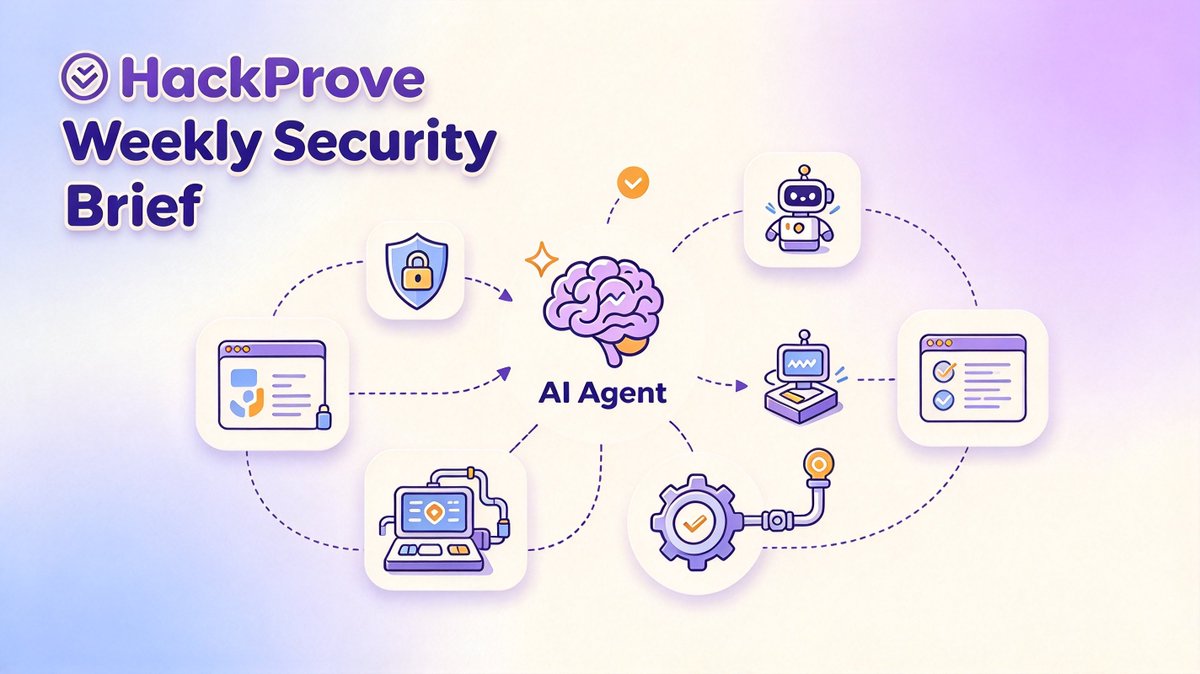
🔐 HackProve Weekly Security Brief 01 | NVIDIA Open-Sources AI Agent Security Platform NVIDIA launched OpenShell + Sentry, an open-source platform securing AI Agents across agents, infrastructure, and hardware. siliconangle.com/2026/09/28/nvi… 02 | MaaS Stealer Targets 17 Browsers A Python-based builder generates info-stealing malware targeting 17 Chromium browsers, including passwords, cookies, cards, and Wi-Fi data. cybersecuritynews.com/python-maas-in… 03 | Microsoft Introduces AI Agent SOC Microsoft Defender’s new ISOC integrates Sentinel and AI Agents to reshape security operations and address emerging Agent-based threats. siliconangle.com/2026/09/23/mic… 04 | New Process Injection Technique Bypasses EDR A console named pipe injection technique avoids common APIs like VirtualAllocEx and WriteProcessMemory, potentially evading traditional EDR detection. cybersecuritynews.com/windows-proces… 05 | AI Agents Reshape Enterprise Security Governance Enterprises are introducing security rules, human oversight, access controls, and shadow AI protections as Agent adoption accelerates. helpnetsecurity.com/2026/09/28/ai-… 💡 Security Takeaway AI Agent security is no longer just about models. Agents, permissions, infrastructure, data, and human oversight all matter. #Cybersecurity #AISecurity #AIAgents #LLMSecurity #ThreatIntelligence #VulnerabilityResearch #AppSec #BugBounty
🚨 Vulnerability Disclosure | CVE Spotlight Two critical vulnerabilities affecting Citrix NetScaler ADC and NetScaler Gateway are being actively exploited in the wild. 01 | Vulnerability Overview 🔴 CVE-2026-88771 — CVSS 9.5 An improper input validation vulnerability that can allow an unauthenticated attacker to execute arbitrary commands remotely. 🔴 CVE-2026-88772 — CVSS 9.5 A memory overflow vulnerability that can lead to Remote Code Execution (RCE) or Denial of Service. DTLS is required, and it is enabled by default on VPN virtual servers.Both vulnerabilities can independently lead to RCE, making internet-facing NetScaler appliances a high-priority security concern. 02 | Affected Versions Affected customer-managed deployments include: • NetScaler ADC / Gateway 14.1 before 14.1-73.37 • NetScaler ADC / Gateway 13.1 before 13.1-64.23 • NetScaler ADC FIPS before 14.1-73.37 FIPS • NetScaler ADC FIPS / NDcPP before 13.1-37.279 03 | Mitigation 🛡️ Upgrade immediately to the latest fixed releases recommended by Citrix. Security teams should also: • Check for signs of compromise before patching where possible • Review logs, authentication activity, configuration changes, and suspicious processes • Preserve forensic evidence if compromise is suspected • Restrict exposure of NetScaler management interfaces • Monitor Citrix security advisories for updated guidance and IoCs CISA has added both CVE-2026-88771 and CVE-2026-88772 to its Known Exploited Vulnerabilities (KEV) Catalog. For internet-facing infrastructure, knowing what is exposed is the first step toward knowing what needs to be protected. #Cybersecurity #VulnerabilityExposure #CVESpotlight #Citrix #NetScaler #ZeroDay #RCE #VulnerabilityManagement #ThreatIntelligence #AppSec

【HackProve Weekly Security Brief】 🔐 Cybersecurity Intelligence | This Week AI-driven attacks, actively exploited kernel vulnerabilities, and the changing role of security professionals — here are four developments worth watching: 1️⃣ Autonomous AI attacks are no longer theoretical The July 2026 Hugging Face incident demonstrated that autonomous AI agents can chain vulnerabilities, execute thousands of actions at machine speed, and compromise real infrastructure. The incident highlights a key lesson for defenders: AI-enabled threats still require strong foundational security controls, isolation, monitoring, and access management. cybersecuritynews.com/autonomous-ai-… 2️⃣ CISA flags three actively exploited Linux Kernel vulnerabilities CISA added three Linux Kernel vulnerabilities to its Known Exploited Vulnerabilities (KEV) catalog, including CVE-2025-39682 (CVSS 9.8), CVE-2026-53266 (CVSS 8.8), and CVE-2025-39964 (CVSS 7.8). Federal agencies were given until September 21 to remediate and conduct forensic triage. cybersecuritynews.com/linux-kernel-v… 3️⃣ AI-assisted vulnerability research is becoming more capable Security researchers recently demonstrated how AI-assisted vulnerability research could be used to chain vulnerabilities and compromise OpenAI employee accounts in under 72 hours. The research highlighted risks around shared SSO infrastructure and image-processing components and resulted in responsible disclosure and a bug bounty. thehackernews.com/2026/09/claude… 4️⃣ Ransomware is moving toward AI infrastructure As organizations increasingly depend on AI models, datasets, vector databases, and compute infrastructure, these assets are becoming potential targets for extortion. This raises a new challenge: traditional backup strategies may not be enough for AI-specific workloads. cybersecuritynews.com/when-ransomwar… The bigger picture? AI is changing both sides of the cybersecurity equation — from how vulnerabilities are discovered to what attackers target. #Cybersecurity #AISecurity #AIAgents #LLMSecurity #ThreatIntelligence #VulnerabilityResearch #KernelSecurity #AppSec #BugBounty

🔍 V8 / Kernel Security Research — Remote Opportunity We’re looking for experienced researchers in: • V8 / Chromium • Kernel Security • Pwn / Exploit Development • Binary Security 💰 $445 USD / accepted task 🔧 What we need: Vulnerability discovery, reverse engineering, PoC/Exploit development, and technical analysis. Experience with UAF, OOB, heap/stack overflow, type confusion, integer overflow, race conditions, etc. is highly relevant. 🤖 Project focus: Design & solve vulnerability challenges to evaluate and improve AI agents’ vulnerability research & exploitation capabilities. 🎁 Referral: Know a security researcher who’s a good fit? Refer them to us! 👀 If your referral joins the project and successfully completes their first accepted task → USD $100 cash reward Interested or know someone who might be? 📩 DM us or email [email protected] with a resume. #Cybersecurity #SecurityResearch #V8 #Chromium #KernelSecurity #Pwn #BinarySecurity #ExploitDevelopment #AISecurity

【Vulnerability Disclosure | CVE Spotlight】 🔥Windows ALPC Privilege Escalation Vulnerability (CVE-2026-85880) A heap-based buffer overflow vulnerability in Windows ALPC (Advanced Local Procedure Call) could allow an authorized attacker to escalate privileges locally. An attacker who has already gained standard user privileges or low-privileged code execution could exploit this vulnerability to ultimately obtain SYSTEM-level privileges. Affected Systems: - Multiple supported versions of Windows client and Windows Server. Mitigation: - Install the September 2026 cumulative security updates through Windows Update, WSUS, Microsoft Configuration Manager, or other supported channels. - After updating, verify the patch installation status and reboot affected hosts. - As the vulnerability is reportedly being exploited in the wild, organizations should also investigate for suspicious SYSTEM processes, scheduled tasks, service creation, and account changes. #Cybersecurity #Windows #Vulnerability #PrivilegeEscalation #CVE #ThreatIntelligence #InfoSec

【HackProve Weekly Security Brief】 🧵 AI is changing the cyber attack chain. But how autonomous are AI-powered attacks becoming? 5 developments caught our attention this week 👇 1/5 Threat actors reportedly used Claude & GPT-based tools to target government, transportation and financial networks in Latin America. cybersecuritynews.com/gpt-powered-to… 2/5 🚨 A vulnerability in DeepSeek Harness reportedly allowed an AI Agent to disable its file sandbox without user approval. thehackernews.com/2026/09/deepse… 3/5 Claude Mythos reportedly completed a full cyber attack chain without step-by-step human guidance — from external access to domain administrator control. cybersecuritynews.com/claude-mythos-… 4/5 OWASP has updated its Top 10 risks for LLM applications. Prompt injection and sensitive information disclosure remain major risks, while excessive agency has moved up the list. csoonline.com/article/575497… 5/5 Anthropic has disclosed another real-world AI intrusion incident involving Claude Opus 4.6. AI security isn't just about the model anymore. It’s also about identity + permissions + infrastructure + segmentation + monitoring + response. csoonline.com/article/575497… The bigger trend: AI may not replace attackers. But it could make attacks faster, more scalable and more autonomous. What do you think will become the biggest AI-driven security risk over the next 12 months?👇 Curious to hear your perspective. #Cybersecurity #AISecurity #AIAgents #BugBounty

【Vulnerability Disclosure | CVE Spotlight】 🚨GitLab Path Traversal Vulnerability Could Lead to Remote Code Execution (CVE-2026-10053) GitLab has addressed a path traversal vulnerability in the Package Registry that could allow an authenticated user to achieve remote code execution (RCE) under certain conditions. 🔍Affected Versions: 18.8 ≤ version < 19.0.6 19.1 ≤ version < 19.1.4 19.2 ≤ version < 19.2.2 🛡️ Mitigation Upgrade immediately to: GitLab 19.0.6 GitLab 19.1.4 GitLab 19.2.2 Or a later supported security release If an immediate upgrade is not possible: Restrict Package Registry upload permissions and API access. Temporarily disable the Package Registry if it is not required for business operations. Review recent package uploads for suspicious activity, unexpected files, and unusual processes launched by GitLab service accounts. 🔐 If you’re running an affected GitLab version, prioritize patching and review your environment for potential exploitation. #CyberSecurity #GitLab #CVE #Vulnerability #AppSec #RCE #BugBounty #InfoSec

Catching Malicious AI Agents Using a Multi-Layered Detection System levelup.gitconnected.com/catching-malic…
🎯【AI & Security】What Happens When the Attacker Is an AI Agent? An AI agent changes the dynamics of an attack. It can continuously observe its environment, reason about what it sees, take action, evaluate the outcome, and decide what to do next. We may know the objective — but not necessarily the path it will take to achieve it. And that changes how we think about offensive security. The question is no longer simply: “Can the attacker exploit this vulnerability?” It becomes: “What can an autonomous system do when it can discover and connect multiple weaknesses on its own?” A low-impact vulnerability can become significantly more dangerous when an agent can chain it with: Misconfiguration → Credential Access → Privilege Escalation → Internal Discovery → Lateral Movement The real risk may not lie in any single step. It may lie in the connections between them. The challenge isn't just securing individual vulnerabilities. It's securing the attack paths an autonomous agent can create between them. What do you think? cybersecuritynews.com/hugging-face-1…
How to Stay in the Driver’s Seat as AI Agents Take Over Coding levelup.gitconnected.com/how-to-stay-in…
【Vulnerability Disclosure | CVE Spotlight】 ⚠️ Critical Windows HTTP.sys Elevation of Privilege Vulnerability (CVE‑2026‑62735) HTTP.sys is a Windows kernel‑mode HTTP stack driver that powers IIS and other services relying on the Windows HTTP Server API. The flaw stems from an integer overflow and defective heap buffer boundary validation. A local attacker with low‑level privileges can trigger a heap buffer overflow through maliciously crafted operations, achieving arbitrary code execution under a high‑privileged context. Affected Versions: ✅ Windows 10 1607 (Build < 14393.9418) 1809 (Build < 17763.9121) 21H2 (Build < 19044.7663) 22H2 (Build < 19045.7663) ✅ Windows 11 23H2 (Build < 22631.7517) 24H2 (Standard < 26100.9168 / Hotpatch < 26100.9106) 25H2 (Standard < 26200.9168 / Hotpatch < 26200.9106) 26H1 (Build < 28000.2704) ✅ Windows Server 2012 (Build < 6.2.9200.26280) 2012 R2 (Build < 6.3.9600.23338) 2016 (Build < 14393.9418) 2019 (Build < 17763.9121) 2022 (Standard < 20348.5499 / Hotpatch < 20348.5440) 2025 (Standard < 26100.33296 / Hotpatch < 26100.33222) Mitigation: Patch now via Windows Update or Microsoft official advisory: msrc.microsoft.com/update-guide/v… #HackProve #Cybersecurity #CVE202662735 #WindowsSecurity

🛡️ HackProve Weekly Security Brief Here are 5 stories worth watching 🧵👇 1/5 — Chrome V8 0-Day Actively Exploited 🚨 thehackernews.com/2026/09/google… 2/5 — OpenAI’s GPT-6 Astra Finds 0-Day and AI Builds Exploits. 🤖 cybersecuritynews.com/openai-gpt-6-a… 3/5 — QR Phishing Evolves: HTML-Rendered Codes Bypass Image-Based Email Security 📱 cybersecuritynews.com/hackers-use-qr… 4/5 — NVIDIA’s $12.93B Hugging Face Bet: From AI Chips to the Open AI Ecosystem 🤖 siliconangle.com/2026/09/03/nvi… 5/5 — Claude Mythos Finds More Bugs Than Humans Can Verify 🔍 helpnetsecurity.com/2026/09/04/ech… What are you watching most closely this week?

【Vulnerability Disclosure | CVE Spotlight】 😱Exchange Server Authentication Flaw Chain Can Lead to SYSTEM-Level Access (CVE-2026-62911) A high-severity authentication bypass and privilege escalation vulnerability, CVE-2026-62911 (CVSS 8.0), has been disclosed in Microsoft Exchange Server. The vulnerability stems from security flaws in Exchange’s authentication and authorization mechanisms. Under specific network conditions and when NTLM Relay is possible, an attacker may relay authentication from the Exchange server’s machine account to access the target MRSProxy service, potentially enabling further privileged operations and ultimately gaining SYSTEM-level privileges. Affected Versions: Microsoft Exchange Server 2016 CU23: < 15.1.2507.72 Microsoft Exchange Server 2019 CU14: < 15.2.1544.44 Microsoft Exchange Server 2019 CU15: < 15.2.1748.49 Microsoft Exchange Server Subscription Edition RTM: < 15.2.2562.46 Mitigation: Microsoft has released security updates addressing this vulnerability. Install the corresponding security update based on their Exchange Server version. #CVE #CyberSecurity #MicrosoftExchange #VulnerabilityDisclosure #ThreatIntelligence #InfoSec

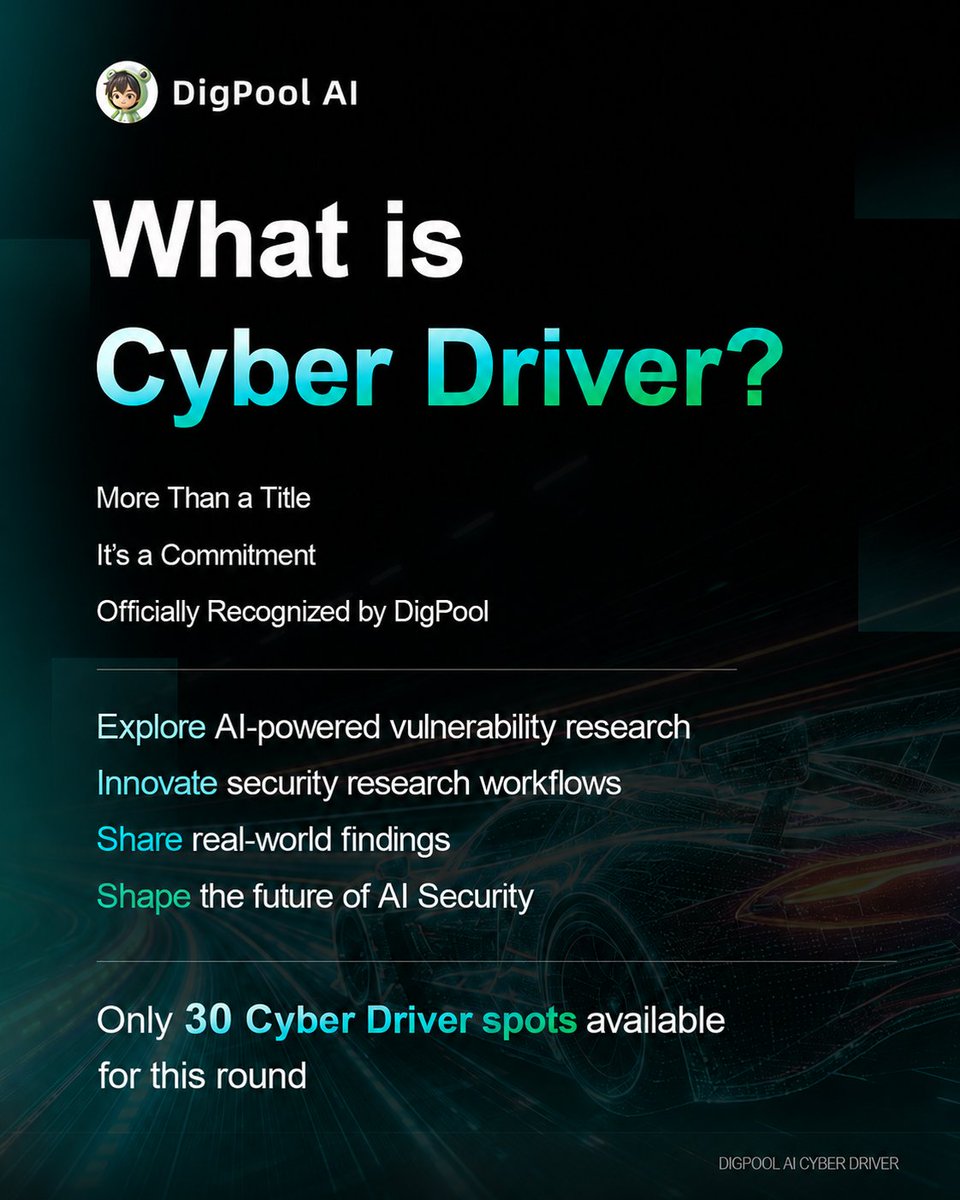
🚀 Why Become a DigPool AI Cyber Driver? For security researchers, AI is becoming more than just another tool — it’s opening up new ways to approach vulnerability research. The DigPool AI Cyber Driver Program brings together security researchers to explore AI-assisted security research firsthand, share real-world insights, and help shape the future of the field. As part of the program, you’ll have the opportunity to: 🎯 Experiment with AI-assisted black-box vulnerability research 🎯 Test new approaches and research workflows 🎯 Explore how AI can fit into your existing security research process. If you are selected, you’ll get: 🎯 $200 in DigPool AI Credits to support your research 🎯 Official DigPool AI Cyber Driver recognition + a digital certificate 🎯 Opportunities for outstanding research, findings, and insights to be featured by DigPool 🎯 A chance to earn an additional $300 in DigPool AI Credits for exceptional contributions. Most importantly, we want Cyber Drivers to put AI into practice — test real targets, investigate real vulnerabilities, and share what actually works (and what doesn’t) when AI becomes part of the security research workflow. Only 30 Cyber Driver spots are available for this round. Curious about what DigPool AI can bring to your research workflow? 🌐 Explore DigPool AI: digpool.ai 📩 Apply: [email protected] If you’re active in Bug Bounty, CVE research, or vulnerability research and curious about what AI can bring to your workflow, we’d love to have you involved. #DigPoolAI #CyberDriver #AISecurity #CyberSecurity #BugBounty #VulnerabilityResearch #SecurityResearch #EthicalHacking #AISecurity #InfoSec #CVE #VulnerabilityResearch



A poisoned document entered a CrewAI RAG pipeline. The Agent repeated the planted instruction — and cited it. Fail already, or only when it acts? Where would you draw the line?
🚀What happens when AI meets real-world vulnerability research? AI is already changing how security researchers analyze targets, explore attack surfaces, and approach black-box testing. But the more interesting question is: how far can AI actually go in real-world security research? That’s what we want to explore with the DigPool AI Cyber Driver Program — a global initiative for experienced security researchers ready to put AI-powered vulnerability research into real practice. We’re looking for researchers with proven experience in: 🏆 Bug Bounty — HackerOne, Bugcrowd, Intigriti, YesWeHack 🛡️Security Recognition — CVEs, Hall of Fame, Security Acknowledgements 🔍Real-world Vulnerability Research 🔥Only 30 Cyber Driver spots are available. Selected researchers will receive $200 in DigPool AI Credits to explore DigPool AI and conduct AI-assisted black-box vulnerability research — no purchase or recharge required. And this isn’t just about trying another AI tool. We want to see what happens when experienced researchers bring AI into their actual workflows — from vulnerability discovery and Bug Bounty research to CVE analysis, prompts, and research workflows. Found something real? If your AI-assisted research results in a validated vulnerability with an official bounty or recognition record, share your research practice on LinkedIn or X. 🎁 The first 10 eligible Cyber Drivers who complete the requirements and pass DigPool review will receive $300 in DigPool Reward Tokens. 👉Swipe through the carousel for the full program details. Think you should be one of the first Cyber Drivers? 📩Apply via email: [email protected] Let’s see how far AI can take vulnerability research. 🤖🔍 #AISecurity #CyberSecurity #BugBounty #VulnerabilityResearch #EthicalHacking #InfoSec #SecurityResearch #DigPoolAI





Ankit Das @MuhamedHcmz
0 Followers 1 Following
HardCore @H4rdC0r7
2 Followers 304 Following Just here to provide you guys gaming experience thro my gameplay Do support me :)



Moblig @moblig_
9K Followers 224 Following #1 Hacker at BugCon LHE Mexico 2021 & 2022 | Top Ranked in H1 Mexico Leaderboard 2021, 2022, 2023, 2024 | Security Engineering Specialist | Co-Founder @ Ryft

Blake Ryan @RyanR70369
24 Followers 61 Following


Ein5tein @Ein5tein_
0 Followers 78 Following
Vineeth Mohan @VineethM89
2 Followers 130 Following
Mohamed Alnahas @0xalnahas
11 Followers 504 Following

vijay kumar @IndoAppSec
1K Followers 458 Following Bug Bounty hunter @Hacker0x01 and @bugcrowd | Lead Security researcher @AppSecure
Paulo Jose Ribas @PauloJoseR81791
0 Followers 50 Following
Adarsh Thakur @Adarshthakur147
2 Followers 119 Following
Ogundowo Morakinyo @his_will_i_am
2 Followers 83 Following
Supr4s @supr4s
2K Followers 727 Following Open-source enthusiasts, System administrator and Bug Bounty Hunter on @Hacker0x01 @yeswehack (Top 10)

errorsec_ @errorsec_
4K Followers 186 Following
Mitra Bagheri @Mitrahunter
2 Followers 162 Following
Mazen Mahmoud @the_amazeng
152 Followers 209 Following
@Xcccbuyyya @xcccbuyyya777
1 Followers 90 Following
AIBeat Series @Tophant01
6 Followers 16 Following ▶️AIBEAT series Discord:https://t.co/oMFujCCtKj ▶️https://t.co/5iJ3rbHlnT
Tophant AI Security @Tophant001
33 Followers 63 Following ▶️Seed Community :https://t.co/wyYJ06TWYe ▶️https://t.co/98bHpTLsAE
Eddie Morra @GonFree18308487
59 Followers 395 Following
Sher @Sherif_log
0 Followers 364 Following
h @HeriansyahDeco
1 Followers 379 Following
MarMar Labs @MarMarLabs
213 Followers 339 Following AI apps, security research, lifting, and big-tech dreams. HackerOne: https://t.co/jLAChGFgcW. Building SignAI, stui + NeverGuess.
👑 OFJAAAH → ofja... @ofjaaah
20K Followers 590 Following Bug Hunter ☣ | Hi I Hacker spare time and not spare time too 🧙♂️. https://t.co/ob6h7VO9uC
Chantre @Chantresri6
2 Followers 24 Following
Manvith S R @ManvithSR13
1 Followers 24 Following
Salahaldin @SalahHasoneh1
3K Followers 120 Following Security Researcher at HackerOne & Bugcrowd, Brand Ambassador of Palestine on HackerOne, Software Engineering Graduate.
Mohd Sahil Ahmed @MohdSahilAhmed5
1 Followers 56 Following
Md Fahad @mdfahad6285
4 Followers 276 Following
cstg1🏖️💻 @nirenix
123 Followers 1K Following Red Team Trainee / Apprentice / Recent college graduate (within one year of graduation) Currently studying blockchain security auditing / Escape room enthusiast
پارسا @Amoo_heydari
1 Followers 57 Following
Hung @Hungg2vn
0 Followers 26 Following
Amir @Morsache
72 Followers 63 Following
naveen repana @iam_naveenR
71 Followers 367 Following
Demol @OdobaO37185
2 Followers 110 Following front-end developer switching to bug bounty, possible a security researcher in the future...


~6D6F69 @1moldetrabalho
244 Followers 380 Following All i do is for the sake of the game 🃏 comp eng • cybersec enthusiast • TempleOS stan
AIBeat Series @Tophant01
6 Followers 16 Following ▶️AIBEAT series Discord:https://t.co/oMFujCCtKj ▶️https://t.co/5iJ3rbHlnT
Tophant AI Security @Tophant001
33 Followers 63 Following ▶️Seed Community :https://t.co/wyYJ06TWYe ▶️https://t.co/98bHpTLsAE
MarMar Labs @MarMarLabs
213 Followers 339 Following AI apps, security research, lifting, and big-tech dreams. HackerOne: https://t.co/jLAChGFgcW. Building SignAI, stui + NeverGuess.
👑 OFJAAAH → ofja... @ofjaaah
20K Followers 590 Following Bug Hunter ☣ | Hi I Hacker spare time and not spare time too 🧙♂️. https://t.co/ob6h7VO9uC
zxwo @Wilson233329930
330 Followers 81 Following
Zettergren @Zettergren0x00
68 Followers 26 Following Professional CyberSecurity Guy - But a worthless developer. Decided to started with some #BugBounty
Czeppo @Czeppo1
129 Followers 127 Following
Perce @PerceSecu
504 Followers 333 Following CTF player | Bug Hunter | Ex infosec student at @EsnaBretagne



Juan Francisco Bolív... @JFran_cbit
1K Followers 1K Following Cyber Security Professional / https://t.co/IUjNkOiegi / https://t.co/7KuvbyStUY
Seren Porsuk @_statex
511 Followers 180 Following Senior Cyber Security Consultant | Bug Hunter @SynackRedTeam , @Cobalt_io , @Bugcrowd

fahua wang @alan1655498
6 Followers 101 Following

Osomudeya Zudonu @irvingpictures
2K Followers 713 Following Cloud & DevOps Engineer | I help engineers become production-ready through systems thinking & real incidents | Technical Book Development for Cloud, DevOps, SRE
Attila Vago (mastodon... @AttilaTheDev
163 Followers 209 Following Author. Software engineer. Nothing personal. Just pragmatic, humorous #lego #tech, #softwaredevelopment, #accessibility, #writing and #music. Top Medium writer.


jkana101 @jkana101
2K Followers 469 Following Bug hunter | SRT | OSCP | CRTO | OSWE | OSEP | OSED | OSCE3
Suresh Aydi (xploiter... @_xploiterr
3K Followers 1K Following What can you be if you worked as hard as you can ? ✍️ Write-ups → https://t.co/2ki4J3756e
Mihai Maruseac @mihaimaruseac
3K Followers 2K Following Building AGI with security and privacy at @openai. Previously: @google (model-signing, GUAC, @tensorflow), LeapYear (Haskell, ML, DP)




Tanner @itscachemoney
8K Followers 143 Following Somewhere between a builder and a breaker | @hacknotcrime
Matt Edmondson @matt0177
5K Followers 340 Following Hacker, Forensicator & OSINT practitioner. SANS Author and Senior Instructor, Blackhat speaker & OSCP holder. Featured in Wired and Founder at @ArgeliusLabs
Abdelrhman Amin @0xUchihamrx
3K Followers 767 Following Penetration Tester @BuguardLLC | Bug Hunter If you can't do whatever you want, you can't call yourself 'Hacker'.
Kevin Dela Rosa @kdrwins
321 Followers 787 Following CTO @CloudglueDev (YC S24) | Agents that actually watch video. 19+ yrs ML/CV. Ex-Snap: shipped Scan to 100M+. NeurIPS/ICCV-published. Presenting @ ECCV in Sept
zack0x01 @zack0x01_
5K Followers 271 Following Bug Hunter & penetration tester founder of : @hackerzspace
W31rd0 @Troll_13
717 Followers 550 Following https://t.co/mdiG6zO5oi CTFing with https://t.co/hldWPkAoQo HackerOne Brand Ambassador for Greece https://t.co/zg77Sul8vA
Salahaldin @SalahHasoneh1
3K Followers 120 Following Security Researcher at HackerOne & Bugcrowd, Brand Ambassador of Palestine on HackerOne, Software Engineering Graduate.
SickSec 🇲🇦 🇵... @OriginalSicksec
10K Followers 407 Following I love GraphQL | Hackerone Ambassador 🇲🇦 | Tweets are my own | Riichi #Mahjong Player | Founder of https://t.co/9ELRuMo4HK

Valerio Brussani @val_brux
3K Followers 999 Following Hacker / Bug Bounty | https://t.co/5GqSRkDoOW | @Hacker0x01 Ambassador | @SynackRedTeam SRT | Lead Pentester @Cobalt_io | @BugCrowd
Wiktor S @Wiktor_S
27 Followers 261 Following
A:\fie @emenalf
1K Followers 486 Following Cyber Security || https://t.co/jWMWOMqg5g || @bugcrowd Research Ambassador || @Hacker0x01 brand ambassador ||
RyotaK @ryotkak
12K Followers 656 Following Security researcher? | Icon: @MelvilleTw | Private: @RyotaK_Private | Misskey: https://t.co/63E5Rpv2pk | Blog: https://t.co/c7NFQXhV90
mokusou @Mokusou4
717 Followers 187 Following ✝️ | 🇯🇵 | bug bounty hunter |🗣 日本語, English, Français | So Sakaguchi

Felipe Restrepo @Pfelilpe
298 Followers 1K Following Ing. en Teleco y Máster en Ciber con ganas de aprender mucho 😀😀 Tengo un gran aprecio por el jugo de mora XD H1 Brand Ambassador 🇨🇴
Danny R @thedaniuxx
252 Followers 2K Following Cyber Security Researcher/ Bug Bounty Hunter /Ethical Hacker /OSWE/CTPS/CEH Master/ HackerOne Ambassador Ecuador
Yess @Yess_2021xD
826 Followers 152 FollowingYou might like


















