Xintrix.Lab @XintrixLab
At XINTRIX, we team up product visionaries with top manufacturers. xintrix.com Sofia, Bulgaria Joined December 2024-
Tweets25
-
Followers8
-
Following412
-
Likes1K

Tell me about doing CAD with Astra. Is it just computer use or api? Which CAD software? And no, to me Blender is not CAD.

J’ai cartographié la future chaîne électrique des data centers IA, du réseau jusqu’à la puce avec les bénéficiaires Au cœur de cette nouvelle transformation le fameux 800 V DC À 600 kW, une distribution en 48 V nécessite environ 12 500 ampères, À 800 V, elle n’en demande plus que 750. Cette réduction du courant permet de diminuer la quantité de cuivre, les pertes résistives, les contraintes thermiques et l’espace occupé par l’alimentationNVIDIA évoque un gain d’efficacité pouvant atteindre environ 5 % sur l’ensemble de la chaîne L’image représente une architecture cible simplifiée, pas un système unique qui serait déployé partout dès demain, mais qui va scale jusqu'à Kyber La transition devrait se dérouler en quatre phases : Phase 1 — 2026/2027 : retrofit du white space L’infrastructure AC existante reste en place : transformateurs, UPS, switchgear et busways 415/480 V. Un power rack, ou sidecar, est ajouté près des racks de calcul. Il convertit localement l’AC en 800 V DC et peut intégrer des batteries ainsi que des supercondensateurs. Cette phase ajoute donc du matériel sans supprimer immédiatement l’infrastructure historique. Phase 2 — 2027/2028 : arrivée du compute natif 800 V Le 800 V DC atteint directement le rack, puis le compute tray. La conversion vers environ 50 V n’est plus réalisée par un PSU AC/DC traditionnel, mais par un module DC/DC placé dans le rack ou directement sur la lame de calcul. C’est à ce moment que le 800 V devient progressivement une nécessité physique pour les racks approchant 600 kW. Phase 3 — fin 2028/2029 : distribution DC à l’échelle du bâtiment La conversion AC/DC remonte dans le grey space : un redresseur central transforme le 415/480 V AC en 800 V DC, ensuite distribué dans le data hall. Le power rack devient essentiellement un battery rack chargé du stockage, de la protection et de la gestion des transitoires. Une partie du switchgear basse tension, des PDU AC et potentiellement des UPS centralisés commence alors à disparaître. Les data centers de colocation pourraient néanmoins conserver plus longtemps ces équipements afin de prendre en charge des charges mixtes. Phase 4 — après 2029 : le Solid-State Transformer Le SST vise à convertir directement la moyenne tension en 800 V DC. Il pourrait remplacer le transformateur basse tension et le redresseur par un équipement unique, plus compact et programmable. Mais cette phase reste la plus incertaine : certification, fiabilité, sécurité et disponibilité des composants SiC haute tension doivent encore progresser. On lit donc la chaine imagée ainsi : 1. Production, réseau et raccordement haute tension 2. Transformateur et appareillage moyenne tension 3. Conversion vers 800 V DC par TRU ou, à terme, par SST 4. Protection, stockage et appareillage 800 V DC 5. Busway 800 V DC jusqu’aux racks 6. Hot-swap, e-fuse et isolation à l’entrée du rack 7. Conversion DC/DC : 800 V vers 50, 12 ou 6 V 8. VRM multiphase vers une tension inférieure à 1 V 9. GPU, CPU, XPU accélérateurs personnalisés Cette transformation redistribue la valeur entre plusieurs catégories d’acteurs, et tous ne gagneront pas au même moment On l’a vu avec $WOLF et $NVTS, le repricing lié aux promesses de ces nouvelles architectures a été spectaculaire. Dans la tech, le marché valorise très rapidement les anticipations parfois avant les revenus mais cela ne signifie pas que la transformation sous-jacente soit anecdotique. Ces technologies pourraient réellement devenir des briques essentielles de l’infrastructure de demain, tout cela en ayant une volatilité énorme. Ceci est le premier post d'une série sur l'électrification et le futurs de ces architectures

@leap_71 Multiple components connections
First tests. Custom Text-to-CAD experiment. First try. 2 minutes work.



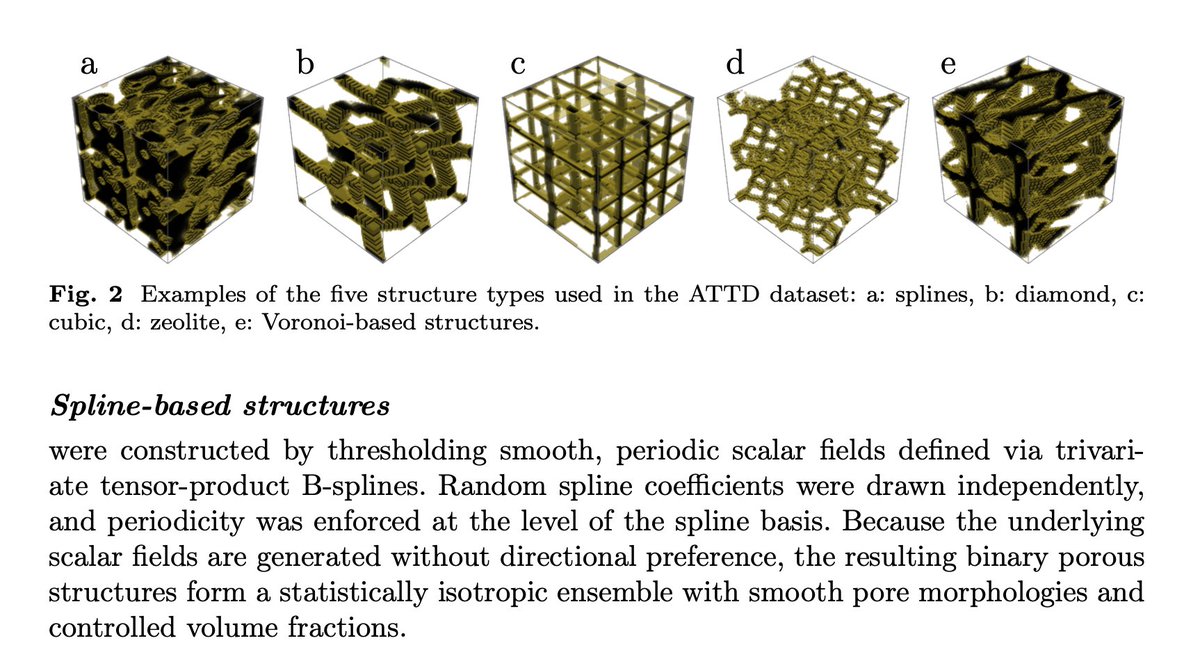
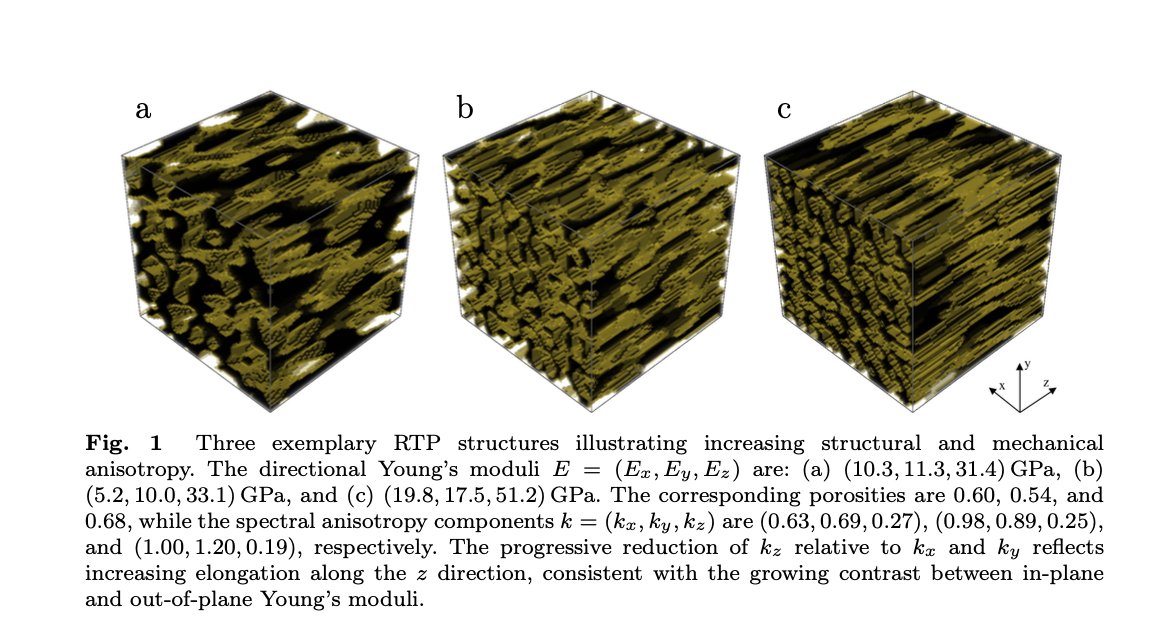
What if topology could predict how strong a material is? TL;DR: Shape matters but direction matters more. This paper introduces direction-aware topological data analysis (TDA) finally capturing how structure + loading direction shape stiffness in porous materials. Key insight: - Standard TDA misses anisotropy. - Add direction → massive jump in accuracy. Results: - Up to 2×–5× better predictions for Young's modulus - Nearly matches deep learning but with compact, interpretable features - Works even when materials look isotropic After a streak of papers in crystallography, it's my first contribution to material science. Exciting!


This is Algebrica. A mathematical knowledge base I’ve been building for 2.5 years. 215+ entries, carefully written and structured. 400k+ views over this time. Not much in absolute terms, but meaningful to me. No ads. No courses to sell. No gamification. No distractions. Just essential pages, aiming to explain mathematics as clearly as possible, for a university-level audience. Built simply for the pleasure of sharing knowledge. Content licensed under Creative Commons (BY-NC). Best experienced on desktop. If it helps even a few people understand something better, it’s worth it.


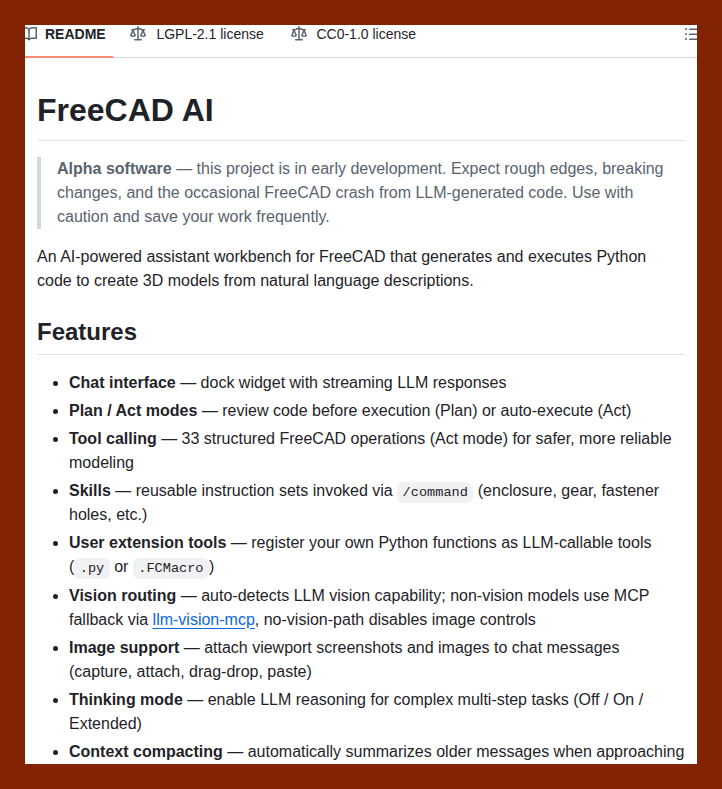
Generates 3D models from natural language github.com/ghbalf/freecad…

Imagine trying to teach someone how to swim just by letting them read books about water. That is how we have been training AI on physics, using text descriptions. To really learn, you need to get in the water. "The Well" is that water. Polymathic AI has released a massive 15TB open-source library of physics simulations. It allows AI models to experience physical phenomena directly. Instead of reading about a supernova, the model processes the actual data of the explosion. Instead of reading about aerodynamics, it analyzes the fluid flow. This moves us from [Generative AI] (making things up) to [Scientific AI] (discovering truth). A huge step forward for open science. GitHub Repo: github.com/PolymathicAI/t…



@C_MDPI This paper outlines a methodology for predicting the adsorption of organic substances on multi-walled carbon nanotubes. Method of Work: The study employs the Monte Carlo algorithm to optimize the model's parameters. (Gemini)
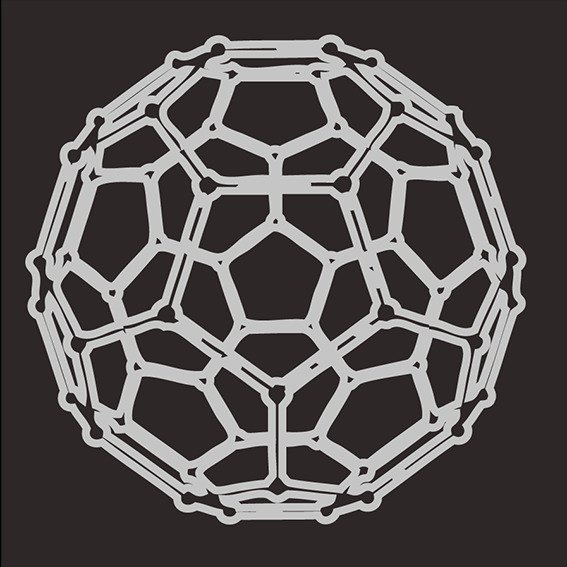
🚨 New Issue Out! C, Vol. 11, Issue 2 (June 2025) features 15 articles—incl. a cover story on plasma-modified carbon materials for improved radionuclide adsorption. 🌊 A step forward in nuclear wastewater treatment! 🔗 Read: mdpi.com/2311-5629/11/2

The story of the almost 10 year build of a telescope camera for one of the largest sky surveys in history…
From Soft to Solid: “Diamene,” the Diamond-Hard Material Forged from Graphene insightinvention.com/from-soft-to-s…

Look what I ran into today: QPress Exfoliator at Brookhaven National Lab. It's "a fully mechanized exfoliation platform" in argon glovebox. They have "developed and optimized exfoliation recipes for high-demand materials such as graphene, hBN, and transition metal dichalcogenides (TMDs)". They also have a Cataloger and a Stacker downstream. (ngl I've also used thorlabs posts as fixtures and guides many times)

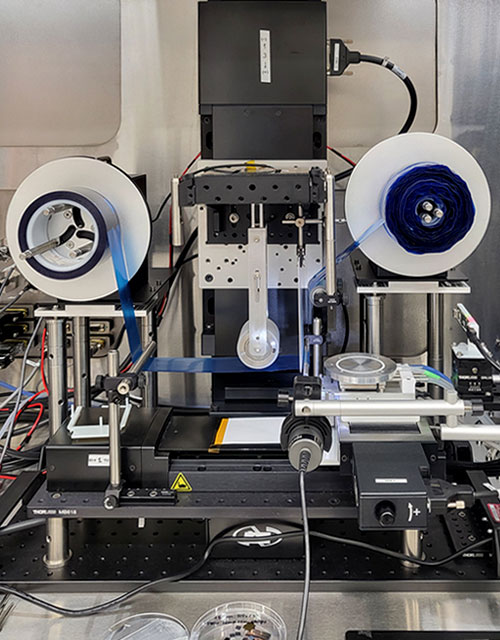

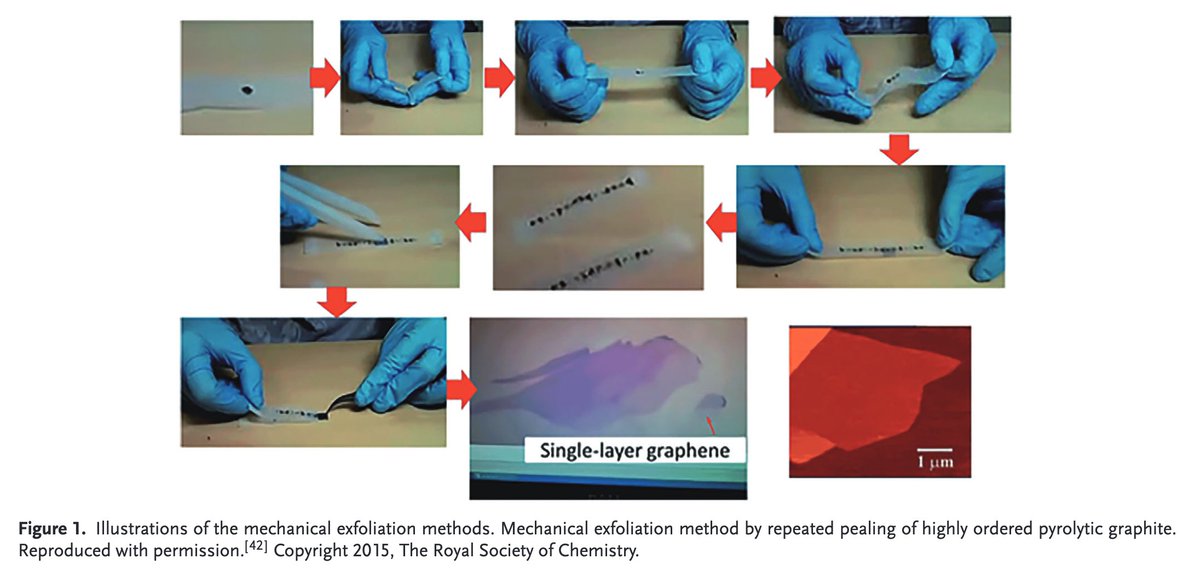
Xiang2025: [Subnanosecond flash memory enabled by 2D-enhanced hot-carrier injection](doi.org/10.1038/s41586…) This is how mechanical exfoliation looks like: [2D Materials Enabled Next-Generation Integrated Optoelectronics: from Fabrication to
🔖 Just a reminder, there is this: Technology Readiness Levels for Invention‑risk companies nasa.gov/directorates/s… via @NASA

day in the life…


📢 PRFluids Editors' suggestion: rotations may lead to brain injuries. Using a soft hydrogel ball in water as a simplified brain model, Wang et al. combine theory & experiments to show that the strongest deformations occur during rotational deceleration go.aps.org/41R1nHE

Mikameel ᯅ @augmentedcamel
2K Followers 2K Following Smartglasses for technicians Grow context from experience in space. @oneshot_ar
Tom Stevenson @TsT3v0
455 Followers 5K Following Technology + Steel @ CTRL - https://t.co/0rzE475iQT
shadows @AhmedShahnab
1K Followers 1K Following
EGF- Graphene and 2D ... @EGF2026Spain
826 Followers 4K Following This 11th edition covers the latest technology developments, applications, commercialization, end user requirements and challenges for Graphene and 2D Materials
Diuti @Diuti4515959
23 Followers 1K Following
Susan Jowett @SusanJowett2
2K Followers 5K Following
Sorwhus @sorwhus47483
79 Followers 1K Following
Flux | Design PCBs wi... @BuildWithFlux
3K Followers 174 Following Flux is your AI intern for hardware design that helps you plan, research, and engineer complete PCBs in a collaborative, browser-based eCAD.
Firestorm @Firestorm_Labs
2K Followers 83 Following Industrial-Grade Manufacturing Solution in a Box Unmanned Aerial Vehicles
Sahil @sahildabasss
318 Followers 101 Following Founder @studiohuncho ✷ Brand & websites for funded AI teams ✷ Further AI, Pine Labs, Sprinto, Nanonets & many more.
Justin Kim @justinplaygame
1K Followers 476 Following Open Sourcing Hardware Building HeyPCB @fdotinc @1517fund
Keileth @keilethh
14K Followers 456 Following brand/design for product-first companies. running https://t.co/wDiIDrBwQJ worked with @shadcncraft @uirules @expertise_ai https://t.co/5Lve0AFL59 https://t.co/BlOwx893gj


Taylor @taylor_sntx
3K Followers 179 Following 3D, design, photography, code, and AI Spatial & interactive product design → https://t.co/mnsUa0WOCW Selected work & experience → https://t.co/TdgF26v3JY
Seve @seveibar
7K Followers 5K Following founder https://t.co/UumwaBg3CF (we're hiring!), AI must create electronics. https://t.co/CmXXav93uj podcast host, founding CTO https://t.co/kbabWthGkJ,❤️open-source. Author https://t.co/jj9o1UMpWk

Kat ⊷ the Poet Engi... @poetengineer__
100K Followers 386 Following artist, engineer, researcher. neuroscience, machine psyche. science & art, futuristic & ancient.
CubeMars @cubemars_motor
545 Followers 12 Following CubeMars | Robot Motor Manufacturer - 17 Years Global Brand Collab: [email protected]
Ayush Soni @ayushsoni_io
44K Followers 5K Following founder @ https://t.co/DeIlJI4WjL creative studio for emergent tech. @hellohex

Norton Reveno @nortonreveno
32K Followers 165 Following https://t.co/jOhwIqsP7P Norton Milhas | Cartão Créd| (Geo)política | Viagens | 98 países | idiomas PT EN ES FR RU 🌎✈️💳
小小东 @xiaoxiaodong
28K Followers 55 Following 国际 不知名 提示词专家 / 植物爱好者 / AI作图基建 skills/chrom plugin/prompt/art/logo/ppt 微信::newbe2012 提示词库: https://t.co/peRpdUN0EQ 有星球 营业中
Cua @trycua
21K Followers 2K Following Close the loop with Cua Driver: /bin/bash -c "$(curl -fsSL https://t.co/eIQYZCD6OG https://t.co/FPlvZ2DeKx)"

Alex Atallah @alexatallah
67K Followers 3K Following CEO, co-founder @OpenRouter, the largest LLM marketplace. Previously: co-founder & CTO @OpenSea.

Tom Brown @NotTomBrown
47K Followers 469 Following Co-founder and Chief Compute Officer @AnthropicAI
Bruce H. Dean, PhD | ... @QuantSymplectic
23K Followers 1K Following Differential Geometry | Thermodynamics Dynamics of self-maintaining systems Independent Researcher I Ex-NASA ORCID: https://t.co/rKitkgpGfm
IGW @interstellargw
24K Followers 273 Following Documenting humanity's endeavor into the stars | Cinematic Production | Live Streams | Exclusive Spaceflight Content | Founder: @joeyigw
Odyssey @odysseyml
43K Followers 17 Following We’re an AI lab pioneering world models—AI to understand and simulate the world.
Diogo Almeida @CompleteSkeptic
147K Followers 96 Following Sane + 🌶️ takes in an insane AI world... AI capabilities researcher: co-created RLHF/ChatGPT @ @openai now trying to right the wrong 🤭 (ceo @typesafeai)
Lewis Jones @thelcjones
3K Followers 671 Following Building robots to build a city on Mars. Co-founder @cosmic_robotics. Prev propulsion @relativityspace, avionics @spacex, robotics @nasa, and @caltech.

만원만 l manwonman @manwon_man
9K Followers 6K Following 좋아하는 디자인 올립니다. Designer / Curator - 제 작업은 여기 ↓
alpha_rover @Alpha10six
5K Followers 916 Following Building robots and community with Codex - since 2024 OpenAI Codex Ambassador - Northwest Arkansas
Brass Hands @brasshands
2K Followers 62 Following Design Systems for the New Industrial Age AI / Robotics / Defense / Industry

Jirachi🌟 @0xJirachi
6K Followers 2K Following the anthony bourdain of plasma sputtering | cryptoindustrialist | prev. @NASA @DroseraNetwork
Alex Zhavoronkov, PhD... @biogerontology
44K Followers 2K Following My posts are strictly personal, not reflective of positions or policies of Insilico Medicine, which disclaims any responsibility for my individual statements.

trailcam @Trail_Cams
1.4M Followers 182 Following

Jessie Frazelle @jessfraz
134K Followers 266 Following CEO @zoodotdev, 👩🏻💻 @oxidecomputer, 📝 @ACMQueue
evnsnclr @evnsnclr
6K Followers 371 Following Evan Sinclair Smith AI Research @ Georgia Institute of Technology https://t.co/0hUXeEtZXe personal: https://t.co/rSyGf1G5dP

Kyle Anthony Miller @kyleanthony
38K Followers 1K Following An American brand designer, designing for the new industrial age.

Nancy Grace Roman Spa... @NASARoman
80K Followers 71 Following The Roman Telescope is a NASA mission that will study dark energy & exoplanets and serve the general astronomy community.
Rutger Bregman @rutgerbregman
373K Followers 549 Following Historian. Books: 'Utopia for Realists' (2014), 'Humankind' (2020) and 'Moral Ambition' (2025). Co-founder of The School for Moral Ambition.
西川裕章(方手... @ossanworld
5K Followers 1K Following 数値流体力学アルゴリズム研究者/バージニア州在住/National Institite of Aerospace所属/NASAラングレー 研究所/Old Dominion University/ゴリってる/青春の高校数学/ある数値流体力学研究者の挑戦 https://t.co/v4N5zU5gUr
Seb Cornelius @SebCornelius
10K Followers 965 Following Independent Designer & Creative Director. Building https://t.co/lfuAAxMIBJ
Kai Lentit (e/xcel) @KaiLentit
28K Followers 607 Following Very important journalist @ ProgrammersAreAlsoHuman

lusso @luusssso
186K Followers 1 Following Lusso Systems, tools for expanding your creativity available now on Substack. Read weekly by 3,000+ https://t.co/vagJ0eZevCYou might like