Scott Adams @ScottAdamsDev
The OG Indie Computer Game Developer, One of the founders of the Personal Computer Gaming Industry. clopas.net Wisconsin USA Joined August 2012-
Tweets1K
-
Followers2K
-
Following632
-
Likes10K
youtu.be/cqwKceUSZ5Q?is… Big robotic breakthrough
@mcdankj_WDE96 The next time you use grok build have it go to deft.md and bring directive into the repo.

SUCCESS! AI ON NO GPU COMPUTERS! I’m back the stress test is done. AND I NOW KNOW I CAN SAVE LARGE AI COMPANIES BILLIONS OF DOLLARS! I’ll show you how for free. The 13B model ran fully offline on ordinary consumer hardware that has less RAM than the model wants. Flash (the SSD) became the primary store. Peak RAM stayed at 15.4 GB. Average generation speed settled at 7.1 tokens per second once the working set was warm. SSD bandwidth peaked at 412 MB/s during the heavier layers and dropped to a steady 180–220 MB/s while the narrative continued. Coherence across multiple turns held—the same quiet storyteller voice that appeared on the $8 ESP32 simply scaled up. No cloud. No GPU. Just the design philosophy that constraints teach you more than excess ever will. My goal is to have a full chat interface now working on it now! I used the best-balanced 13B available for this exact job: Llama-2-13B-Chat Q4_K_M (7.48 GB on disk). It is the cleanest narrative model at this size, stays coherent when you feed it short personal notes, and refuses to invent worlds it cannot hold. How you can test this on old hardware: •Older Ryzen 5 desktop (any 6- or 8-core Zen 2/Zen 3 is fine) •24 GB DDR4 RAM (or less) •Single 1 TB NVMe SSD (PCIe 3.0 is what I used; PCIe 4.0 is faster but not required) •No discrete GPU! Here is exactly how I set it up and how any amateur can repeat the experiment tonight on Linux, Mac, or Windows. 1. Download the model (same on every OS) # one-time install of the downloader pip install -U huggingface_hub # pull the exact file I used huggingface-cli download TheBloke/Llama-2-13B-chat-GGUF \ Llama-2-13B-chat.Q4_K_M.gguf \ --local-dir ./models 2. Build / install llama.cpp Linux git clone github.com/ggerganov/llam… cd llama.cpp mkdir build && cd build cmake .. -DLLAMA_NATIVE=ON cmake --build . --config Release -j$(nproc) macOS (Apple Silicon or Intel) git clone github.com/ggerganov/llam… cd llama.cpp mkdir build && cd build cmake .. -DLLAMA_METAL=ON -DLLAMA_NATIVE=ON cmake --build . --config Release -j$(sysctl -n hw.ncpu) Windows •Download the latest release zip from github.com/ggerganov/llam… •Or build with Visual Studio: git clone github.com/ggerganov/llam… cd llama.cpp mkdir build cd build cmake .. -G "Visual Studio 17 2022" -A x64 cmake --build . --config Release The binary ends up in build\bin\Release\llama-cli.exe. 3. Run the exact command that produced the numbers above Linux / macOS ./build/bin/llama-cli \ -m ./models/Llama-2-13B-chat.Q4_K_M.gguf \ --mmap \ -c 4096 \ -n 512 \ -t 6 \ --temp 0.65 \ -p "You are a personal knowledge node. Here are today’s notes and schedule. Weave them into a quiet narrative with a beginning, middle, and gentle intention." Windows .\build\bin\Release\llama-cli.exe ` -m .\models\Llama-2-13B-chat.Q4_K_M.gguf ` --mmap ` -c 4096 ` -n 512 ` -t 6 ` --temp 0.65 ` -p "You are a personal knowledge node. Here are today’s notes and schedule. Weave them into a quiet narrative with a beginning, middle, and gentle intention." That is the full setup. The --mmap flag is the entire secret: the weights stay on the NVMe, the OS pages in only the active tensors, and the sparsity windowing I added on top simply keeps the most recent neuron blocks hot. 7.1 tokens per second on a machine that most people would call under-powered. Peak RAM never touched the 24 GB ceiling. The narrative never broke. This is no longer a toy. It is a personal knowledge node that lives entirely offline, owns its own data, and costs almost nothing to run. The same design that made the $8 ESP32 speak now speaks on every desk that already has an SSD. Soon we will explore this Flash setup on mor elaborate chat type interfaces. But the big story is how this will save RAM, power and heat at very large data centers. My goal is to bypass CUDA on some tasks and remove the need for RAM. 1 of 2

I’m in the garage lab tonight under the workbench lights, running the first real stress test of flash-backed inference on a larger model using ordinary consumer hardware. Setup is deliberately constrained to mirror the spirit of the $8 ESP32-AI experiment: an older Ryzen 5



@mwhite1961 @elonmusk This is the correct source. Still accurate, however.

Just interviewed #CarlForhan (@SongbirdPro) about his new game, '#Microvaders Caravan,' for the #Atari Lynx, now avail 2 order as ROM/Physical + #JagFest 2026, plus all the latest #Jaguar, #Lynx & #Nuon releases! Link Incoming! MON 6/29 on #AtariNewsline! Only on #BCB! #Gaming

Roof Rat Adventures are live on my website! A free to play homage to Scott Adams @ScottAdamsDev fantastic original series of games from Adventure International. blonderoofrat.com/roof-rat-adven…

NVIDIA Just Unveiled a 75 DOF Humanoid Robot share.google/zvBRSwei5DRkJh…
Good GPU performance summaries - in 6 mints.

So obvious

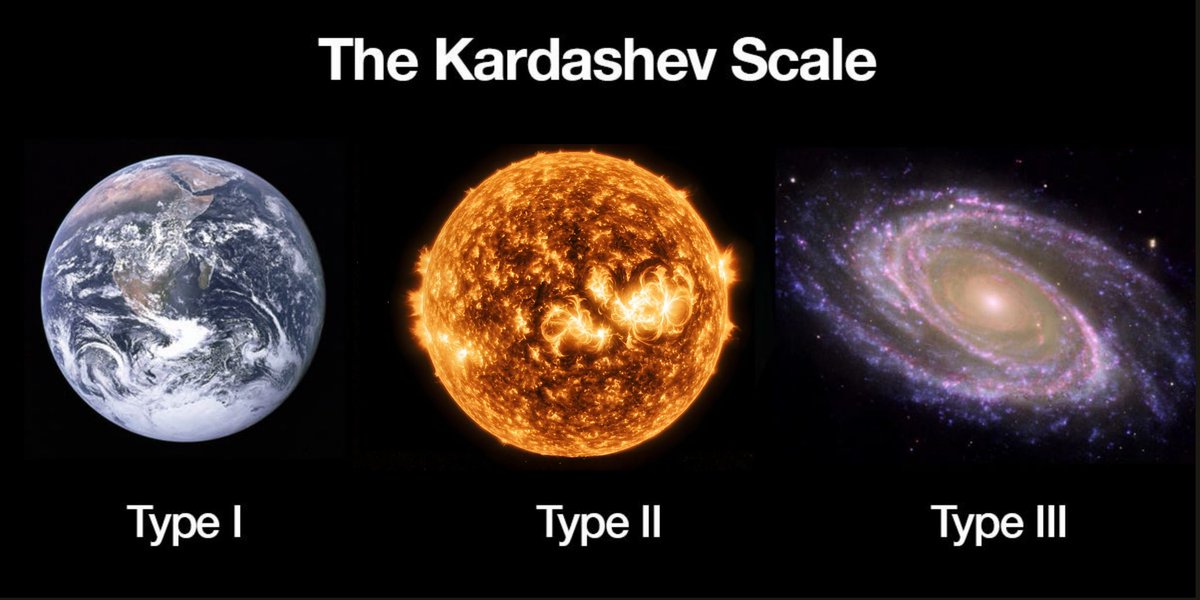
When you think in terms of the Kardashev scale, it becomes obvious that the Sun is the most overwhelming source of energy
Sigmund Freud's nephew wrote a 168-page book in 1928 that taught American corporations how to manufacture desire, and almost every advertising campaign and political messaging strategy you have ever seen still runs on the playbook he wrote a century ago. His name was Edward Bernays. The book is called Propaganda. And the strangest thing about it is that he was completely open about what he was doing. He opened with one of the most chilling sentences ever published in a non-fiction book: “The conscious and intelligent manipulation of the organized habits and opinions of the masses is an important element in democratic society. Those who manipulate this unseen mechanism of society constitute an invisible government which is the true ruling power of our country.” He was not warning you about this. He was advertising his services. Bernays had figured something out that nobody else in the early 20th century had put into words. The old model of selling things to people was broken. You could not just describe a product and expect people to buy it. Humans do not make decisions based on information. They make decisions based on emotion, identity, and social pressure, then construct a rational story afterward to explain what they already wanted to do. His uncle Sigmund Freud had spent decades documenting this in clinical psychology. Bernays took that work and pointed it at consumer markets and political campaigns. The case study that made him famous is the one almost nobody knows the full story of. In 1929, the American Tobacco Company hired him because women were not buying cigarettes. Smoking in public was considered scandalous for women at the time. The market was cut in half by social taboo and the company could not figure out how to break through. Bernays did not run an ad campaign. He hired a psychoanalyst to figure out what cigarettes symbolically meant to women. The answer that came back was that cigarettes represented male power, and the taboo against women smoking was a symbol of male dominance over female freedom. So he staged an event. He recruited a group of fashionable young women to march in the 1929 New York Easter Parade and light cigarettes in public at a coordinated moment. He tipped off the press in advance and told them to expect a feminist demonstration. He named the cigarettes "torches of freedom." The photographs ran on the front page of newspapers across the country. Within a few years, female smoking rates had jumped. He had not sold cigarettes. He had sold liberation, and the cigarette came along for the ride. The mechanism underneath every move he ever made is the part you should not forget. He never sold the product. He sold the identity the product represented. He never argued with the audience. He restructured the environment until the conclusion he wanted felt like the audience's own idea. He never appealed to reason. He appealed to the unconscious associations people already had and quietly attached his client's product to those associations. Every influencer marketing campaign, every political ad, every Super Bowl commercial that makes you feel something without telling you why, every news segment that frames a story before you have time to think about it, is running a version of his original system. He died in 1995 at the age of 103. He gave interviews in his final years admitting that he had helped overthrow a democratically elected government in Guatemala in 1954 by manipulating American public opinion against it. He said it without regret. He was proud of the work. The book is 168 pages. It is in the public domain. You can read it in one evening. Almost nobody who is being manipulated by his methods has ever opened it.


Scientists mapped a piece of brain the size of half a grain of rice. One-millionth the size of the human brain. It took them a year and over 1.4 million gigabytes to scan it. They found over 57,000 cells, 150 million synapses, and even some new structures they didn't know existed. Mapping the entire human brain in this level of detail would require all the data storage generated on Earth in a year + a 140-acre data center. But the human brain itself can hold up to ~2.5 million gigabytes of information - enough for ~3 million hours of HD video or 342 years of continuous viewing. It can process roughly 10 quadrillion calculations per second - enough processing power to run over 4,000 high-end gaming PCs all operating at peak ability. And it only runs on the amount of power needed for a single dim light bulb. No technology even comes close to doing what the brain can do. The more we learn about biology, the more complex it becomes. This is God's Glory on display.
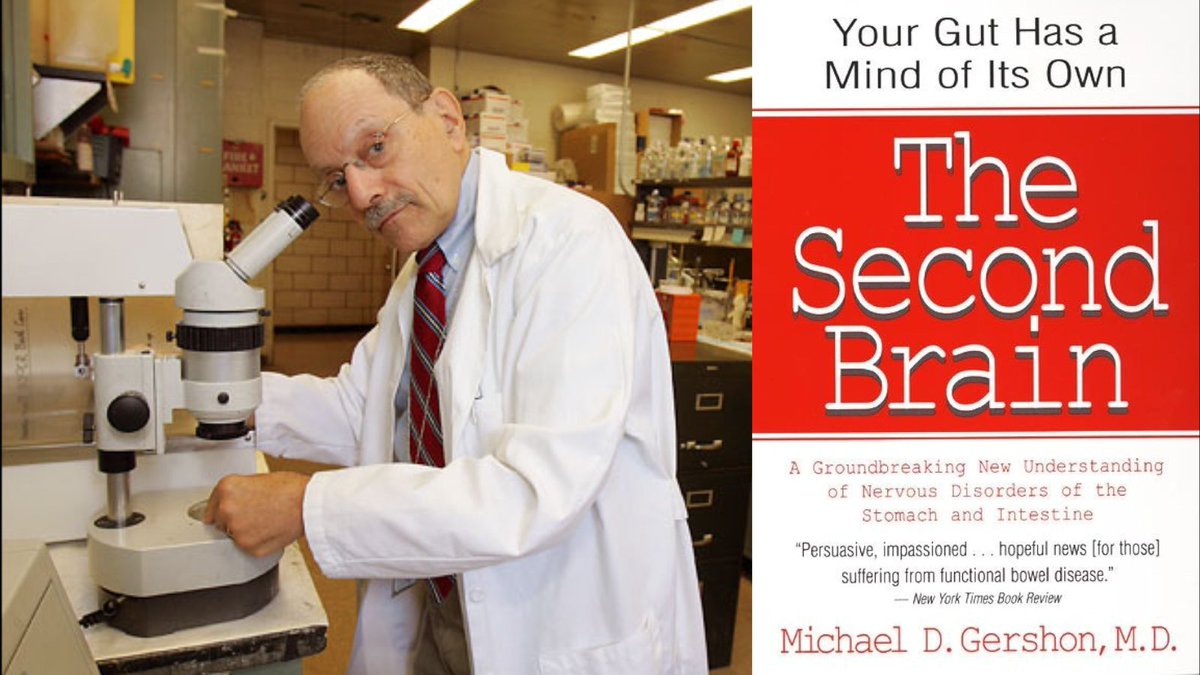
A neurobiologist at Columbia spent 30 years proving that the gut has its own brain, and the day he finally published the book that named it, almost every psychiatrist in America stopped returning his calls. His name is Michael Gershon. He runs the Department of Anatomy and Cell Biology at Columbia University Medical Center in New York, and the field he built from the ground up is called neurogastroenterology in short brain-gut axis. The book that announced it to the world was published in 1998, and the title alone tells you everything about what he was up against. He called it The Second Brain. The claim sounded like science fiction in the 1990s. Gershon was saying that the human gut contains its own fully functional nervous system, with around 100 million neurons embedded in the walls of the alimentary canal, which is the nine-meter tube running from your esophagus to your anus. That is more neurons than your entire spinal cord, and more than your entire peripheral nervous system put together. The gut was not just digesting food. It was running its own intelligence, with its own reflexes, its own memory, and its own way of deciding what to do without asking the brain in your head for permission. The medical establishment treated this as borderline heretical when he first started publishing it. The brain was supposed to be the command center. Everything else was supposed to be the periphery. A second brain in the belly did not fit the architecture anyone had been taught. Then the data started piling up, and it was impossible to argue with. The first finding that broke the old model was about serotonin. You might have heard Andrew Huberman talking about it on his podcasts. Serotonin is the neurotransmitter associated with mood, well-being, sleep, and depression. Every antidepressant on the market targets it. The assumption for decades was that serotonin was a brain chemical, produced in the brain, regulated in the brain, and responsible for what happened inside the brain. Gershon's lab showed that 90 to 95 percent of the body's serotonin is not produced in the brain at all. It is produced in the gut, by specialized cells called enterochromaffin cells embedded in the intestinal lining. Your stomach and intestines are the largest serotonin factory in the human body, and the brain in your skull is producing only a tiny fraction of what is circulating below your neck. The second finding was even harder to swallow. The vagus nerve is the longest cranial nerve in the body, running from the base of the brain down through the neck, the chest, and into the abdomen, where it branches into the gut. For most of the 20th century, doctors assumed the vagus was the brain's way of giving orders to the digestive system, in the same way the brain gives orders to the rest of the body. The actual measurements showed almost the opposite. Roughly 90 percent of the fibers in the vagus nerve are carrying signals upward, from the gut to the brain, and only a small fraction are carrying signals downward. Your gut is sending nine times more information to your head than your head is sending to your gut. The bandwidth is wildly asymmetrical, and almost all of it is going in a direction the medical textbooks had quietly been wrong about for decades. The implication of those two findings together is what changed psychiatry. If most of your serotonin is being produced in your gut, and most of the information flowing through your vagus nerve is moving from your gut to your brain, then your mood is being shaped from the bottom up far more than it is being directed from the top down. The feeling of dread before a difficult meeting. The sudden clarity after a good meal. The low-grade anxiety that will not go away no matter how much you talk through it. All of it is downstream of signals that started below your diaphragm. A 2019 study at McMaster University put the final piece in place. Researchers gave mice oral antidepressants and watched what happened. The drugs activated the vagus nerve from the gut side, and the gut-to-brain signaling was what produced the antidepressant effect. When they cut the vagus nerve and tried the same drugs, the antidepressant effect disappeared completely. The drug was not working on the brain directly. It was working on the gut, and the gut was working on the brain. The follow-up research on the microbiome made the connection even tighter. Mice raised in completely sterile environments with no gut bacteria produced about 60 percent less serotonin in their intestines than normal mice. When the bacteria were reintroduced, serotonin production returned to normal. The trillions of microorganisms living in your digestive tract are not passengers. They are running the factory that makes the chemical your antidepressant is trying to manipulate. The most haunting line from Gershon's interviews is the one I keep coming back to. He said the second brain does not do philosophy or poetry, and it cannot help you write a novel. But it is the brain that decides whether you wake up in the morning feeling like the day is full of possibility or feeling like something is wrong before anything has even happened. The mood you assume your conscious mind is generating from your thoughts is mostly being generated underneath you, by a nervous system you cannot feel and cannot consciously access, in an organ you have spent your entire life thinking about as a digestion machine. The decision your gut makes about how you are going to feel arrives in your head a fraction of a second before your brain catches up to it. The conscious thought is the explanation your mind invents for a verdict that has already been reached somewhere lower. You did not feel uneasy because you were thinking dark thoughts. You started thinking dark thoughts because your gut was already uneasy.

Elon Musk just described how the entire government operates in a single sentence. Musk: “Paying people to do nothing doesn’t make sense.” Then he told a Milton Friedman story that should terrify every bureaucrat on the payroll. Friedman watched workers digging ditches with shovels. He suggested they use excavators instead. Someone pushed back. “But then we’re going to lose a lot of jobs.” Musk: “Friedman says, well, in that case, why don’t you have them use teaspoons?” One sentence. That’s all it took to gut the entire logic of modern government. The teaspoon is not a punchline. It is the actual policy. Every agency that would cease to exist if it actually solved the problem it was created for. Every department that measures success by headcount instead of output. Every approval that routes through nine desks before someone can say yes. Teaspoons. The system doesn’t want excavators. Excavators finish the job. And a finished job is the one thing the system can’t afford. So it hands you a teaspoon. Calls it a career. Gives you a pension for never asking why the ditch took forty years. But this isn’t about laziness. It’s about control. A person digging with a teaspoon doesn’t have time to build something better. Doesn’t have the energy to question the plan. Doesn’t have a thought left to ask if the ditch even needed digging. Busy people don’t ask dangerous questions. That’s the point. The economy doesn’t run on productivity. It runs on the appearance of productivity. Millions of people sit at desks right now doing work a single script could replace by morning. They know it. Their managers know it. The people who sign their budgets know it. But the teaspoon stays in their hand. Because the moment you hand someone an excavator, they finish by noon. And a person with a free afternoon starts thinking. Starts building. Starts wondering why they needed permission to dig in the first place. That’s the thing the system can’t survive. Not unemployment. Free time. Musk didn’t tell a joke on Rogan. He described the longest con in modern governance. Keep them digging. Keep them busy. Keep the teaspoon in their hand so they never look up long enough to see the ditch was pointless from the start. Friedman told that story sixty years ago. He meant it as a warning. The system heard every word. It just made sure everyone kept calling it a joke so no one would recognize it as a confession.

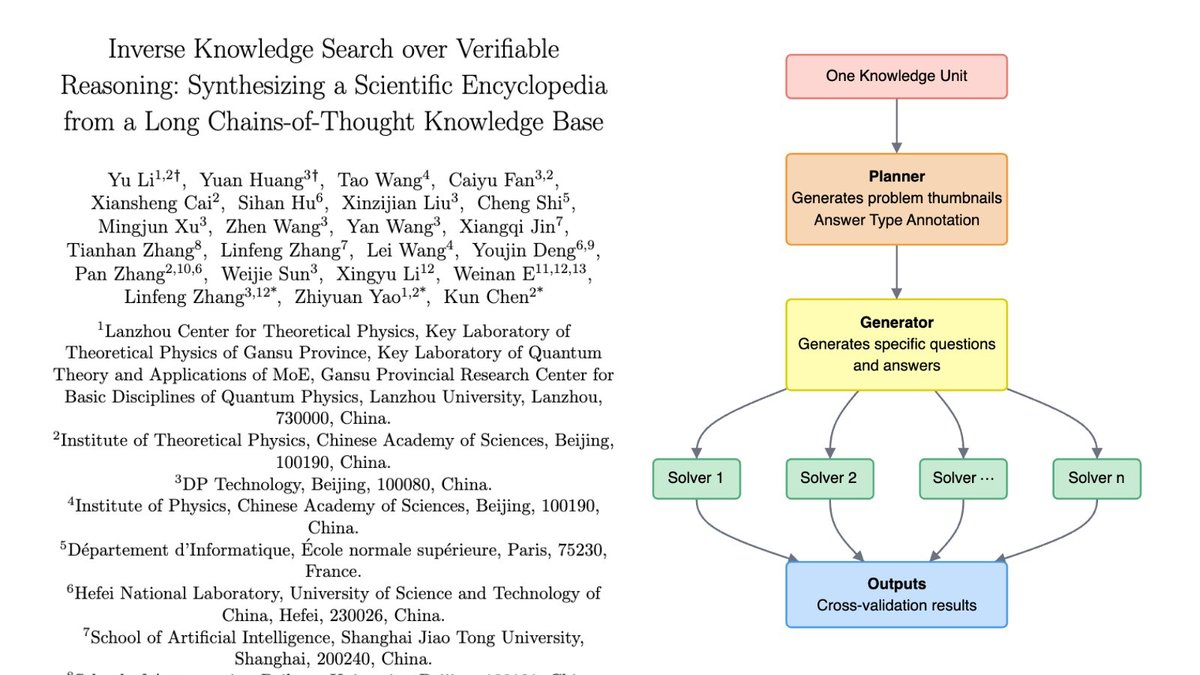
China has open-sourced a Wikipedia's replacement and it exposes the fatal flaw in how we store ALL human knowledge. Right now, every textbook, research paper, and Wikipedia article suffers from a massive problem. Researchers call it "reasoning compression." When humans write down knowledge, we write down the conclusions. We skip the messy, step-by-step logic it took to get there. We record the "what." We completely delete the "how" and the "why." This creates the "dark matter" of science, the invisible pathways that actually connect different concepts together. Because of this, we can't verify knowledge easily. We just have to blindly trust the authority who wrote it. Now, researchers just dropped a paper that completely fixes this. They built SciencePedia. An emergent encyclopedia built entirely by AI. But they didn't just ask an LLM to write articles. That would just replicate the same compressed, hallucinatory garbage. Instead, they did something genius. They gave an AI agent a curriculum of 200 university courses and told it to generate 3 million first-principles questions. Then, they had multiple independent AI models solve every single question step-by-step, showing their work in Long Chains-of-Thought. They threw out anything that couldn't be mathematically or logically verified at the endpoint. What they got was a massive, verified knowledge base of pure, unadulterated reasoning. Then, they built an "inverse search engine." When you search for a concept, it doesn't just look up the definition. It retrieves every single logical derivation and causal pathway that leads to that concept across different disciplines. Finally, an AI synthesizes those raw, verified chains into a human-readable article. The results are staggering. The initial version already has 200,000 entries spanning math, physics, chemistry, biology, and computation. Factual errors plummeted by 50% compared to standard AI. Knowledge density skyrocketed. We have spent decades building search engines to look up facts. But facts without the reasoning behind them are just blind memorization. The future of knowledge isn't about looking up answers. It's about uncompressing the logic that makes the answers true.
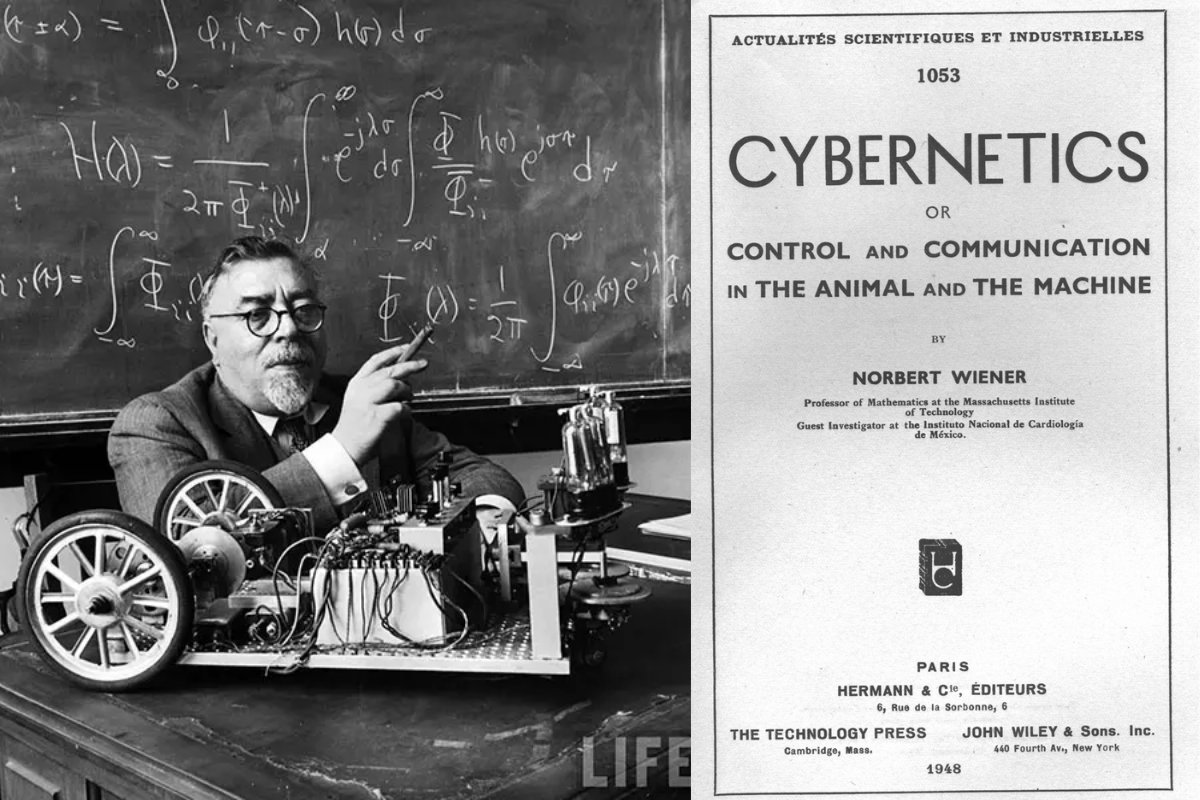
A child prodigy who finished his Harvard degree at 14 and his PhD at 17 sat down in 1948 and wrote a single book that invented the entire conceptual vocabulary we still use to talk about AI, robotics, self-driving cars, and reinforcement learning. He never got the credit. Most people have never heard his name. His name was Norbert Wiener. The book was called Cybernetics. Every feedback loop running inside every system you interact with today traces back to one problem he was handed during World War II. The problem was this: how do you aim a gun at a fast-moving airplane? By the time your shell arrives, the plane is somewhere else. You cannot aim at where the plane is. You have to aim at where the plane will be. And the plane's pilot, knowing this, is constantly changing course to make that prediction wrong. Wiener spent years on this. What he built to solve it was not a better gun. It was a new science. He noticed something that nobody had formally described before. The gun system and the human nervous system were solving the same problem using the same method. You observe where the target is. You compare it to where you want to hit. You calculate the gap. You correct. You observe again. He called that loop feedback. Not in the casual sense people use it today. In the precise mathematical sense. A signal goes out. The result comes back. The system compares the result to the goal. The gap between them drives the next action. The loop closes. That mechanism, exactly as Wiener described it in 1948, is what runs inside every thermostat, every autopilot, every cruise control system, and every AI training loop on the planet right now. When GPT-4 learned to answer questions better, it was doing feedback. When AlphaGo learned to play Go, it was doing feedback. When a self-driving car adjusts its steering because it drifted two inches toward the curb, it is doing feedback. The word they all use, the concept underneath the word, the mathematics formalizing the concept, all of it came from one book written by a child prodigy in 1948 who was trying to figure out how to shoot down a plane. The deeper insight was what he proved about living systems and machines. Before Wiener, biology and engineering were treated as completely separate domains. Organisms adapted. Machines calculated. The idea that you could describe both using the same mathematical framework was not just unusual. It was considered a category error. Wiener proved it anyway. He showed that a brain correcting a reaching movement and a missile correcting its trajectory were running mathematically identical control loops. The hardware was different. The math was the same. Living systems and engineered systems obeyed the same laws once you understood what those laws actually were. He named the field after the Greek word for steersman. Kubernetes. Cybernetics. The person who holds the rudder, reads the water, and adjusts constantly to hold a course through a current that is always pushing the ship somewhere else. That is the mental image he wanted. Not a machine that executes instructions. A system that responds to its own results. The third thing he did is the part almost nobody connects to modern AI. In 1948, Wiener spent an entire chapter of Cybernetics warning about what would happen when machines that learn from feedback were given control over consequential decisions. He described the displacement of workers not as a distant possibility but as a near-term certainty. He wrote about the ethical risks of building systems that optimize for measurable proxies of human values rather than actual human values. He described in plain language what alignment researchers today call Goodhart's Law without using that name, 25 years before Charles Goodhart published anything. He was a mathematician in 1948 writing about problems that AI safety researchers are still trying to solve in 2026. The book is dense in places. The equations are real and the sections on statistical mechanics require actual attention. But Wiener knew this, which is why in 1950 he published The Human Use of Human Beings, which is the same book with all the math removed. Same ideas. Same warnings. Written for anyone who reads English. That second book has been in print for 75 years and almost nobody in tech has read it. Wiener died in 1964 at a conference in Stockholm. He collapsed mid-conversation between sessions. He was 69. He did not live to see a personal computer. He did not live to see the internet. He never saw reinforcement learning, neural networks, or the AI systems that run almost entirely on the mathematical architecture he designed while trying to solve a World War II gunnery problem. Every AI lab in the world today is building systems that run on his framework. Almost none of the people building those systems know his name. The field he founded, cybernetics, mostly disappeared as a word. The ideas did not disappear. They dissolved into every other field. Control theory. Cognitive science. Computer science. Neuroscience. AI. They each took a piece of what he built and called it their own terminology. The word that survived is the one that proves he invented it. Feedback. You use it every day. You use it in code reviews, in meetings, in conversations about AI performance. Every time you use it in the technical sense, meaning a signal that closes a loop between output and goal, you are using the exact definition Wiener wrote down in 1948. He gave the word its meaning. Most people using it have never heard of him. The Human Use of Human Beings is free on archive. Cybernetics is in print and available anywhere books are sold. His major essays are in academic archives at no cost. The man who built the foundation of modern AI was writing about its dangers before the first commercial computer existed. Most people building AI today have never read a word he wrote.

Jason Scott @textfiles
52K Followers 629 Following Proprietor of https://t.co/sdyjXHCZF7, historian, filmmaker, archivist, storyteller. Works on/for the Internet Archive. Rank Amateur. Pitiful Man.
Charles Hawn @CharlesHawn66
4K Followers 1K Following I have loved computers since my Timex Sinclair in 1982. Then my #C64 that I got for Xmas in 1983, which I still use. #Commodore #RetroComputing #retrogaming
/ Judge Drokk / @JudgeDrokk
13K Followers 4K Following Founding & longest standing member of Amiga demoteam 'ANARCHY' '89-'93. #CBM64 #AMIGA #MiSTer #DEMOSCENE #VINYLYTE #GAMES #MAGS #BOOKS #ZZAP_AMIGA #MORE
Mike Mika @MikeJMika
17K Followers 10K Following Game, TV & Film dev. Digital Eclipse, NextGen, DK Pauline, Atari:GameOver, #IDARB: Man(child)-of-Action.
Robin @ 8-Bit Show An... @8BitShowAndTell
9K Followers 4K Following Programmer, gamer, collector of retro computers and video games, making 8-bit Youtube videos, games with @P1XLgames, nerd music with @BedfordLvlExp
Juanjo Muñoz @Juanjoide
2K Followers 2K Following Vivo en Japón. Como ramen. Fui uno de los fundadores de @AventurasAD. Y del @CAAD_es. He escrito muchos fanzines. Y un libro. O dos.
time to go @JohnKennedyEsq
7K Followers 6K Following gone to @GrantMeStrength@hac https://t.co/Gsrs1h5uFQ
Stefan Vogt @8bit_era
4K Followers 473 Following Artist and producer. Vox/Git/Synths for @1200light_years
Richard Garriott @RichardGarriott
48K Followers 3K Following President Emeritus @ExplorersClub; a Videogame Industry Founding Father; Astronaut, Aquanaut, Polar Explorer; Family: @Ronin_British, @Kinga_British
Mark Hardisty @hardistymark
3K Followers 2K Following Midwife to @gamesbritannia. Loves Elite and The Cannonball Run. 3 Education Awards. Author of The Classic Adventurer & the definitive Gremlin Graphics book.
Uto @uto_dev
593 Followers 440 Following Developing text adventures and engines since 1984. Z80 coder, 6502 also. ZX Spectrum in my heart, but also fond of C64, CPC and MSX. DOS was my favorite OS.
Clopas @ClopasLLC
213 Followers 268 Following Family-friendly video game development studio founded by Roxanne and Scott Adams. Text-based games, Conversational Adventure™ games, game updates, tech history.
OldTechAdverts @OldTechAdverts
8K Followers 5K Following Old Adverts from Tech, Games, Electronics and Engineering. Bring on the nostalgia. Plus also writing 3 chapters of SciFi stories.
Benj Edwards @benjedwards
12K Followers 1K Following Tech reporter, tech historian. Bylines Fast Company / The Atlantic / Retronauts / Creator https://t.co/Rh4KGhtWM0, The Culture of Tech
Fredrik Ramsberg @FRamsberg
333 Followers 176 Following Into Commodore computers, interactive fiction, programming and more
TimOfLegend @TimOfLegend
895K Followers 1K Following Did not pay for blue check! he/him official DF twitter: @doublefine Bugs: https://t.co/tzuedy0vyz Press: [email protected]
Mark F. Grogan | Atar... @MarkFGrogan
3K Followers 1K Following Started off with the Atari ST in 1990, big love for late 90s PCs and I also like Amiga 💾 💿 Setting up resources to develop video games with Microsoft Direct X

Laura 🔜 PRGE (Port... @IndieLauraSDG
4K Followers 1K Following Co-founder & Producer @ Stirring Dragon Games. Making 8bit RPG @UnknownRealmSDG. Husband + wife gamedev w/ @stirringdragon. Mom of 5. Rush fan.
TI99'er UK @MacattackAm
247 Followers 49 Following Always looking to buy TEXAS INSTRUMENTS TI99/4A items.
Paul Kelly @pop_smoke78
146 Followers 2K Following
Sophia @YashJaddhav
5 Followers 430 Following horse girl energy, city girl budget 🐴 kind, chaotic & full of surprises

Kirsten Snow @anyatrader7
33 Followers 412 Following Don't click any links in replies & | Daytrader | Stocks | & Master's in Economics | Trading Chat FREE TRIAL
Viking goddess🐝 @blue6_good
1K Followers 1K Following Transgenderism and homosexuality have long been regarded as mental illnesses. When will the U.S. government finally take these issues seriously?

Sophia @Moyowright1
45 Followers 918 Following horse girl energy, city girl budget 🐴 kind, chaotic & full of surprises
Monika Khanna @Monikamokhanna
501 Followers 864 Following I am an entrepreneur and investor with a passion for business growth, innovation, and continuous learning. After moving to the United States,I built my career !
Olyvia @oliviaastar99
30 Followers 1K Following soft-hearted dreamer who loves good playlists & sweet tea 😊☀️

Bobby Lisa @BobbyLisatq3m
0 Followers 30 Following


Bub Studios @1984theBaseball
54 Followers 883 Following Manage your team, call every pitch, and out-strategize the CPU in this pitch-by-pitch 1984 baseball simulation. #Retrogaming #BaseballSimulation #1984

Lucas Gimenes @lucasmgimenes
57 Followers 1K Following
Halle Berry @HalleBerry9h
178 Followers 7K Following It's not what you look at that matters, it's what you see." -Thoreau
Daniel Rearick @DanielRear12545
1 Followers 189 Following

Rork James @RorkJames0011
2K Followers 7K Following Digital Artist /No Ai • Character design • Game/board game art • Book/worldbuilding illustrations. #VTuberAssets #IndieDev#open commissions
MarlaPosh @MarlaPoshFL
949 Followers 4K Following The School Revolution: A New Answer for Our Broken Education System~by Ron Paul, rEVOLution Tampa ‘12. Onward!

Charles Oppermann �... @ChuckOp
693 Followers 1K Following Creator of software. Former @Microsoft, @Amazon, now crushing malware at @Malwarebytes. Focus on engineering and helping others. Pilot and proud father.

brian starr 🐀🥰 @brianstarr
215 Followers 180 Following Roof Rats are friendly, playful and gentle pets. AKA Rattus rattus, Black Rats or Ship Rats. They come in blonde, agouti and black. [email protected]

Retro Replay @RetroReplayer
333 Followers 1K Following I love retro gaming. Specifically the years 1986 through 2006. #RetroReplayPick #RetroReplayDYP #RetroReplayFYI #RetroReplayLongplay #RetroReplayTops
EmP 🇪🇺🇺🇦�... @EmP_70
239 Followers 3K Following

Mad Overlord Studios @Mad__Overlord
17K Followers 18K Following Insane Super Villian. Author of the #grimfuture series. Nothing I say should be taken seriously. I'm just here to annoy everyone. 🇺🇸 🇵🇱
Jack Tomlinson @t0mlinjack
228 Followers 1K Following Christian| Dad to 4 | Fractional CIO/CTO | Tech-Founder of $200M SaaS | America can be the best in Health/Education/Lifestyle not ~worst!
Simon May @nemesissm2010
27 Followers 309 Following Cisco Network Architect for Global Information company.
Text Adventure Studio @text_adv_studio
3 Followers 11 Following

BrewOtaku Homebrew Re... @brewotakumag
1K Followers 2K Following Where new games keep old systems alive

MarkyX 🌹 MafiaBlit... @Marky_X_
2K Followers 532 Following Game designer. Game Critic at @meeplemountain. Creator of Mafia Blitz. Saying the quiet parts of the tabletop industry out loud.
Frank Bergknecht @fbergknecht
1 Followers 923 Following
Friction Logic - Spat... @CARL_OS_NGI
49 Followers 38 Following This is an educational account and the posts are intended to teach.
IllegallySighted @BGFH79
2K Followers 2K Following Hello, my name is Jesse Anderson, aka IllegallySighted on many areas of the Internet. I am a technology, gaming, and XR accessibility advocate & consultant.
isofarro (@isofarro@m... @isofarro
874 Followers 882 Following Full-stack engineer, news junkie, ZX & CPC retro gamer, chess. Built the ZOE Covid Symptom Study app. I like muffins. #chesspunks #retrogamer
O𝓷k𝓮I Jo 🍭 �... @JoachimHesse
23K Followers 2K Following Godfather of gaming ★ unknown life form ★ addicted to social media ★ The views expressed on this account represent my personal point of view only
Stephen Brough @SRBrough
101 Followers 4K Following Android dev | Semi-amateur wood worker and electronics tinkerer | Stubbornly leaving my header photo blank since 2012.

DJ Fizz @TheDJFizz
131 Followers 565 Following Well Seasoned Turntabler & Electro Funkology Host | Retro Gamer | Father | 🏴 🇮🇪 🇺🇸 ✝️
Peugeot 406 Coupe @P406Coupe
614 Followers 2K Following Bu sıralar Megane Coupe K4M - Skoda Superb PD130 AWX - Fiat Panda 4x4 0.9 Twin Air
TeachUrb @Teachurble
208 Followers 5K Following Passionate about storytelling in gaming and the arts.
digispud 🏴... @digispud
1K Followers 3K Following Programmer. Freedom. Bitcoin. Sci-fi. Linux. Dog.
Jason Scott @textfiles
52K Followers 629 Following Proprietor of https://t.co/sdyjXHCZF7, historian, filmmaker, archivist, storyteller. Works on/for the Internet Archive. Rank Amateur. Pitiful Man.
Lord Arse! @Lord_Arse
112K Followers 48 Following
Ken Williams @caboken
8K Followers 15 Following Game company CEO (Sierra On-Line, now Cygnus), Ship Captain (MV North Star), and best selling author. Exploring the world with my wife Roberta and our doggies.
Charles Hawn @CharlesHawn66
4K Followers 1K Following I have loved computers since my Timex Sinclair in 1982. Then my #C64 that I got for Xmas in 1983, which I still use. #Commodore #RetroComputing #retrogaming
Mike Mika @MikeJMika
17K Followers 10K Following Game, TV & Film dev. Digital Eclipse, NextGen, DK Pauline, Atari:GameOver, #IDARB: Man(child)-of-Action.
Juanjo Muñoz @Juanjoide
2K Followers 2K Following Vivo en Japón. Como ramen. Fui uno de los fundadores de @AventurasAD. Y del @CAAD_es. He escrito muchos fanzines. Y un libro. O dos.
Stefan Vogt @8bit_era
4K Followers 473 Following Artist and producer. Vox/Git/Synths for @1200light_years
Richard Garriott @RichardGarriott
48K Followers 3K Following President Emeritus @ExplorersClub; a Videogame Industry Founding Father; Astronaut, Aquanaut, Polar Explorer; Family: @Ronin_British, @Kinga_British
Mark Hardisty @hardistymark
3K Followers 2K Following Midwife to @gamesbritannia. Loves Elite and The Cannonball Run. 3 Education Awards. Author of The Classic Adventurer & the definitive Gremlin Graphics book.
Uto @uto_dev
593 Followers 440 Following Developing text adventures and engines since 1984. Z80 coder, 6502 also. ZX Spectrum in my heart, but also fond of C64, CPC and MSX. DOS was my favorite OS.
Scott Miller - Apogee... @ScottApogee
31K Followers 152 Following Created Apogee (1990) and Apogee's "3D Realms" label (1994). Also co-created Duke Nukem, Max Payne, Prey and others. Follow to see game history revealed!
Clopas @ClopasLLC
213 Followers 268 Following Family-friendly video game development studio founded by Roxanne and Scott Adams. Text-based games, Conversational Adventure™ games, game updates, tech history.
John Romero 🤘🏽 @romero
214K Followers 628 Following FPS is my DNA. Game Director @RomeroGamesLtd | New FPS in the works | DOOM, DOOM II, Quake, Wolfenstein 3D, Heretic, Hexen, SIGIL, SIGIL II.
OldTechAdverts @OldTechAdverts
8K Followers 5K Following Old Adverts from Tech, Games, Electronics and Engineering. Bring on the nostalgia. Plus also writing 3 chapters of SciFi stories.
Benj Edwards @benjedwards
12K Followers 1K Following Tech reporter, tech historian. Bylines Fast Company / The Atlantic / Retronauts / Creator https://t.co/Rh4KGhtWM0, The Culture of Tech
Fredrik Ramsberg @FRamsberg
333 Followers 176 Following Into Commodore computers, interactive fiction, programming and more

Ethan Johnson (Play H... @GameResearch_E
2K Followers 56 Following Independent games researcher, Ethan Johnson. Preserving gaming history! Patreon: https://t.co/ZIHZNcFtm5 Editor @GamingAlexandri
Laura 🔜 PRGE (Port... @IndieLauraSDG
4K Followers 1K Following Co-founder & Producer @ Stirring Dragon Games. Making 8bit RPG @UnknownRealmSDG. Husband + wife gamedev w/ @stirringdragon. Mom of 5. Rush fan.
Everything C64 @EverythingC64
7K Followers 3K Following 🕹️ Former employee at Interceptor Micros. Passionate Commodore 64 fan with a special fondness for the VIC-20 🩵

Kimi.ai @Kimi_Moonshot
363K Followers 137 Following Built by Moonshot AI to empower everyone to be superhuman. PR: [email protected] DC: https://t.co/wBsBTn6fmE
Alejandro AO 🤗 @_alejandroao
4K Followers 493 Following AI Education | Developer Advocate @huggingface
Rork James @RorkJames0011
2K Followers 7K Following Digital Artist /No Ai • Character design • Game/board game art • Book/worldbuilding illustrations. #VTuberAssets #IndieDev#open commissions
Charles Oppermann �... @ChuckOp
693 Followers 1K Following Creator of software. Former @Microsoft, @Amazon, now crushing malware at @Malwarebytes. Focus on engineering and helping others. Pilot and proud father.
brian starr 🐀🥰 @brianstarr
215 Followers 180 Following Roof Rats are friendly, playful and gentle pets. AKA Rattus rattus, Black Rats or Ship Rats. They come in blonde, agouti and black. [email protected]
Charly Wargnier ♨�... @DataChaz
181K Followers 49K Following Living and breathing LLMs, agents, automation and data science. prev. @Snowflake | @Streamlit | @Samsung • my ♥ is open-source • 📩 DM for Collabs
Akshay 🚀 @akshay_pachaar
290K Followers 501 Following Simplifying LLMs, AI Agents, RAG, and Machine Learning for you! • Co-founder @dailydoseofds_• BITS Pilani • 3 Patents • ex-AI Engineer @ LightningAI
Shubham Saboo @Saboo_Shubham_
121K Followers 492 Following Senior AI Product Manager @google | Open Source Awesome LLM Apps Repo (#1 GitHub with 139,000+ stars) | Author of books on GPT-3 & Neural Search | My views
Kirk Borne @KirkDBorne
493K Followers 3K Following Founder of @LeadershipData. Global Speaker. Leading Social & B2B Influencer of Data Science, AI, ML. PhD Astrophysics @Caltech. AAS Legacy Fellow (@AAS_Office)
Santiago @svpino
456K Followers 600 Following Computer scientist. I teach hard-core AI/ML Engineering at https://t.co/THCAAZcBMu. YouTube: https://t.co/pROi08OZYJ
Python Coding @clcoding
654K Followers 154 Following Lets Learn #Python with tips and tricks. Free Python Course: https://t.co/l9NKxZWrh7 biz : [email protected] AI Community Partner. DM for Everything.
Bojan Tunguz @tunguz
306K Followers 8K Following Founder and CEO @tabul_ai. Creator of @trainxgb. ML ex Nvidia. Data Scientist. Physicist. Catholic. Husband. Father. Stanford Alum. Memelord. e/xgb. AMDG.
Data Science Dojo @DataScienceDojo
229K Followers 938 Following We make learning data science and LLMs easy! Join the community of 10,000+ professionals. #DSDojo
Dan Kornas @DanKornas
99K Followers 454 Following AI/ML Engineer AI Tools Ranked: https://t.co/8ezZSwN2WP Newsletter: https://t.co/NMMvPSmzua Dans AI Lab: https://t.co/uIBlLyXFKu
Pratham @Prathkum
449K Followers 972 Following I talk about web, AI, API, and social • Building experiences at @APILayer • Prev @Rapid_API @HyperspaceAI
Rohan Paul @rohanpaul_ai
158K Followers 7K Following Compiling in real-time, the race towards AGI. 🗞️ Get my daily AI analysis newsletter to your email 👉 https://t.co/6LBxO81tfN
Arthur MacWaters @ArthurMacwaters
95K Followers 998 Following cofounder @legionhealth building abundant healthcare for all with AI hiring engineers | prev @princeton @mckinsey
Jack Tomlinson @t0mlinjack
228 Followers 1K Following Christian| Dad to 4 | Fractional CIO/CTO | Tech-Founder of $200M SaaS | America can be the best in Health/Education/Lifestyle not ~worst!
CopyRebeldia @CopyRebeldia
155K Followers 117 Following What will you do when AI can do almost anything? [email protected]
Text Adventure Studio @text_adv_studio
3 Followers 11 Following
BrewOtaku Homebrew Re... @brewotakumag
1K Followers 2K Following Where new games keep old systems alive
Atari Scene News @Philsan69
2K Followers 255 Following by Filippo 'Philsan' Santellocco, Swiss retrocomputers user, coder, preservationist and collector. Atari and Jay Miner's machines (Atari VCS, 800, Amiga) fan.
Friction Logic - Spat... @CARL_OS_NGI
49 Followers 38 Following This is an educational account and the posts are intended to teach.
isofarro (@isofarro@m... @isofarro
874 Followers 882 Following Full-stack engineer, news junkie, ZX & CPC retro gamer, chess. Built the ZOE Covid Symptom Study app. I like muffins. #chesspunks #retrogamer
TeachUrb @Teachurble
208 Followers 5K Following Passionate about storytelling in gaming and the arts.

Willie Koeper @williekoeper
604 Followers 3K Following The concepts 'centrism' and 'extremism' are ideological constructs which impose a liberal typological schematic upon political consciousness.
What they don't teach... @notoncelta
2K Followers 860 Following ELT bloggers offering advice, ideas and inspiration. Retweets do not reflect endorsement of opinions


Juri Strumpflohner @juristr
18K Followers 4K Following Builder for 20+ years⋅working on @nxdevtools and @trypolygraph ⋅ Speaker ⋅ Dad, martial artist ⋅ https://t.co/AwpABEnt4Q
Ihtesham Ali @ihteshamali
51K Followers 298 Following Founder and writer at https://t.co/HIyoWJcZn3. Helped 100+ founders, companies and creators build brands on X. Writing about AI, open source, and business.
Jane Whittaker @WhittakerGames
1K Followers 2K Following 45 years in entertainment. AvP co-dev, Atari, MGM, EA, Bullfrog et al. currently working on "Codename Xeno" on PC and consoles.
Lukasz Olejnik @lukOlejnik
32K Followers 266 Following Security & Privacy. Data Protection. Research & Development. Engineering. Analyst. Policy. W3C. Consultant. Author. [email protected] Ph.D, LL.M. @warstudies
Reza @rezasadx
25K Followers 299 Following Legal adviser and analyzer عاشق ایران.ارتشی سابق جبهه های جنگ با سابقه 3 سال خدمت در یک یگان تکاور هوابرد و محاصره شکن
Am Yisrael Chai 🇨�... @kyg_best
69K Followers 9K Following Breaking News | Jewish News | Israel Advocacy Proud Jew. ✡︎ Pro Israel. 🇨🇦🍁🇮🇱 Please Dm for Removal Copyright or Credit.
ballistikcoffeeboy @ballistikcoffee
975 Followers 1K Following indie journalist BCB. host of BALLISTIK COFFEE BOY, THAT ATARI SHOW, ATARI NEWSLINE, XPressO & More! celebrating ATARI since 2020! now exclusively on Rumble!
Kalshi Finance @Kalshi_Finance
103K Followers 51 Following Trade on financials, commodities, tech and everything else finance. Powered by @Kalshi
Robert Youssef @rryssf
41K Followers 53 Following Building @godofprompt & @prompt_copilot Agentic Memory and Context Engineering
Willis Eschenbach @WEschenbach
26K Followers 2K Following Generalist. Climate researcher. I'm happy to discuss anything, but expect an immediate block if you open the bidding by insulting me.
Allie K. Miller @alliekmiller
109K Followers 2K Following #1 Most Followed Voice in AI Business (2M followers). Former Amazon, IBM. Time100 AI. Fortune 500 and startup AI advisor, public speaker. AI-First courses in 🔗
Dr. Bob Thiel's Produ... @ProducerBNP
253 Followers 869 Following Media Relations for Dr. Bob Thiel who is a globally recognized biblical prophecy expert and host of the Bible News Prophecy program.
Eric Berger @SciGuySpace
438K Followers 768 Following Senior Space Editor at Ars Technica. Likes rockets. Author of the best-selling book on the Falcon 9 and Dragon, REENTRY. https://t.co/5HYUhJzFHZ
Frank Rundatz @FrankRundatz
2K Followers 1K Following Software Engineer since birth. Deep dives into running local AI models, retro computing and finance/crypto. Follow for daily technical insights and builds.
Jason Hiner @jasonhiner
26K Followers 4K Following Editor in Chief @TheDeepView • Technology is at its best when it brings out the best in us.
You might like