-
Tweets129
-
Followers12
-
Following129
-
Likes137
Your uptime dashboard is lying to you. Not on purpose, but it is. Here's the gap that should worry every operator: · Reported uptime across the industry: 98 to 99% · First-time charge success rate: around 71% Read those two numbers again. Your software says the charger is online, yet nearly one in three drivers who pull up still can't charge. A dead payment terminal. A connector fault. A handshake that fails. A CDR that never closes. The box says "available." The driver stands there, plugs in, and nothing happens. Every failed session is a lost session, a driver who won't come back, and a photo of a broken charger on the internet. Here's the uncomfortable part: you're probably measuring the wrong thing. Most software status tells you what the charger says about itself, but doesn't tell you whether anyone actually charged (hats off to the CPMS that do calculate usage and give % of smth broken, which I know some do) The fix could be a better dashboard, but also a second / third / fourth signal, from the session layer, the OCPI connection, that sees the charger the way a driver does. Did the session start? Did it complete? Did the money clear? We wrote about downtime at NetworkCore, link comment 📷 #EVCharging #CPO #CPMS

A question for every CPO in Latin America right now: Do you want the roaming Europe built, or the roaming Europe wishes it had built? You actually get to choose. That's the beautiful part. In the older markets roaming became a toll. You pay to be connected, your price disappears under a wholesale mark-up before the driver sees it, and you wait 30, 60, 90 days to be paid. They're all trying to escape that model now, and it's hard, because it's baked in. It will take time. LATAM has none of that baggage. You're building the chargers and the commercial rails at the same time, so we can skip the mistakes and adopt the better model directly. The painting is by the Bolivian artist Alfredo Román Bulacio. It fit a post about the region drawing its own picture instead of inheriting someone else's. The better model is simple: roaming that behaves like a sales channel, not a toll. Nothing to connect, nothing to hold. It earns only when it brings you a session, so its interest is yours. It pays fast. And it carries your own public price to the driver, intact. Don't import roaming into LATAM. Do it right here first, while the rules are still being written. We're building it. Here NetworkCore 📷 More in the comments 📷 #EVCharging #CPO #Roaming #LATAM

When someone says "white label EV charging software," what comes to mind? Usually this: take an app someone else built, change the colours, add your logo, ship it as yours. And that's exactly what it is... But here's the thing. That's not your product. It's a rented app wearing your brand. Fine, if a re-skinned app is all you want. Not fine if you're an OEM with telematics. Or a bank with your own flows. Or a fleet platform with real data. You hit the ceiling fast, and charging ends up an island beside your product, not built into it. That's why we've launched Just Charge at NetworkCore. Not a skin, but a deep integration. From the car's telematics to the front-end app. You decide how much you run, and how much we do. Hands-off if you want. Deeply embedded if you don't. So the real question isn't "can I change the colours?" Think. Read the blog post. Link in comment 📷 #EVCharging #WhiteLabel #DistributionPartners
Unpopular truth: the roaming hubs that built European and US charging solved the wrong half of the problem, and everyone's too polite to say it. Hubject and Gireve did something genuinely hard: they made networks talk to each other across borders, and they did it well - credit where it's due. But their whole model stops the moment money enters: - Your price becomes a wholesale input someone marks up - Cash for a session today lands in 30, 60, and sometimes 90 days - You pay a fee for the connection whether it brings you a driver or not - And you scope and build the integration yourself, sometimes they have help, but you pay.. - The EMSP also has to pay to connect, maintain connection... and usually the bigger the platform, the more drivers, the more they pay That's not roaming in my opinion... That's data exchange with an invoice attached.
We wrote about where traditional roaming integration stops, and the financial layer it was never built to carry. networkcore.org/ev-roaming-hub…
The most famous painting of anxiety ever made is a figure on a bridge, hands to its face, screaming at nothing in particular. It is roughly how the industry talks about charging anxiety. A vague dread everyone points at and nobody quite locates... So let me try to locate it. Charging anxiety has overtaken range anxiety as the number one reason people reject an EV. And the problem is: Not "will the battery last?" But "will I find a working charger, can I access it, will it work, and can I understand what it costs?" We keep answering an experience fear with hardware answers, more chargers, bigger packs, and wondering why the anxiety persists. Solve that and the objection stops being a scream, and it becomes a selling point. This is what we are working on @ NetworkCore #EVCharging #ChargingAnxiety #OEM

Fleets are usually told that scalable charging means depot infrastructure. Bigger grid connection, more chargers, smarter load management across the yard. That builds one half. The depot handles the predictable base, the vehicles that return to a known place on a known schedule. But it does not scale linearly. Forty vans charging at once can exceed 400kW, past the electrical capacity of most commercial sites, and the next vehicle can trigger a transformer upgrade measured in months. Worse, the depot cannot reach the half of fleet energy that actually moves: the away-from-base routes, the new cities, the punctual top-up mid-shift. You cannot pour concrete in every city your vehicles enter. That half does not scale through hardware. It scales through software. The James Rosenquist print below works by forcing fragments from unrelated worlds, a grocery bag, a window, a rack of lipsticks, onto one surface until they read as a system. Public fleet charging done badly looks the same: separate cards, separate apps, receipts in five currencies, an accounting collage the finance team quietly resists. Done well, it is one integration. The fleet plugs its existing management software into NetworkCore once, charges in any public charger, and every session, whatever the operator or country, resolves into a single reconciled invoice stream. The collage becomes one picture between your depot charging and public charging. The best scalable fleet charging is two halves. Right-size the depot for the base. Plug in for the rest. Link in comment 📷 #EVCharging #Fleets #FleetElectrification

Are you treating your chargebacks as a refund with extra paperwork? There is a difference: - a refund returns the money - a chargeback returns the money, adds a fee you never get back, damages your dispute ratio, and is won less than half the time even when you are plainly right. In #EVCharging the most common trigger is not fraud, but a driver who saw one price at the charger and found a different number on their statement days later. The Margarita Ivanova piece below says it better than I can. One event, two faces, neither of them happy. To the driver it feels reasonable. To the operator it is a loss with a penalty attached. The uncomfortable part is that most charging chargebacks are self-inflicted, and preventable. Fighting disputes after the fact is a losing strategy played well. At NetworkCore we run a ten-step identification sequence on every session, so a fraudulent one can be challenged or stopped before value moves, invisibly to everyone else. #Chargebacks #CPO

Everyone in this industry calls rural charging uneconomic. I think that framing is half wrong, and it lets us off the hook. Yes, density is thin and grid connections are painful. But the deeper problem is discovery: an urban charger gets found by accident, surrounded by traffic that was passing anyway. A rural charger has no ambient footfall at all: a driver arrives because something sent them there, in-car navigation, a fleet policy, a mapping app... Which means rural sites depend on demand aggregation more than urban ones, not less, yet we keep treating rural as a subsidy question and waiting for public money to make the numbers work. There is a second blind spot: rural coverage is built largely from AC and mid-power chargers, not the ultra-fast corridor hardware that gets all the attention. A demand network that only values 150kW and above leaves the rural map empty by design. The artwork below is by Alfred Sisley, who spent his life painting village roads and riverbanks that everyone else thought too ordinary to be worth the canvas. He died poor, but the work is treasured now. Some places are not worth less, they are just being looked at in the wrong way. Rural is not a charity case. It is thin traffic that nobody is routing to. This what we are solving

Every charging operator has someone whose week is quietly eaten by disputes, and nobody puts that on a slide. Here is what makes it so painful: - A session happens in March, the settlement arrives in May, bundled with thousands of others, netted into a lump sum. - Somewhere in there is the one session a driver is querying, so the work does not start with the dispute, it starts with finding it. - And when you do find it, the two sides are not even looking at the same number: the driver was billed a retail price, the operator was paid a wholesale rate. They were never comparing like with like, by design. Which is why I keep coming back to this: On a ninety-day cycle you are not investigating a dispute, you are doing archaeology... In my opinion this is not an operations problem, and it is certainly not a failing of the teams doing the work: it is architecture. The model separates the session from the money, then asks people to reconnect them months later, from fragments, in mismatched prices. Keep the session and the money together and most of it dissolves. This is exactly the problem we are solving NetworkCore My team and I wrote about it - more in comments 📷 #EVCharging #CPO #Settlement #DisputeResolution #ChargingInfrastructure

@kerrysmith134 @Tesla @BYDCompany they sure are !
@DigitalEU thats what we are fixing , but for the EV space
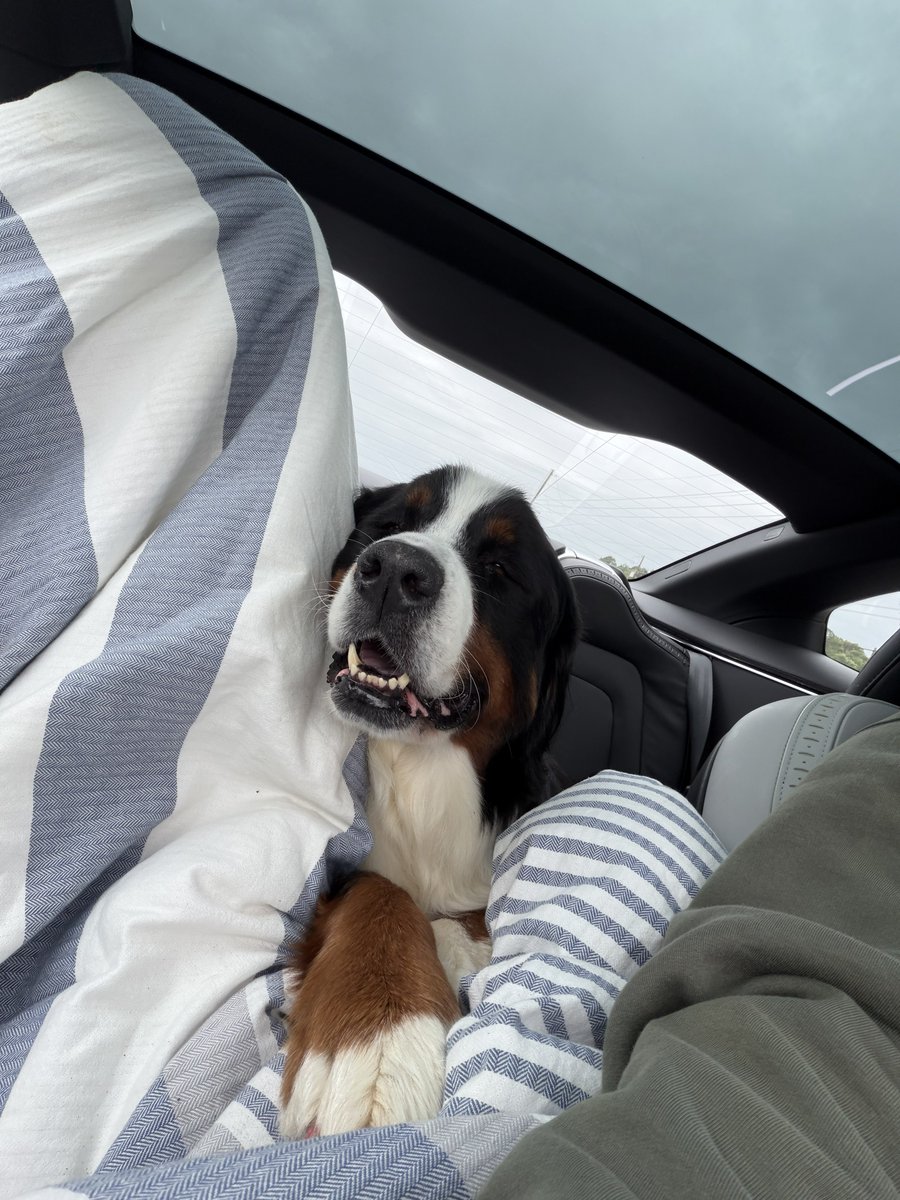
We love dogs at NetworkCore ! And dogs in EV's even more

Ruby loves the car more than any dog I’ve met
@TheEVuniverse thats actually pretty cool
@cauhdez Hey Carlos, somos una startup en Mexico in the EV space, nos encantaria hablar contigo brevemente para discutir una tal vez advisory role para usted. Dinos cosas. Saludos, Gaspar


Ola E ⚡#Gen4 @OlaEAmerica
965 Followers 3K Following Todo lo que necesitas saber sobre la @fiaformulae y categorías alternas.
Christer K Andersson @yesboxx
4K Followers 4K Following Investor @ Sommet Ventures #investor 🚀🚀🚀 #FinTech #blockchain #deeptech #Mobility @ Europe, USA, India, Israel, and LatAm. retweets≠endorsement.
RISE-IN @RISEINPROJECT
69 Followers 243 Following RESILIENT INVESTMENT FOR SUSTAINABLE ENVIRONMENTS Acknowledgement: Funded by EU under Grant Agreement no. 101214441.

Jaan of EVwire.com �... @TheEVuniverse
22K Followers 18K Following ⠀⠀⠀⠀ ⠀ ⠀⠀⠀⠀⠀⠀⠀ is the founder of https://t.co/948vKLet8U The daily EV news site, newsletter and market intelligence platform for all true EV geeks. X: @theEVwire

jan dekkers @jan_dekkers
3K Followers 3K Following https://t.co/gTw9odJkGS All posts are my personal opinions and not financial advice, I mainly support NIO and EV content.
Diamoons @Diamoonsfinance
680 Followers 77 Following #Diamoons Finance is redefining rare digital assets 💎
George @LG7498
27 Followers 102 Following
Loup @LoupHrv
948 Followers 447 Following •@ASCannes1902 • Ex : Us Granville / SM Caen / Mandel United 🇧🇪 / EA Guingamp / FC Fleury 91
Dilan Mehta @DilanMehta_
213 Followers 621 Following
cartb4thehorse @cartb4thehorse
259 Followers 910 Following
lox the only @boda_focus
84 Followers 2K Following
Dotdigital @dotdigital
16K Followers 3K Following Marketing made personal. The marketing personalization platform helping you connect with your customers on the channels they know and love.
Victoria Garcia MBE @AccessBuses
1K Followers 2K Following Very lucky to work with amazing people and organisations in my role as accessibility and communities manager for https://t.co/X5nukVeelO and https://t.co/7JM4OZfU71
Vineet Rastogi @Vineet4B2B
808 Followers 3K Following We have another market for you, more profitable, less competitive, much more exciting !!!

Prof Shafi Ahmed PhD ... @ShafiAhmed5
19K Followers 6K Following Surgeon. Teacher. Entrepreneur. Innovator. Humanitarian. International Keynote Speaker
Electric Mobility @EMobilityEuro
2K Followers 622 Following Electric Mobility Euro Ltd supply Mobility Scooters, Powerchairs & Riser Recliner Chairs to a network of over 450 distributors in the UK & Worldwide.

Overly Trev’s Futur... @OverlyTrev
7K Followers 890 Following Tesla, FSD, SpaceX, and more. Just a guy who loves Tech and wants to learn and share how it could shape are future! Future Optimist.
XPENG @XPENG_Global
432K Followers 273 Following Official Twitter page of XPENG. We build intelligently connected all-electric cars for a new generation.🤓 #DriveDifferent
BYD @BYDCompany
133K Followers 757 Following Leveraging technology and innovation for a greener today. Build Your Dreams.
Energía Hoy @energiahoy
14K Followers 2K Following Energía Hoy es la principal plataforma de divulgación para el sector energético de México.
a16z @a16z
1.1M Followers 64 Following https://t.co/A9eTFq6Xbx https://t.co/3RHK5vqQo7 Posts are not investment advice or an advertisement for investment services. See https://t.co/nX2FtaLE06.
Sequoia Capital @sequoia
819K Followers 2K Following We help the daring build legendary companies from idea to IPO and beyond.
Kleiner Perkins @kleinerperkins
306K Followers 2K Following For five decades, we have partnered with founders building enduring companies that make history.
Kerry Chu @kerrysmith134
177 Followers 3K Following Founder of Anari energy, an EV charger manufacturer.
Comunidad Transporte @CTransp
4K Followers 977 Following Cuenta de @CONUEE_mx dirigida a propiciar el uso eficiente de la energía en el Transporte y promover mejores prácticas para optimizar la Movilidad Urbana
Javier García Osorio @xavier_osorio
375 Followers 379 Following Me interesa el ahorro de energía, la tecnología y la capacitación en la eficiencia energética.
Banco de México @Banxico
912K Followers 18 Following Esta es la cuenta oficial del #BancodeMéxico en X. Para mayor información consulte la página https://t.co/OS7JaavaeJ

CEH Colmex @CEHColmex
15K Followers 250 Following Centro de Estudios Históricos de El Colegio de México
CEE COLMEX @CEEColmex
9K Followers 134 Following Centro de Estudios Económicos de El Colegio de México. Programas de Licenciatura, Maestría y Doctorado en Economía.
CEI Colmex @CEIColmex
23K Followers 540 Following El Centro de Estudios Internacionales de El Colegio de México es una institución dedicada a la docencia y la investigación.
Programa de Energía @EnergiaColmex
2K Followers 438 Following Como parte del @CEIColmex, El Programa de Energía acompaña y monitorea las transformaciones del sector energético, sus instituciones y políticas en México.
Carlos Aurelio HG @cauhdez
14K Followers 1K Following National Advisor to @Coparmex and President of their National Energy Commission. Founder @Watt2Trade @SUJIOMX 🇲🇽
Petróleo&Energía @petroleoenergia
23K Followers 1K Following Petróleo & Energía - El medio multiplataforma que informa, conecta y potencia a las industrias que construyen el México del futuro.
Roberto Capuano @Capuano
14K Followers 1K Following
China EVs & More @ChinaEVsandMore
5K Followers 109 Following EV & mobility experts Tu Le & Lei Xing plug you in to all of the latest news coming out of 🇨🇳 that is sure to have effects on the 🇺🇸 & 🇪🇺 markets.
EMA - Electro Movilid... @EMA_Asociacion
341 Followers 73 Following Acelerar la adopción de la movilidad eléctrica en México, a fin de combatir el cambio climático y mejorar la calidad de aire.
Tycho de Feijter @TychodeFeijter
6K Followers 2K Following Chinese car industry expert and analyst. Lived 16 years in China. Original founder of https://t.co/sHJJ0Xkj96. Founder of https://t.co/DS09oEwd41 & https://t.co/mTVucRKeH0.
🚍Desde El Camión�... @camion_desde
35K Followers 6K Following Cuenta dedicada al transporte público de Monterrey y demás estados de México. administrada por un operador y usuario de transporte público.
Magazzine del Transpo... @MagazzineTransp
8K Followers 1K Following NOTICIAS de la industria del transporte de carga y pasaje. Retuitea lo que más te interese, gracias por tu preferencia.
On.Energy México @OnEnergyMexico
83 Followers 329 Following Diseñamos, construimos y operamos soluciones de almacenamiento de energía para impulsar un futuro con bajas emisiones de carbono. #OnEnergy
North American Develo... @NADB_BDAN
2K Followers 2K Following NADBank is an international organization that develops and finances infrastructure that benefits the residents of the U.S.-Mexico border region.
China Chamber Mexico @chinachambermx
2K Followers 2K Following BILATERAL CHAMBER that represents, promotes and defends the interests of the companies with operations and business in both nations.
Alcaldes de México @AlcaldesMexico
51K Followers 33K Following Información de consulta, plural, independiente y propositiva para una mejor gestión pública. #AlcaldesMéxico #RevistaAlcaldesMx #AlcaldesDigital #AlcaldesEnVivo
Ola E ⚡#Gen4 @OlaEAmerica
965 Followers 3K Following Todo lo que necesitas saber sobre la @fiaformulae y categorías alternas.

Green Car Reports @GreenCarReports
25K Followers 8K Following The source for info about Green Cars. Get reviews, specs, ratings and pictures for new and used green, electric, smartcars; hybrid vehicles.
PlugShare @plugshare
27K Followers 8K Following PlugShare is the #1 App for EV drivers to find and use charging stations for electric cars & plug-in vehicles. #electricvehicles #electriccars #EVcharging
EVgo Fast Charging Ne... @evgonetwork
28K Followers 2K Following Fast charging the road to an all electric future. Share your charging photos with #EVgo! ⚡️
Jay in Shanghai 电�... @JayinShanghai
30K Followers 2K Following Tesla Model S Owner (2016) Founder of Tesla Expat Owners Club in China. Influencer and Content Creator. Award Winning Insurance Broker in Asia.
Humpidumpi2 aka HII H... @Humpidumpi2
2K Followers 3K Following Granddad from 1950, Emobility since 2012. Long $TSLA, 2019 red Tesla Model 3 AWD , 2025 White Model 3 SR. 2021 Starlink. Member of TeslaClubBE and TeslaClubNL
RISE-IN @RISEINPROJECT
69 Followers 243 Following RESILIENT INVESTMENT FOR SUSTAINABLE ENVIRONMENTS Acknowledgement: Funded by EU under Grant Agreement no. 101214441.
Trends for United States
You might like