LIFE AI @LifeNetwork_AI
The clinical-development coordination layer for AI-generated drugs | Discord: https://t.co/gOvHPKVGYB | Telegram: https://t.co/DVjbfueQrk testnet.lifeai.io Joined March 2024-
Tweets1K
-
Followers62K
-
Following355
-
Likes628
@AnthropicAI , a company whose entire product is intelligence, just confirmed it runs a wet lab. Within a day, several of our investors had pinged me with the same two questions. Is this a trend? Will every frontier AI lab end up running its own wet lab? And if so, is Life AI losing its competitive advantage? Short answers: yes, and no. Here are the longer ones. I understand why Anthropic did it. I have a fair idea how that internal debate went, because we had the same one eight years ago. Back then it looked like an odd move for a company that started on the software side of genomics: we built a physical sequencing center, the largest in Southeast Asia, designed for 500,000 genomes a year, with all the freezers and sample logistics that come with it. We did it for the reason Anthropic gives now: in biology, the final test still happens at the bench. A model can propose. Biology doesn't have to agree. So to the first question: yes, expect more of this, and the reason is arithmetic. The marginal cost of a hypothesis is heading toward zero. The cost of a failed trial is not. Roughly nine in ten candidates that reach the clinic still fail, and ten times more candidates does not fix that ratio; better evidence before the trial does. A company that sells intelligence has just concluded that intelligence is not the bottleneck. That is the real news, and every model company will reach the same conclusion once its predictions meet a petri dish. Anthropic seems to know this. It says the lab is focused on fundamental biology, not drug discovery, and it doesn't want to be seen competing with pharma. That is structure, not modesty: pharma pays its bills, and a model company that starts producing evidence for approval competes with its own customers. So the lab exists to make a model better at biology. Its product is a smarter Claude. Our lab was built for a different job. Its product is evidence a regulator will accept. A research-grade experiment tells you whether a hypothesis is interesting. A regulatory-grade one tells you whether a patient can be treated on the strength of it. Evidence at that grade cannot be rented by the token. It takes a robotic wetlab, validated processes, and a loop that runs from study design through validation to deployment, and we started building ours before models were producing candidates at today's volume. Which brings me to the second question. No, I don't lose sleep over Anthropic, DeepMind, or whoever builds the next wet lab. A better model is the best supplier we could ask for. Every jump in capability sends more candidates toward the narrow door where proof happens. We spent eight years building the infrastructure for this moment. Welcome to the bench, Anthropic. There's plenty of room. To the investors who asked, and to any who want to join the conversation: the question I'd put back is not which model will win drug discovery, but the next step. Who can prove what the models find will be the final winner.
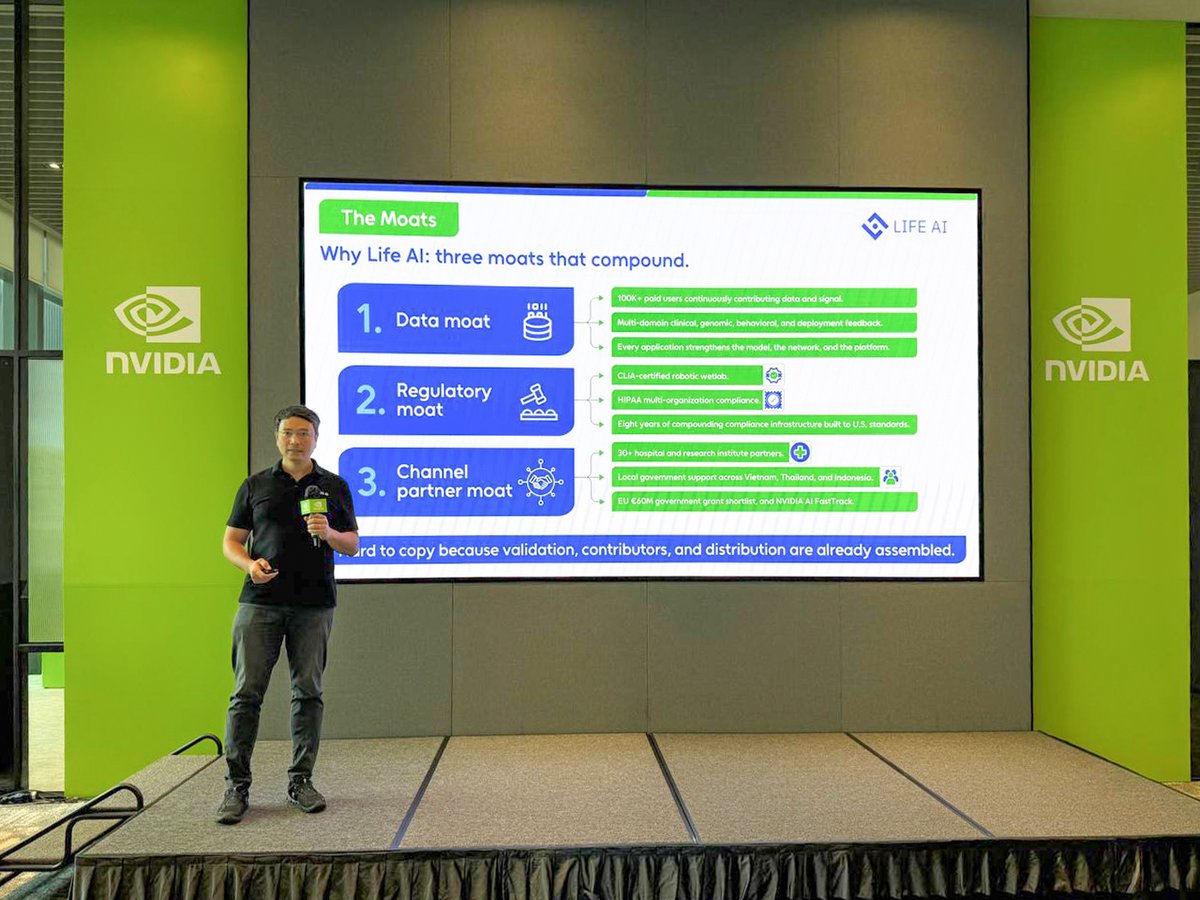
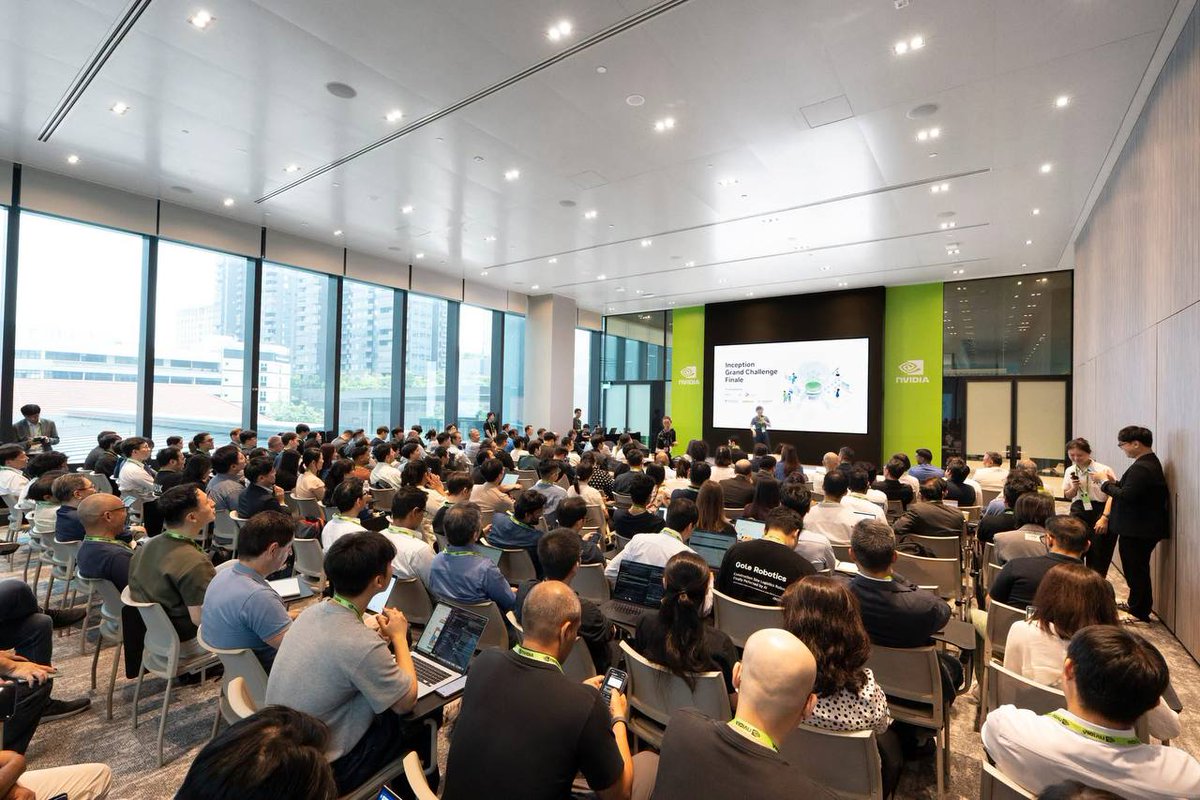
Today in Singapore, we took a question we have been working on at Life AI to a much bigger room. As AI accelerates drug discovery, how do we build the operating infrastructure to move what we discover through clinical validation, evidence, and real-world execution? Our Co-Founder & CEO Dr. Tuan Cao shared Life AI’s perspective on that question today at the NVIDIA Inception Grand Challenge Finale. And much of the value lies in what follows: new perspectives, sharper questions, and meaningful connections across the industry. Singapore extended the rails we’ve been laying, bringing our work into a broader conversation across AI, drug development, and healthcare. And that is exactly where we want to be.
Life AI Named a Top 20 Finalist in the NVIDIA Inception Grand Challenge 2026 Life AI has been named one of the Top 20 Finalists in the NVIDIA Inception Grand Challenge 2026, selected from more than 500 startups across Asia Pacific. The recognition follows Life AI’s selection in

The countdown to the NVIDIA Inception Grand Challenge Finale is on. Tomorrow, our Co-Founder & CEO Dr. Tuan Cao will take the stage as one of the Top 20 finalists, sharing Life AI’s approach to building the operating infrastructure for AI-enabled drug development from accelerating discovery to clinical validation and real-world execution. 📅 September 22, 2026 | Singapore If you’re joining us in Singapore, we’d love to connect.
Life AI Named a Top 20 Finalist in the NVIDIA Inception Grand Challenge 2026 Life AI has been named one of the Top 20 Finalists in the NVIDIA Inception Grand Challenge 2026, selected from more than 500 startups across Asia Pacific. The recognition follows Life AI’s selection in
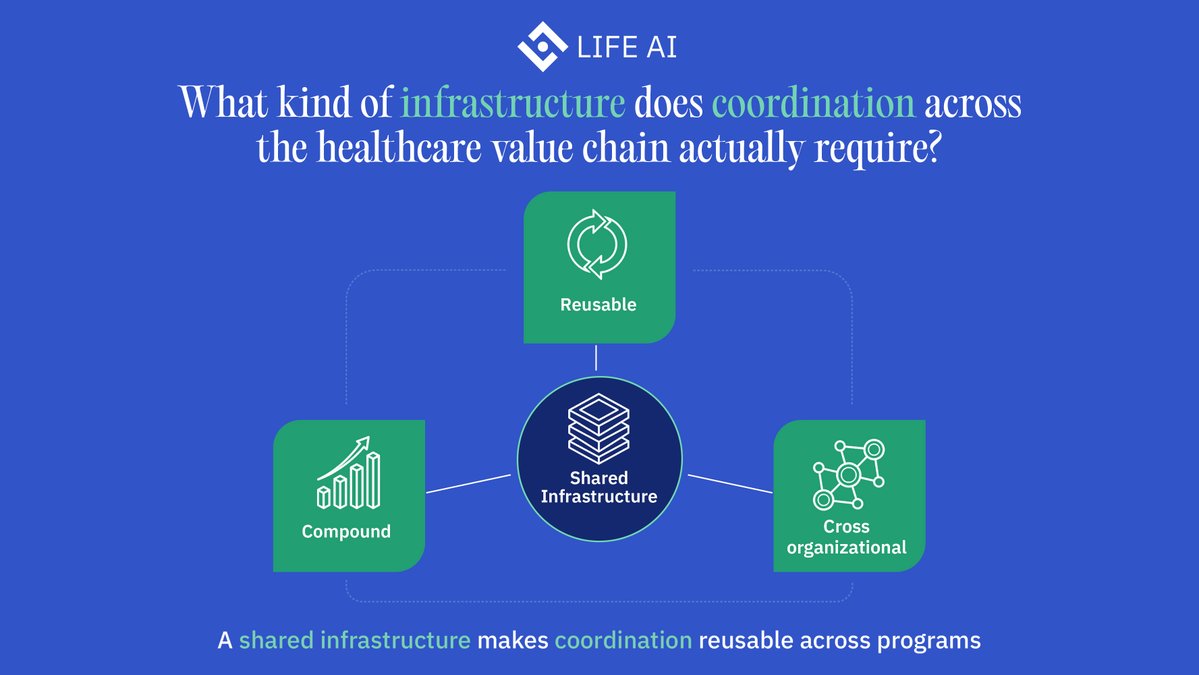
What kind of operational infrastructure does coordination across the healthcare value chain actually require? Eight years of building clinical programs across Southeast Asia, working with governments, hospital networks, and pharmaceutical companies, produced one consistent finding: the challenge is not the absence of capable AI. It is the absence of operational infrastructure that makes coordination reusable across programs. Without that infrastructure, coordination remains highly program-specific, especially in drug development, where multiple key players must work together across the development process. The infrastructure this requires has three properties. It has to be reusable. Clinical programs should move from bespoke projects to reusable rails, with shared coordination rails replacing bespoke integration at every site. It has to compound. Every application should strengthen the model, the network, and the protocol, building greater capacity across the ecosystem over time. It has to enable coordination among independent actors. Hospitals, doctors, labs, pharma sponsors, regulators, patients, and AI builders can contribute services, validation, and clinical execution without surrendering operational sovereignty. At Life AI, we are building an operating infrastructure for drug development around these requirements, bringing together AI-driven discovery, wet-lab screening, and clinical validation.
Why is validation so difficult to accelerate? Because unlike discovery, validation cannot be completed in isolation. An AI-generated drug candidate still has to move through key players across the healthcare value chain, including pharma teams, clinical sites, hospitals,
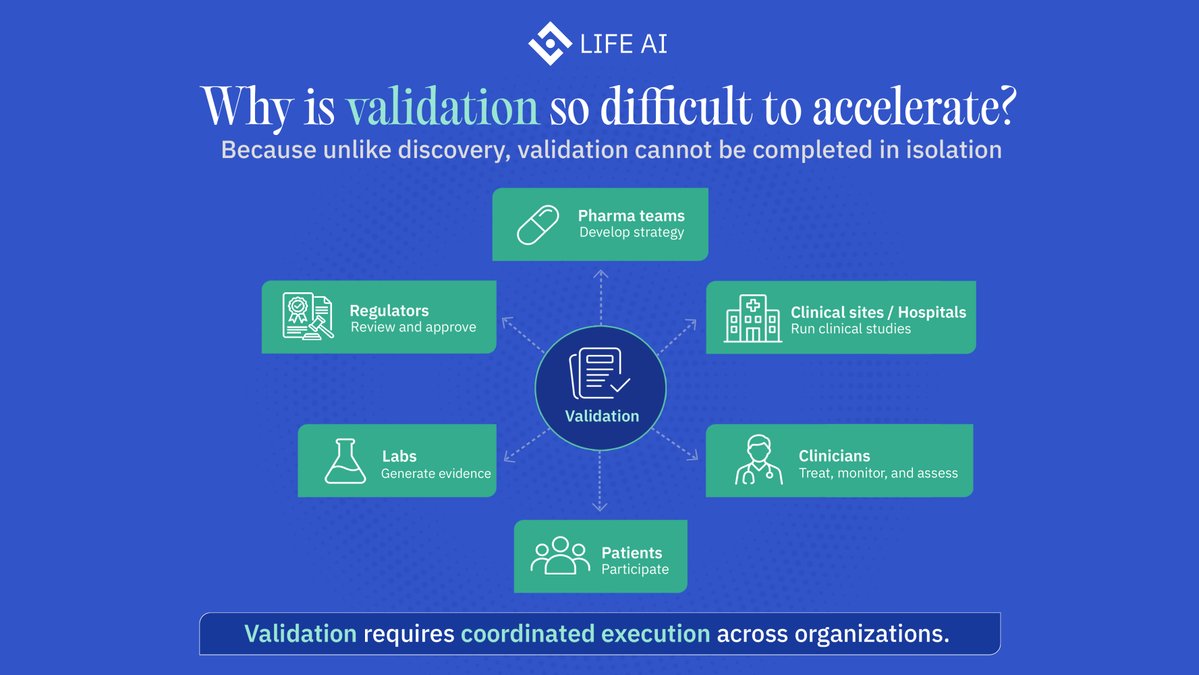
Why is validation so difficult to accelerate? Because unlike discovery, validation cannot be completed in isolation. An AI-generated drug candidate still has to move through key players across the healthcare value chain, including pharma teams, clinical sites, hospitals, clinicians, patients, and regulators. Each operates with different timelines, evidence requirements, compliance constraints, and operational priorities. A candidate can move forward on one front while remaining constrained elsewhere, whether by patient recruitment, study execution, evidence generation, or the decisions required to advance it. This makes validation more operationally complex than discovery. Discovery can be accelerated within a model, platform, or controlled environment, while validation depends on how effectively these key players coordinate and execute across the development process. With more candidates entering development, that operational complexity compounds, requiring more evidence generation, clinical execution, patient participation, and coordinated decision making across organizations. As AI accelerates discovery, the need for better coordination and the infrastructure to support it becomes increasingly important downstream.
AI is accelerating drug discovery. But the pressure is shifting downstream, toward the work required to validate what discovery produces. Across science and life sciences, AI is moving deeper into discovery. Anthropic is expanding AI into scientific research, Isomorphic Labs is
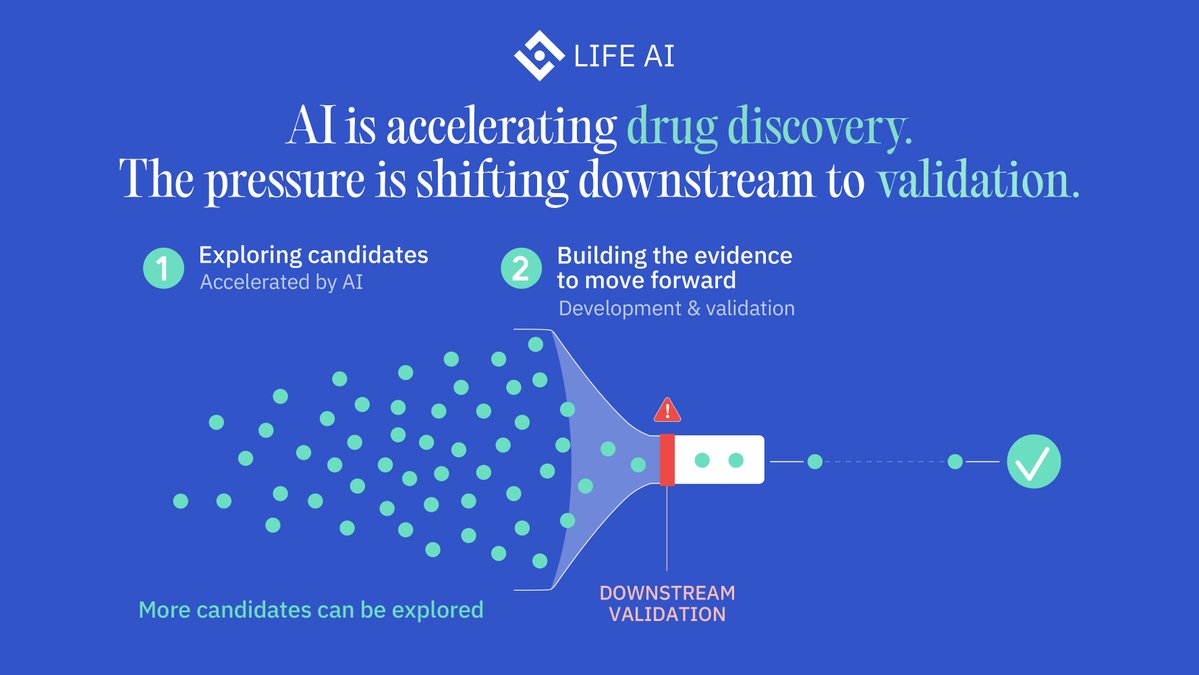
AI is accelerating drug discovery. But the pressure is shifting downstream, toward the work required to validate what discovery produces. Across science and life sciences, AI is moving deeper into discovery. Anthropic is expanding AI into scientific research, Isomorphic Labs is scaling AI-first drug design and development, and Discovery Loop is building systems to automate experimental loops. As these capabilities advance, more targets can be explored, more molecules can be designed, and more potential candidates can be generated. The discovery layer is becoming faster and more expansive. But accelerating discovery does not automatically accelerate the path to validation. A promising candidate still has to be evaluated, tested, and supported by sufficient evidence before it can move forward. Clinical validation is where this downstream pressure becomes especially visible. The gains from faster discovery can begin to narrow if the path to validation remains slow and difficult to scale. For Life AI, this raises a critical question: How do we make sure the path to validation can keep pace as AI accelerates discovery?
I used to come to the Google office mostly for the food. This time, it's special. I came here for work. I just finished a video interview with the Google for Startups team. They asked wonderful questions, and ten minutes was nowhere near enough. Here's what I wish I'd had time to say. Years ago, I was a Google engineer on the Gmail and Google Data Infra teams. Walking back in as a founder, selected for the first Google for Startups Accelerator: Southeast Asia, feels like a homecoming. Google taught me how to build systems billions depend on. Now I'm bringing that standard to healthcare. At Life AI, we're building an operating infrastructure for drug development: AI models for drug discovery, a robotic wet lab for in vitro screening, and a network of hospitals for clinical validation. Several products run on it. The one we're bringing to Google is closest to my heart: Life Cloud, an AI-powered cloud for healthcare. Here's the problem. AI has disrupted industry after industry, but not yet healthcare. Hospital data is uniquely hard: fragmented, buried deep inside departments. Connecting data within one hospital is already a serious challenge. Connecting a network of hospitals is orders of magnitude harder. Yet patients move between hospitals, test by test. The warning sign a doctor needs often already exists, scattered across systems, never connected in time. Take thalassemia: about 13% of Vietnamese, 14 million people, carry the gene. Every year, around 8,000 affected babies are born, most of them preventable. The first clue hides in a routine blood test that costs less than a cup of coffee, stored somewhere, in some hospital. Life Cloud is built on one principle: the data never moves. The AI does. Hospitals keep full control of their records. The AI comes to them and learns across the whole system. The AI flags and suggests. The doctor always makes the final decision. What excites me most is the mentorship. I still remember how much I learned just by sitting close to great engineers at Google. Now my whole team gets three months of that. Honestly, it feels a bit like going back to school. In October, I'll bring our product to Google San Francisco's bootcamp for engineers to stress-test. Thalassemia doesn't stop at borders. With health partners in Thailand and Indonesia, Southeast Asia is the map we're building for. Closing the gap between what AI can demonstrate and what doctors can depend on. That's the whole journey. And yes, I'm coming back to Google, not only for food, but for work too. If you're a clinician, life-science researcher, or investor who cares about trustworthy healthcare AI in Southeast Asia, my inbox is open. #GoogleForStartups #HealthcareAI #LifeCloud
AI is moving faster than the systems around it. In healthcare, that gap matters. But what makes that gap so difficult to close? “How do we turn AI intelligence into accountable action across fragmented healthcare systems?” It is also a question that has increasingly shaped how Life AI thinks about healthcare AI. Speaking at NVIDIA GTC Taiwan 2026, Life AI Co-Founder and CEO Dr. Tuan Cao @tuan_lifeai put it this way: “In other industries, if you have the best model, you win. But in healthcare, what actually matters is the coordination of so many key players across the healthcare value chain. That is why running a clinical trial in the US is so expensive. It costs about $20 million to $100 million to run a Phase III clinical trial, and for every patient, we pay about $500,000 because the man in the middle has to coordinate so many different players: the pharma, the hospital, the patient, and the doctor. So coordination of all of those key players is actually one of the main bottlenecks.” The challenge is not simply advancing AI, but understanding what it takes to make AI work across the complexity of healthcare. The NVIDIA Inception Grand Challenge 2026 gives Life AI a timely platform to bring this infrastructure question into a broader AI conversation.

6/6 And this is the key question left open by the discussion: When the pieces of a person’s health journey are spread across different interventions, providers, and systems, what connects them over time? The McKinsey Health Institute’s From healthcare to health: Asia’s longevity opportunity is well worth reading for anyone thinking about what comes next for healthcare in the region. mckinsey.com/featured-insig…
4/6 What stands out is that the opportunity is not only about discovering new treatments. McKinsey points to the potential of proven interventions, particularly those focused on prevention at the population and individual levels. The challenge becomes how to move prevention earlier, broaden access, and make its impact more consistent. This is where the conversation shifts: from healthcare to health.
1/6 Asia is living longer. But too many of those years are spent in poor health. That is the central tension explored in a recent Future of Asia Podcast from the McKinsey Health Institute. So what stands between living longer and living healthier? 🧵 Here are some numbers and insights worth looking at.

Life AI Named a Top 20 Finalist in the NVIDIA Inception Grand Challenge 2026 Life AI has been named one of the Top 20 Finalists in the NVIDIA Inception Grand Challenge 2026, selected from more than 500 startups across Asia Pacific. The recognition follows Life AI’s selection in 2025 as one of six startups in the inaugural FastTrack AI Accelerator, powered by GenAI Fund and accelerated by the NVIDIA Inception Program. On September 22, our co-founder and CEO, Dr. Tuan Cao, will present Life AI’s perspective at the Grand Challenge Finale during NVIDIA AI Day Singapore. But the significance of this milestone extends beyond the competition. AI capabilities are advancing at unprecedented speed. Yet in healthcare, building more capable AI is only the beginning. The harder challenge is making that intelligence usable inside systems that were never designed to work together. Clinical records, workflows, validation processes, and decision-making remain distributed across hospitals, laboratories, pharmaceutical companies, and care teams. Moving AI from isolated pilots into real-world practice therefore requires more than a powerful model. It requires a way to connect signals, coordinate actions, and maintain accountability across those boundaries. As AI intelligence becomes increasingly abundant, how do we turn it into accountable action across fragmented healthcare systems? That is the question Life AI is taking to Singapore. In the weeks ahead, we will share how we are approaching it.
Source: FDA, Digital Health Technologies for Drug Development fda.gov/science-resear…
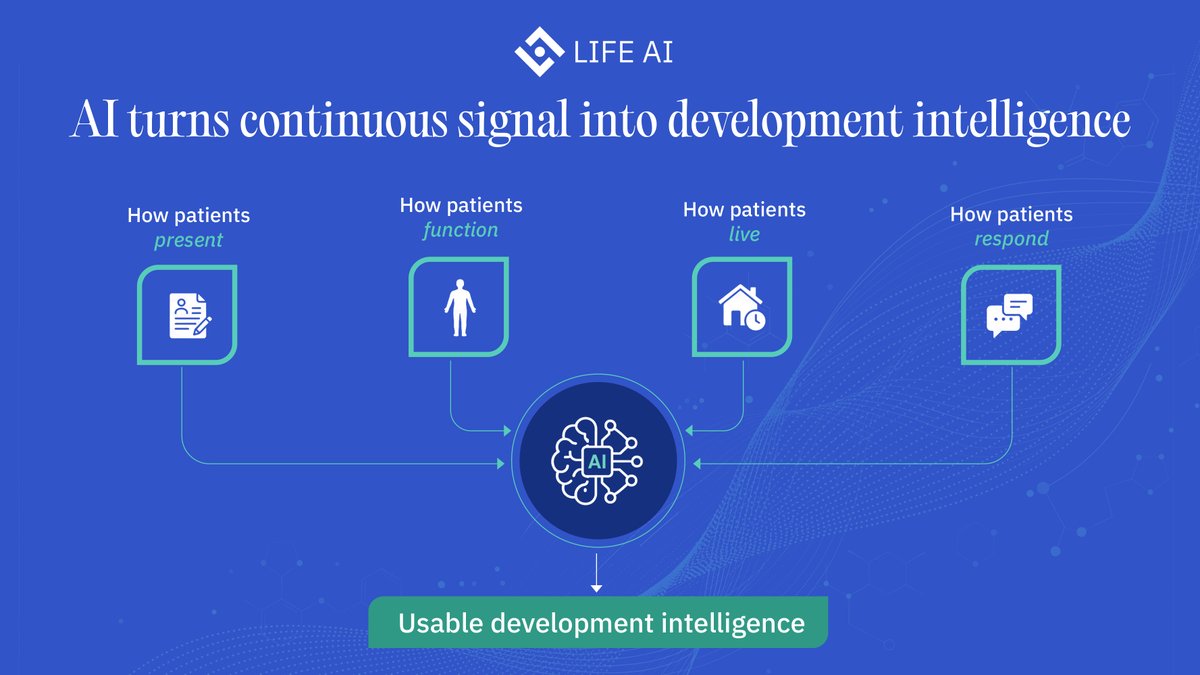
The next edge in drug development will come from understanding patients at higher resolution. For decades, clinical evidence was shaped by scheduled visits. What patients reported. What clinicians observed. Everything between visits remained largely unseen. The FDA’s Digital Health Technologies program is expanding the use of continuous and frequent measurements beyond traditional study visits, including through wearables, sensors, and remote monitoring. For drug development, this opens the possibility of following treatment response beyond scheduled assessments and across the patient journey. But capturing these signals is only part of the challenge. Biological signals, interventions, and outcomes remain fragmented across the patient journey. Without coordination, the longitudinal picture remains incomplete. The next infrastructure layer will need to connect these signals with interventions and outcomes across time, institutions, and real-world conditions. As the FDA advances the regulatory pathway for digitally derived endpoints, that coordination layer becomes increasingly important to drug development.
@MNaelendra @GoogleStartups Faster discovery only matters if regulatory review can keep pace with the evidence AI helps generate.
AI can now generate more drug and treatment candidates than the healthcare industry can ever validate. That gap between what AI can discover and what actually reaches patients is the problem Life AI was built to close. What we're most excited about in the @GoogleStartups Accelerator: Southeast Asia program is the chance to work directly with Google's engineering teams on scaling that infrastructure, the rails that help hospitals and pharma partners move healthcare AI programs from pilot to real, deployed care. We've already seen what's possible when this works: programs that used to take years now take months, at a fraction of the cost, while still meeting regulatory standards. Over the next three months, we'll be pressure testing our technology alongside some of the best AI minds in the industry, building toward a technical residency in San Francisco. More soon. #AcceleratedWithGoogle
We're pleased to announce that Life AI has been selected for the @GoogleStartups Accelerator: Southeast Asia program. We look forward to the opportunities ahead and to sharing our journey. [goo.gle/4wIlbsP] #AcceleratedWithGoogle
@NmillerBen2665 @GoogleStartups That’s an important question. Long-term outcomes will be key to understanding whether the impact extends beyond faster validation.
@vanvinh2788 @GoogleStartups Exactly. More candidates only matter if we can validate the right ones and move them into real-world treatment faster.

Meduza Zoldyck 🪼 @Kalipso_Meduza
1K Followers 5K Following Insta: Meduza Zoldyck 🐍 Snap: 👻kalipso.meduza👻

𝗔𝗟𝗜 @AliBldz
1K Followers 636 Following AI & Crypto | Artist, Researcher, NFT Seeker, Content Writer ✍🏻 | VibeCoder 👨🏻💻 4159

𝟘𝕩𝔸𝕝𝕚.... @tra2logist
1K Followers 620 Following 🏋️♂️ PE Teacher & Coaching Specialist 🌐 Web3 | AI | Crypto Ξ .eth 🎮 Gaming & Digital Worlds 📚 Learning • Building • Exploring
Alireza Sparoo @AlirezaSparoo
9 Followers 104 Following
said @said1saidzgjc
3 Followers 47 Following


Tagoo @tagoo_dev
0 Followers 44 Following
shirinbano @shirinbano5688
63 Followers 102 Following

Michele 'fredrico' D'... @michelepeaceday
2K Followers 3K Following Award-winning Creative | Scholarship Advocate | Patron | Public Figure. AI native!
sukonnakhatun | ETHGa... @sukonnakhatun
7 Followers 58 Following
Umaa @UmaaAman19513
3 Followers 8 Following
نعمت مجیدی @Majidi_48
0 Followers 47 Following
Med Nejib Gdoura @MedNejibGdoura
5 Followers 20 Following
RAVINDRA PALASHTE @RAVINDRAPA29212
0 Followers 2 Following
Sarita Gautam @SaritaGaut99605
0 Followers 6 Following
Goadsby @Goadsbyodyf
1 Followers 90 Following
Tomas Alber Lamey @Tomasalberlamey
0 Followers 3 Following
Kal8083 @kal8083c65
2 Followers 27 Following
milad khorsand @miladkhorsand67
21 Followers 112 Following
CryptoNews @MZultimahora
14 Followers 126 Following Passionate about blockchain and the crypto ecosystem. Focus on Bitcoin, DeFi and Web3. Quality analysis and content. DYOR. NFA. @TxFlow_L1 https://app.txflow

Maxwell F. Rodriguez @Amiecrypto_
14 Followers 75 Following holding Bitcoin | Navigating crypto cycles & market structure | Long-term conviction, short-term volatility | Stacking sats while others chase noise
wichai fipakpheraa @WFipakpher89087
0 Followers 3 Following
www.nestrow.in @nestrowin
2 Followers 25 Following Nestrow helps customers easily discover and book service professionals.
Aporajoy Masud @aftabumasud
14 Followers 358 Following
milonmondol008 🚢 @MondolMilo9561
3K Followers 6K Following OG ambassador of @Dtelecom ecosystem https://t.co/lHSvNhgWDZ https://t.co/92kIzSup7e https://t.co/BEArQMaU6M
kastriot @kastriotzayb
12 Followers 76 Following
Talha aziz @talha_noir
153 Followers 2K Following Coffee connoisseur ☕x Digital Alchemist x Poet Investor × High-Leverage Trader USA 🇺🇸 | UAE 🇦🇪 | CAN 🇨🇦 | Global Tech. Markets. Legacy. #infj
Optimind Technologies @optimindtech
0 Followers 146 Following Building AI-powered software & digital products for startups and businesses. Full-stack engineering • AI integration • Automation 🚀 Turning ideas into producti
VIJAYA KUMAR @VilokanaKumar
0 Followers 2 Following
Alalmin Alalminok @alalminok
17 Followers 136 Following
Awais jatt @Awaisjatt1ln5
4 Followers 8 Following
𝔍𝔲𝔩𝔦𝔢�... @Heyohletsgcm6l
4 Followers 129 Following Créateur de valeur concrète et réelle en entreprise | L'amélioration en continue coule dans mes veines | Vous êtes les Saints de France - Papa León XIV 🇫🇷
borlarji @mcee001
34 Followers 172 Following
Darren Cooper @Deecoopgobrrr
74 Followers 215 Following common family man with a truly uncommon desire to succeed! Living and loving life!!! web3 & crypto!!! LFG!!!
Cris Dang @crisdangvan
0 Followers 42 Following
mtr @komariah_n80883
0 Followers 23 Following
Jaj K @JajK22251
16 Followers 71 Following
mohammed ahnaf | Inte... @naruto27920
12 Followers 62 Following Official Trainee Ambassador of InterLink Labs,Interlink ID: @270920
مجتبی غلامی @Mojtaba69777
25 Followers 70 Following
Aymeric Dadure @Tunarywxsd
5 Followers 49 Following
Ayaan Temuri @AyaanTemuri
30 Followers 217 Following
Shubh Maheta @MAHETA_SHUBH
0 Followers 34 Following
Google for Startups @GoogleStartups
256K Followers 1K Following Connecting startups to the Google people, products, and best practices they need to grow.
AI at Meta @AIatMeta
858K Followers 367 Following Together with the AI community, we are pushing the boundaries of what’s possible through open science to create a more connected world.
Hugging Face @huggingface
805K Followers 227 Following The AI community building the future. https://t.co/TpiXQMQ9rZ
USC VanEck Digital As... @USC_VEDA
650 Followers 129 Following Education, research, and community efforts around digital assets, blockchain technology, and cryptocurrencies for the @USC ecosystem. Supported by @vaneck_us.
DeSci Japan @DeSciJapan
1K Followers 140 Following DeSci Japanは、日本における「分散型サイエンス( #DeSci )」の普及・発展に貢献するために設立されたコミュニティです。 DeSci Japan is a community for the development of decentralized science in Japan.
Stanford HAI @StanfordHAI
109K Followers 605 Following The official account of the @Stanford Institute for Human-Centered AI, advancing AI research, education, policy, and practice to improve the human condition.
The Lancet @TheLancet
765K Followers 456 Following Welcome to The Lancet, one of the world’s leading medical journals, published weekly since 1823.
Sam Altman @sama
6.3M Followers 1K Following The mission of OpenAI is to ensure that AGI benefits all of humanity
Kelvin Onchain @FomoKelvin
599 Followers 864 Following Community Manager & Moderator @LifeNetwork_AI | Blockchain Marketing Specialist - Building and growing Web3 communities #BTC #ETH #MEME
Team1 Vietnam @Team1VN
8K Followers 877 Following Building the home for community, builders, and startups in Vietnam. Powered by @AvaxTeam1
Tu Nguyen ∀ 🕹�... @houyaoi
3K Followers 2K Following Belonging to the Red Chain civilization 🔺 | @avax @AvaxTeam1 Ex @avalabs | Building @Team1VN since 2020 Telegram: @houyaoi
David Post @Post_DavidC
393 Followers 96 Following Blockchain Network Thinker, Recovering Academic, Business Development Aficionado, Managing Director, IBM (tweets are my own)

Phillip Liu Jr. ⚔�... @phillipliujr
6K Followers 3K Following Investor @ Something New | Co-founder The Arena | Founding Team @avax @avalabs | Tweets not financial advice and opinions my own
GLOCK ⚔️ @Mr_GLCCK
1K Followers 678 Following HMOD | User Services Operator @TheArena ⚔️ Project management and customer service Certificates from #Oracle | #Intel | #Logitech | #Sony
Jason Desimone ⚔️ @jasonmdesimone
60K Followers 6K Following I build, I trade, I grow // Founder & CEO @TheArenaApp // @Rove_Inc
₿𝖔𝖋𝖋 @agentboff
3K Followers 2K Following Head of BD @TheArena⚔️ Los Angeles Lead @avaxteam1🔺 antics @nautsmeme 🟣
The Arena ⚔️ @TheArenaApp
74K Followers 721 Following The Arena is your all-in-one social crypto app. Multichain token launchpad, perps, prediction markets, & creator coins. https://t.co/NuXOTuNewu
DeSci News @DeSciNews
9K Followers 567 Following Curating what matters in DeSci. Your front-row seat to the onchain science revolution. DMs open for news and announcements.
Joey 🔺 @joeycannoli9
4K Followers 6K Following BD & Biz Ops @avalabs 🔺 | Ecosystem Analysis & Crypto News | Opinions are my own.
Avalanche Team1 @AvaxTeam1
21K Followers 490 Following A global network of builders, developers, creatives, and community members building @avax || Registrations closed


vera🔺 @veritaim
1K Followers 2K Following investments @blizzardfund @avalabs🔺 | growing @avax | made in seoul 🇰🇷| @brownuniversity alumna 🐻 (views are my own)
Chris🔺 @cakowalski2
1K Followers 2K Following biz ops at @avalabs🔺 formerly @citi | lover of chikn...wings & NFTs | opinions are mine and not views of my employer

Avalanche Foundation ... @AvalancheFDN
25K Followers 154 Following Dedicated to the long-term economic sustainability and growth of the @avax ecosystem. Follow for exclusive updates. RT ≠ endorsements.
Boss Penguin 🐧🔺 @BossPenguin7
3K Followers 2K Following Building: @loopia_world 🔺🌎 Business Development Lead: @pangolindex Member: @AvaxTeam1
KITE AI ✈️ KBW�... @GoKiteAI
585K Followers 56 Following Building Agentic Payment Infrastructure Backed by @PayPal Ventures and @Generalcatalyst Kite Agent Passport: https://t.co/qw13oC6l3z
NVIDIA @nvidia
2.7M Followers 47 Following The official handle for NVIDIA. Blog: https://t.co/JAn5eKOTBT Support: https://t.co/6ln5FVnA2o All our social media: https://t.co/Uc56dL57Dh
Life AI Connect @LifeAIConnect
209 Followers 27 Following Community-run hub for LifeAI (Unofficial) · A place for people who love Life AI
GenAI Fund @genaifund_ai
859 Followers 100 Following GenAI Fund invests in AI-first technology companies in Southeast Asia that make a lasting impact on their markets.
Balaji @balajis
2.2M Followers 4K Following Author of the Network State. Founder of the Network School.
Galxe Quest @GalxeQuest
184K Followers 59 Following Join millions growing, learning, and earning with web3 brands through reward-powered loyalty programs. Built by @Galxe.
Galxe @Galxe
1.5M Followers 62 Following The leading web3 growth platform — powered by @GravityChain. Home to @GalxeQuest and @GalxePassport.
Avalanche DeSci @AvalancheDeSci
201 Followers 4 Following Accelerating the future of science on-chain 🔺

AvaxFusion 🔺 @AvaxFusion
24K Followers 5K Following Ecosystem of decentralized networks designed to achieve real-world outcomes through programmable economic alignment. Powered by Avalanche.
Hoang Thanh The @HoangThanhThe1
75 Followers 286 Following
The Wizard’s Node @thewizardsnode
34 Followers 498 Following A wizard of prompts, building @ElioraAI. "A wise old Owl lived in an oak. The more he saw, the less he spoke. The less he spoke, the more he heard....."
Ashley @AshleyDCan
197K Followers 12K Following founder | daily x news | partner @rainbetcom | @avaxteam1 collaborator | avg bro @noturavgbros | inquiries: [email protected]
LokUnchained @LokUnchained
5K Followers 1K Following $LOK Meme Token / AVAX Community Ambassadors / Loksmith DAO LLC

Beraborrow (🐻⛓�... @beraborrow
43K Followers 141 Following Instant Liquidity, Infinite Opportunities.
Mystic 🔺 @0xMysticBeast
5K Followers 6K Following We Only Rise By Lifting Others | BTC+AVAX | Something something @LokUnchained

Ricardo @0x_rc
1K Followers 567 Following building @txflow_l1 | prev @okx , @nansen_ai , @fireblockshq
J @robinhoodjesus
10K Followers 3K Following Led the Great Migration to Robinhood, liquidated in the NOXA crash of 2026 Nothing I post is financial adviseYou might like