Addeeze | ADHD Planning @Addeeze
The chaos-based planning and productivity tool for people with AD(H)D brains, chronic procrastinators and other organisationally challenged individuals. addeeze.com The Netherlands Joined January 2025-
Tweets68
-
Followers18
-
Following203
-
Likes28
The hardest part was never the task. It was starting. You know exactly what needs to happen. The list exists somewhere, maybe in 4 different apps, 2 notebooks, and a crumpled sticky note in your jacket pocket. But when you sit down to actually begin? Your brain stares at the tangled mess and goes completely blank. Where do you even start when everything feels equally urgent and equally impossible? This is task paralysis. And it's exhausting. We built Addeeze for exactly this moment. Not to add more pressure or another system you'll abandon by Tuesday. But to help you find that first thread in the tangle. One small, doable step. That's it. Because overwhelm doesn't need another productivity hack. It needs someone to hold the yarn ball steady while you gently pull that first thread free. You don't have to untangle everything at once. You just have to find where to begin. We can help with that 🧶
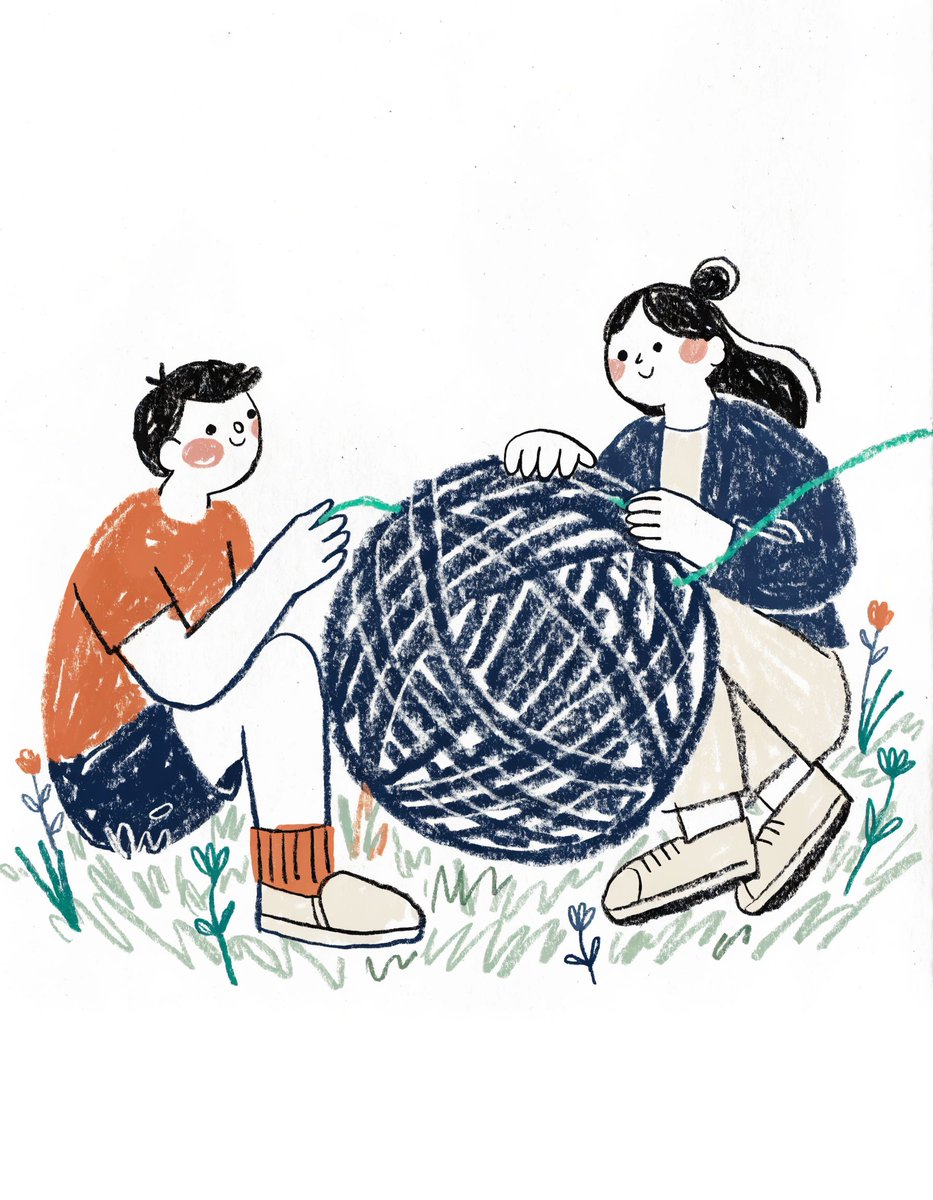
The threads were already knotted before she opened the app. That's the part nobody talks about. The 47 things you need to do. The 12 you forgot about. The 3 that keep circling back at 2am. All tangled together in one big overwhelming knot sitting right at the top of your brain. You're not bad at planning. You're overwhelmed by an endless to-do list and genuinely unsure where to start. That's not a character flaw. That's a starting point. We built Addeeze for the moment before the moment. For the tangled threads. For the brains that need to dump everything out before they can see anything clearly. Because sometimes the first step isn't organizing. It's just getting it all out of your head.

Nobody signs up for the reminders. We see this pattern constantly. People come to Addeeze for the brain dump feature, the task breakdown, the planning tools. Reminders? They barely glance at that part of the setup. It feels like a basic checkbox feature, not something worth their attention. But here's what we keep noticing: the users who actually stick with a system, who finally start finishing things, are the ones who let the reminders do their job. ADHD brains don't forget tasks because they don't care. They forget because the task left working memory. That's it. The intention was real. The motivation was there. But the moment something else grabbed attention, the task simply vanished. Most reminder systems feel like nagging. They trigger guilt, not action. So people turn them off and blame themselves for not being better at remembering. The shift happens when someone stops seeing reminders as a crutch and starts seeing them as external working memory. Not a sign of failure. Just a tool that does what the brain wasn't built to do. The ones who embrace this tend to stop fighting their own wiring. They build systems that work with their brain instead of against it. Reminders aren't the feature people want. They're the feature people need.

Every productivity app I tried made me feel broken within a week. The color-coded calendars. The perfectly timed reminders. The beautifully organized task lists. None of it stuck. Not because we lack discipline. Because those tools were built for brains that think in straight lines. ADHD brains don't work that way. We work in bursts. In tangents. In creative explosions that happen at 2am or not at all. So we stopped trying to fix the chaos. We started building inside it. At Addeeze, we designed a system where your scattered thoughts aren't a problem to solve. They're the starting point. Your braindump isn't messy. It's raw material. Your 47 open tabs aren't failure. They're how your brain explores. Your sudden pivot to a completely different task? Sometimes that's exactly where the momentum lives. Conventional productivity assumes linear thinking. We assume you're an out-of-the-box thinker where normal rules of time and space don't always apply. That's not a bug in your operating system. That's the feature we built for.

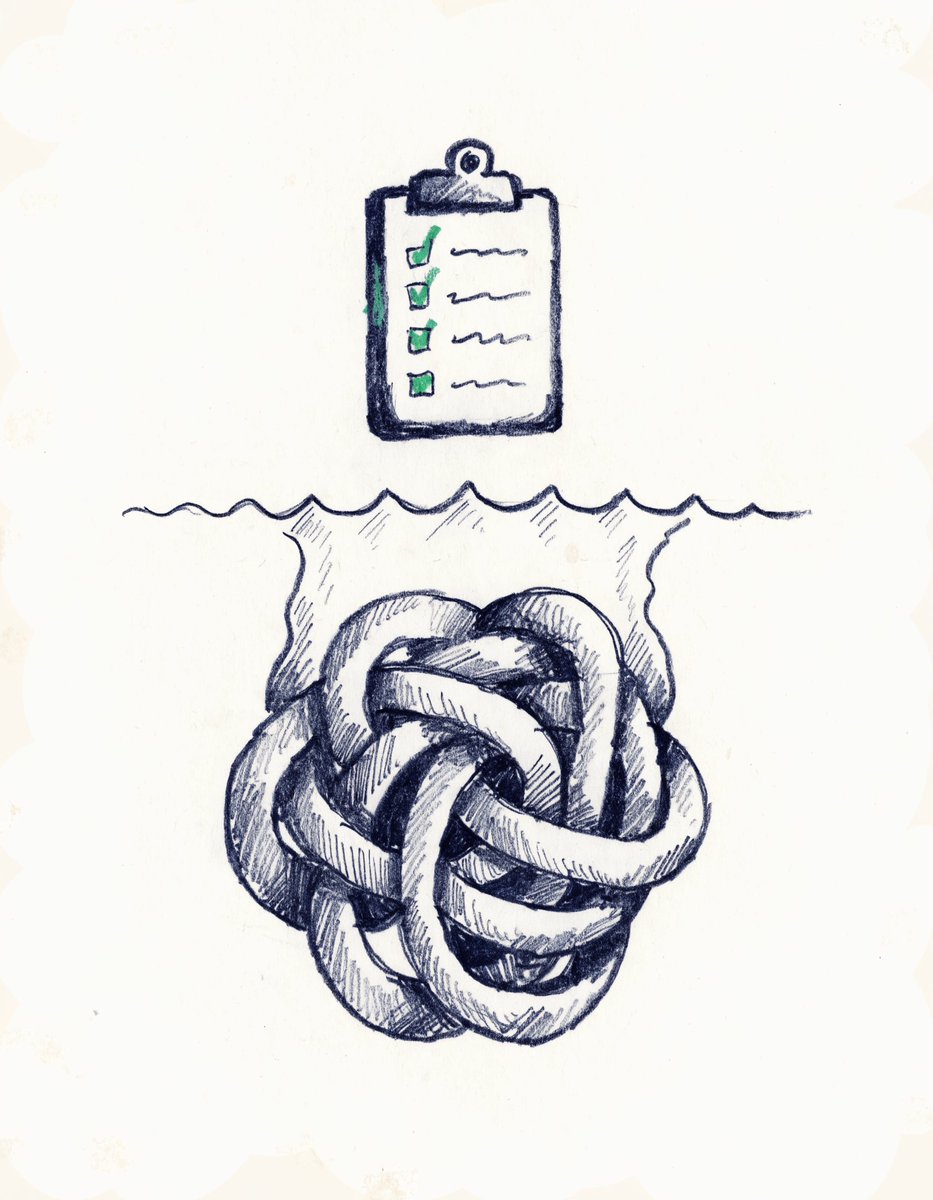
A clean task list hides a war zone underneath. You know that moment when someone asks "what do you have to do today?" and you show them your tidy little checklist? What they don't see: The 47 mental tabs running in the background. The priorities reshuffling every 3 minutes. The time blindness making "quick task" feel like 5 minutes when it's actually 2 hours. The executive dysfunction making step one feel impossible. The anxiety about forgetting something important. Again. That's the iceberg. Above the waterline? A simple, step-by-step plan. Below it? A massive tangled knot of chaos that took real effort to untangle. We built Addeeze to handle that underwater mess. You dump everything out of your brain. We sort through the chaos, manage the time blindness, and send gentle nudges so nothing falls through the cracks. You just see the clean checklist. Because your brain deserves tools that understand what's really going on beneath the surface 🧠✨
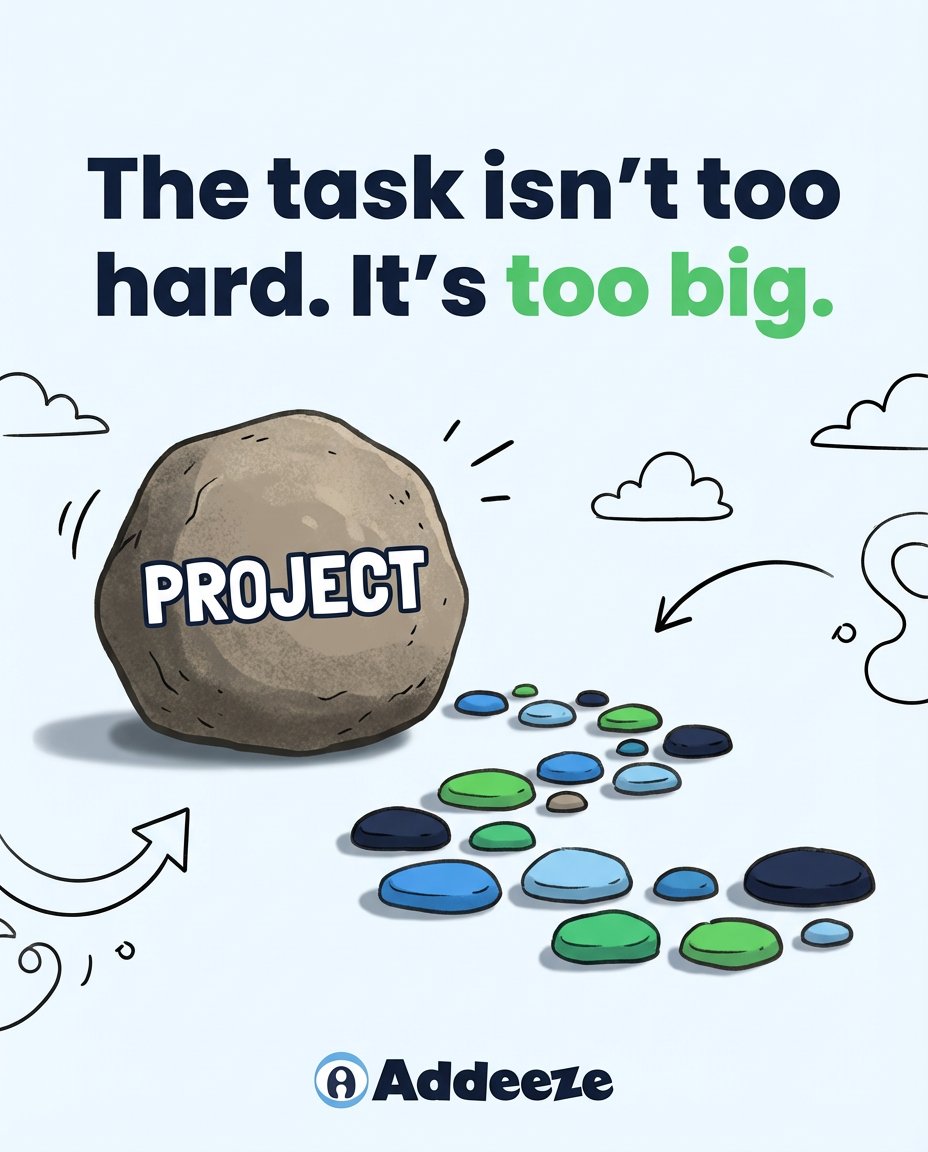
A pattern we see again and again with ADHD brains and to-do lists: the task says "Write quarterly report." Three days pass. Nothing happens. The task was never the problem. Most people assume they need more motivation. More focus. A better morning routine. So they wait for the right moment, the right energy, the right mindset. But the real blocker is almost always task size. ADHD brains stall on ambiguous, large tasks because executive function struggles with undefined starting points. "Write quarterly report" has no entry point. It's a destination without a map. The shift happens when someone stops looking at the whole task and starts asking a different question: what's the smallest first step I could actually do right now? Open the document. Write one sentence. Pull last quarter's numbers into a blank sheet. When the first step is small and obvious, starting stops requiring willpower. It becomes almost automatic. The task that sat untouched for days suddenly has momentum. We built Addeeze around this exact principle. Our chunks feature exists because we kept seeing the same pattern: people don't lack capability. They lack a concrete first action. Big tasks don't need big energy. They need small doors.
Open the deadline panel in Addeeze when nothing is due and you see two words: No Sweat. A thumbs-up icon. That's it. Most productivity tools treat an empty deadline list like a warning. Or worse, an opportunity to remind you what you should be doing. We built ours to feel like relief. We started by removing forced deadlines entirely. Creating a task doesn't require a due date. If you don't know when something needs to happen, that's fine. The system doesn't nag. Then we separated repeatable tasks from deadlines completely. Recurring items have their own toggle. So when Monday rolls around and you didn't finish last week's recurring task, it doesn't stack into a guilt pile. We rewrote every notification label. Nothing says "urgent" or "overdue." The word we use most is "gentle." Finally, we stripped out the red. No warning colors. Calm blues and positive icons only. The visual language matches the emotional goal. Anxiety around deadlines is why ADHD users abandon productivity tools. A missed deadline in Addeeze isn't a failure. It's just information.
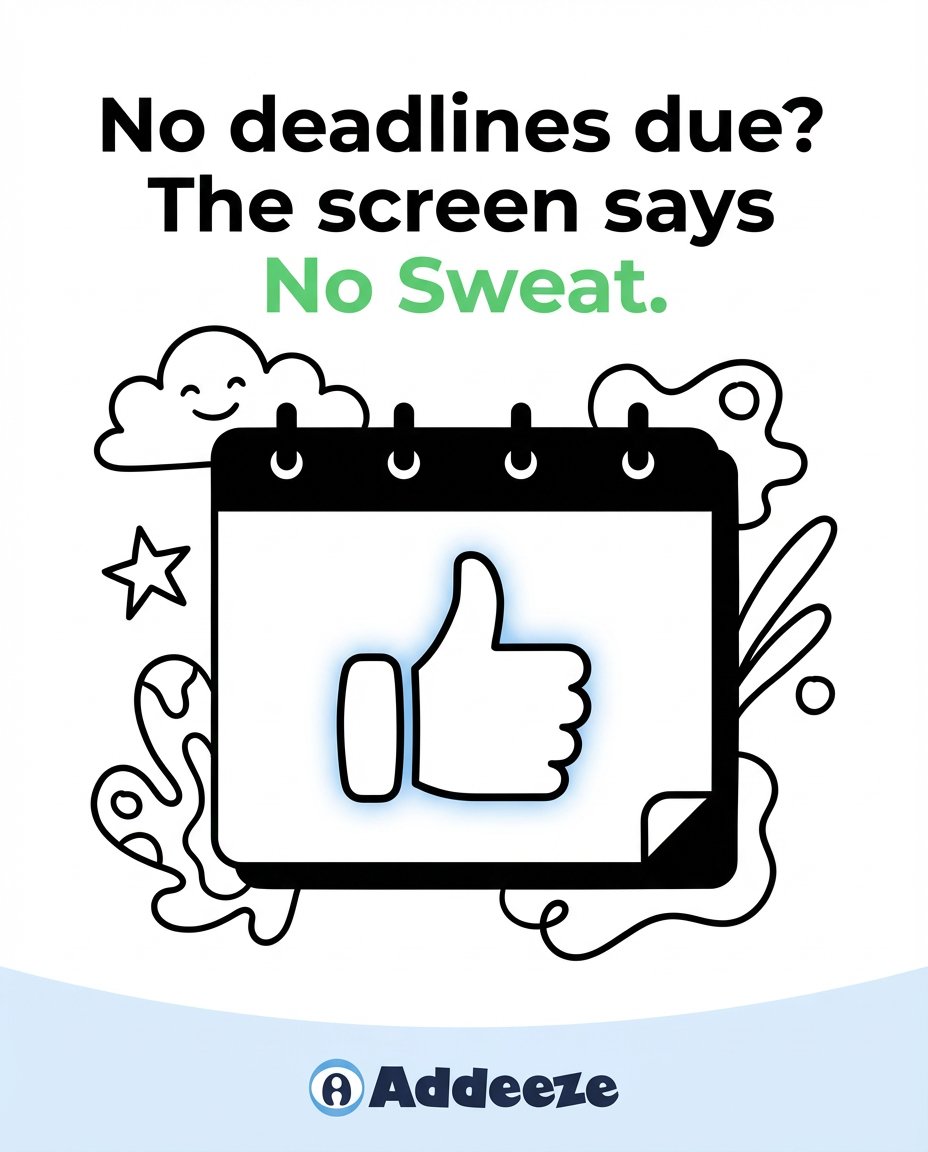
We tested urgent red notifications early on. Users didn't complete tasks faster. They stopped opening the app. This surprised exactly zero people with ADHD on our team. Here's what we learned: most productivity tools treat urgency like a universal motivator. Flash a red badge. Add a countdown. Make the user feel behind. For neurotypical brains, that might work. For ADHD brains, it triggers a shame spiral. And shame spirals don't create action. They create avoidance. So we tried the opposite. We built a "NO SWEAT" screen that shows up when there's nothing urgent. Thumbs up. No pressure. Just acknowledgment that you're doing fine. We replaced aggressive reminders with gentle nudges. Completion rates went up. App opens went up. Anxiety went down. Turns out, removing pressure works better than adding it. We're still learning. But this much is clear: the tools that help ADHD brains most are the ones that stop treating them like broken neurotypical ones.

We built Addeeze around one core insight: your brain needs two completely different views for two completely different jobs. Storing everything and focusing on what matters right now should never clog up the same list. The first view is your organized master view. Every task you capture lives here permanently, sorted into channels and projects. Nothing is hidden. Nothing disappears. Everything is safely stored and always visible when you need to find it. This is your complete picture, your reliable system of record. You will never forget a task because it always has a home. The second view is your Focus List. This is where execution happens. It only shows tasks that need your attention right now, organized into five time windows. Now Doing. Do Today. Tomorrow. Later This Week. Next Week. That's it. Clean, calm, and actionable. Here's what makes the two views work together: you write each task once. Just once. You capture it into your master view and you're done. If you want, assign it a deadline or set it to repeat. You never rebuild a daily list from scratch. You never rewrite the same task Monday after Monday. Deadlines automatically surface tasks into your Focus List at exactly the right time. Repeating tasks show up on schedule without you lifting a finger. We also built chunking as a core tool because some tasks are too vague or too big to act on. "Redo the website" sits on your list for weeks because your brain doesn't know where to start. That's where chunking comes in. You can choose to break any task into smaller, concrete chunks that each feel doable. Each chunk gets its own progress slider so you can see momentum building in real time. And if a task grows large enough, you can convert it into a full project with its own structure. Chunking is there when you need it, especially for those paralyzing tasks that trigger avoidance. But if a task is already clear and actionable, you skip it entirely. No extra steps. No forced structure. Just capture and go. When you need to focus, pull a task from your master view into the Focus List. When you need the full picture, your organized channels and projects are right there waiting. The key is separation. Comprehensive storage in one place so nothing slips through the cracks. Focused execution in another so your brain only sees what it needs to act on right now. For ADHD brains especially, trying to do both at once is what creates overwhelm. You stare at 47 tasks and do none of them. And staring at a vague task that feels impossibly large is just as paralyzing. Chunking gives you a way to cut through that fog whenever you need it. Addeeze gives you the confidence that everything is captured, the clarity to act on what matters most, and the tools to break down anything that feels too big to start. Two views. One system. Write it once and trust it to show up when it counts.

Over and over, new users do the same thing. They open the app and immediately try to build a perfect task list. Categories. Priorities. Deadlines. The whole system. Meanwhile, their brain is still holding onto 47 things at once. We see this pattern constantly. Someone with ADHD or executive dysfunction sits down to get organized, and they try to do two cognitive tasks simultaneously: hold everything in their head AND structure it perfectly. That's not planning. That's a freeze response dressed up as productivity. The assumption is always the same: organization comes first. But an ADHD brain cannot organize what it's still trying to remember. The mental load has to go somewhere before it can be sorted. When people dump everything out first, without any structure, something shifts. The overwhelm drops. Tasks that felt impossible suddenly feel manageable. Not because anything changed about the tasks themselves, but because the brain finally has room to think. We built Addeeze around this principle. Unload first. Organize second. Most productivity tools expect you to arrive with a clear head. We expect you to arrive with chaos. That's the starting point, not a problem to fix.

"Write everything down. Get it all on paper. That's step one." We believed this for years. Then we watched users drown in their own lists. The productivity world treats comprehensive capture as gospel. Brain dump everything. Get it out of your head. The longer the list, the more organized you are. For ADHD brains, this advice is backwards. A long to-do list doesn't create clarity. It creates paralysis. We learned this the hard way. When we showed users their complete task list, they froze. Not sometimes. Consistently. The more items visible, the less likely anyone was to start. Task managers were becoming anxiety generators. So we built the opposite. Our Focus List shows only two things: what you're doing now and what's due today. Everything else stays hidden until it matters. We split tasks into smaller chunks specifically to prevent the overwhelm that comes from seeing too much at once. The real first step isn't comprehensive capture. It's radical reduction. More items on a list doesn't mean more progress. Often it means less. The goal isn't to see everything. It's to see only what you can actually do next.

We built a planner with a two-week horizon. Users told us it was the first planning tool they actually opened twice. Not because it had more features. Because it had fewer. ADHD brains experience what researchers call "time nearsightedness." Anything beyond next week feels like fiction. A hazy "later" that never arrives. Traditional planners expose the full timeline. Every deadline. Every overdue task. Every commitment you made three months ago. That triggers overwhelm, not action. So we designed the Focus List with five sections: NOW DOING, DO TODAY, TOMORROW, LATER THIS WEEK, and NEXT WEEK. That's it. No monthly calendar staring you down. No endless backlog of everything you've ever committed to. Just what matters in the next two weeks, broken into bite-sized windows your brain can actually process. Turns out, when you stop showing people the whole mountain, they actually start climbing.
pattern we keep seeing: people sign up convinced their problem is laziness. Almost every time, the real problem is that their system was built for a brain they don't have. They arrive with years of internalized shame. Missed deadlines. Abandoned planners. A graveyard of productivity apps that worked for about three days. They assume they failed because they lack discipline or willpower. But when they start using a system that actually expects nonlinear thinking, something shifts. Tasks get done. Not because they suddenly developed superhuman focus, but because they stopped fighting their own brain. The overwhelm drops. The guilt fades. And they realize they were never broken. They were just using tools designed for neat, tidy brains that punish the way they actually think. We built Addeeze for special brains. For people who have tried everything and blamed themselves every time it did not stick. When users stop asking "why can't I just be more disciplined?" and start asking "what would actually work for my brain?" everything changes. The tool was broken. Not you.

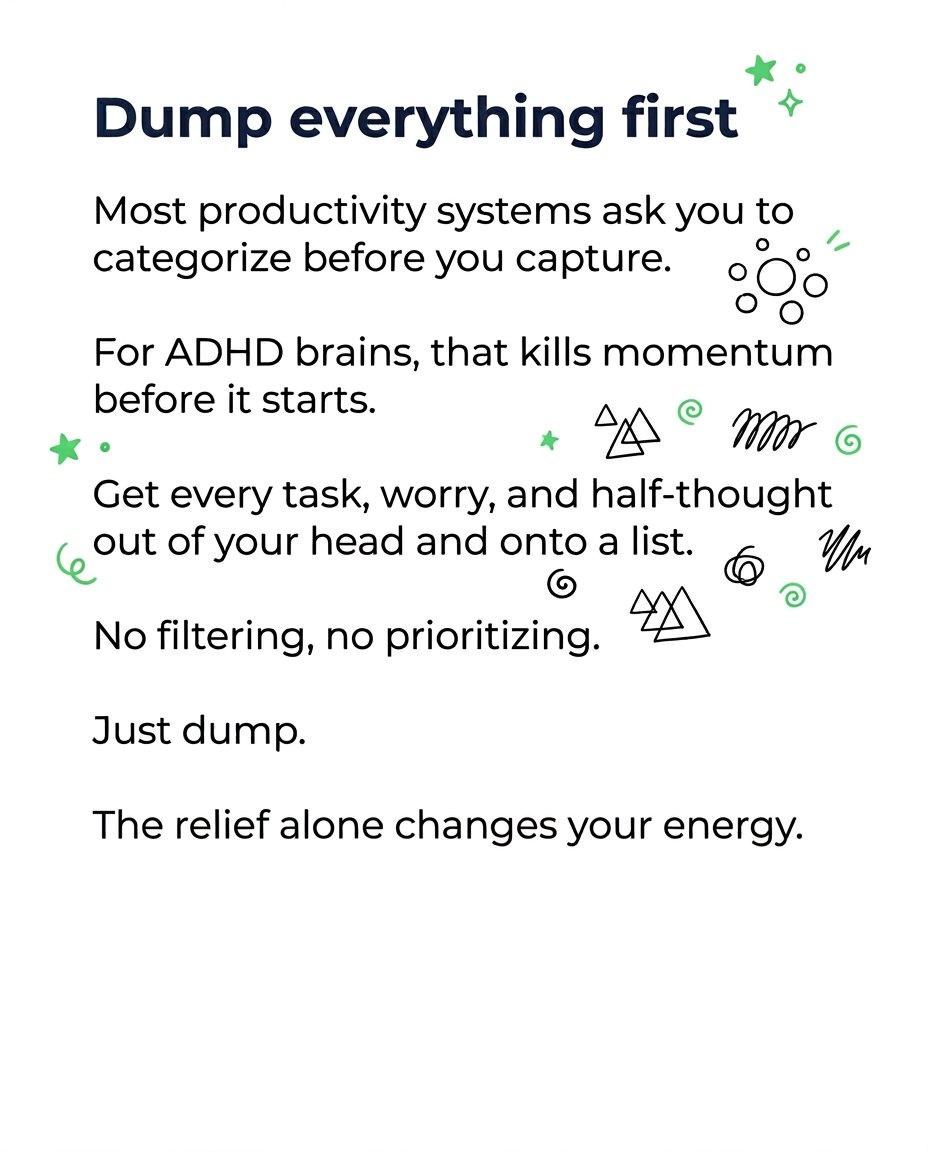
The step most planners skip. Most productivity advice starts with organizing. But if your brain is already overloaded, that's like tidying a room while stuff keeps falling out of the closet. We start with unloading first. Structure comes after. Swipe through to see why brain dumps beat to-do lists every time.



"People with ADHD thrive in chaos." Every productivity forum, every pop-psychology thread, every well-meaning friend repeats it. We built an entire product around chaos, and discovered the opposite. ADHD brains don't thrive in chaos. They survive it. There's a massive difference. Structure doesn't suppress ADHD creativity. Task-tracking anxiety does. A simple system to capture and organize thoughts removes that anxiety. The myth confuses survival mode with peak performance. They look similar from the outside. From the inside, one is exhausting and the other is energizing.

"People with ADHD thrive in chaos." Every productivity forum, every pop-psychology thread, every well-meaning friend repeats it. We built an entire product around chaos, and discovered the opposite. ADHD brains don't thrive in chaos. They survive it. There's a massive difference. Structure doesn't suppress ADHD creativity. Task-tracking anxiety does. A simple system to capture and organize thoughts removes that anxiety. The myth confuses survival mode with peak performance. They look similar from the outside. From the inside, one is exhausting and the other is energizing.

"People with ADHD thrive in chaos." Every productivity forum, every pop-psychology thread, every well-meaning friend repeats it. We built an entire product around chaos, and discovered the opposite. ADHD brains don't thrive in chaos. They survive it. There's a massive difference. Structure doesn't suppress ADHD creativity. Task-tracking anxiety does. A simple system to capture and organize thoughts removes that anxiety. The myth confuses survival mode with peak performance. They look similar from the outside. From the inside, one is exhausting and the other is energizing.

"People with ADHD thrive in chaos." Every productivity forum, every pop-psychology thread, every well-meaning friend repeats it. We built an entire product around chaos, and discovered the opposite. ADHD brains don't thrive in chaos. They survive it. There's a massive difference. Structure doesn't suppress ADHD creativity. Task-tracking anxiety does. A simple system to capture and organize thoughts removes that anxiety. The myth confuses survival mode with peak performance. They look similar from the outside. From the inside, one is exhausting and the other is energizing.
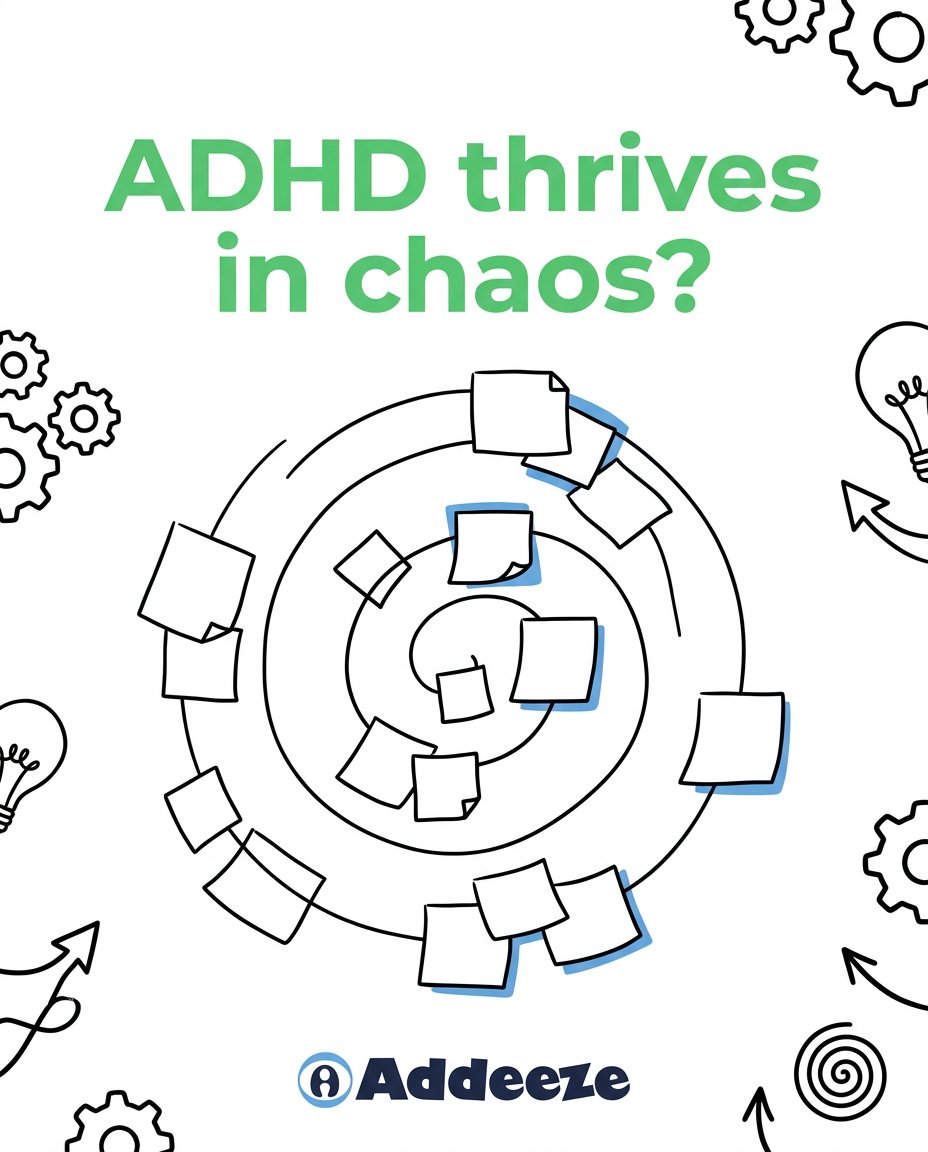
"People with ADHD thrive in chaos." Every productivity forum, every pop-psychology thread, every well-meaning friend repeats it. We built an entire product around chaos, and discovered the opposite. ADHD brains don't thrive in chaos. They survive it. There's a massive difference. Structure doesn't suppress ADHD creativity. Task-tracking anxiety does. A simple system to capture and organize thoughts removes that anxiety. The myth confuses survival mode with peak performance. They look similar from the outside. From the inside, one is exhausting and the other is energizing.

"People with ADHD thrive in chaos." Every productivity forum, every pop-psychology thread, every well-meaning friend repeats it. We built an entire product around chaos, and discovered the opposite. ADHD brains don't thrive in chaos. They survive it. There's a massive difference. Structure doesn't suppress ADHD creativity. Task-tracking anxiety does. A simple system to capture and organize thoughts removes that anxiety. The myth confuses survival mode with peak performance. They look similar from the outside. From the inside, one is exhausting and the other is energizing.


Jax hackz @jaxon_michael77
387 Followers 656 Following Professional Hacking And Recovery Services. Tracking of scammers Clearing of money owing IRS or https://t.co/ZDjQcSE8VC🌏🌐
𝑹𝒐𝒔𝒌𝒐 @officiallyrosko
6K Followers 8K Following Thoughts by Rosko💭 Autistic & Genderfluid 🏳️🌈🏳️🌈🏳️🌈🦋🦋🦋🏳️⚧️🏳️⚧️🏳️⚧️
ThePoetiam @ThePoetiam371
189 Followers 711 Following Just a poet writing poems for the sake of poetry
Mahek @Mahektwitt23
38 Followers 54 Following My second Id . 🫶✨ まえくちゃん is my original 🆔 ✨ https://t.co/p63qnYAHQx
Onyii Ejiofor @heyonyii
96 Followers 1K Following Brand & Marketing Strategist || Software Engineer || Technical Product Manager || Growth Product Manager
Judith Mackenzie @JudithGatito
169 Followers 2K Following Longing for Heaven and Home Until then, Beloved. When we will be known and loved in full. I covet to be dissolved with Christ🦋👑🌱❤️🩹
Cleo Dukat @CleoDukat
9K Followers 7K Following Truth•Freedom•Health 🇬🇧🇺🇸 Thinker, Healer, Dreamer, Trekkie. Starseed, empath, poet. Seeking transcendence and knowledge. Pondering existence.

Excellent heart @pnhohu256328a
92 Followers 151 Following 我是♂的😚想要本人色图照片视频50 陪玩一小时20 🈷✈️4000 要过🚪加好友30 每天在线 不约线下 我不是男娘😅我是正太福瑞 感谢大家的关注点赞,谢谢~ Traveling in China
Kaat @DameTuthola
2K Followers 3K Following Trying to navigate a crazy world - Proud executive producer of the #NoAgenda show.
Aaron Morrison @_AaronMorrison
51 Followers 459 Following Author of System Glitch. I Help ADHD adults build a peak physique, focus & purpose | Get FREE ADHD Course 👉 https://t.co/ZDzsmmxDcB
Troy Stephens @TroyStephe55087
139 Followers 410 Following
Akiva Anderson @erasmus_east
2K Followers 2K Following Adult with ADHD. Father to a 16 year old daughter with Autism & ADHD. Trader on Betfair ✡️ 🕎 Noahide & Zionist 🇮🇱
Felicity Kay @FelicityKay
6K Followers 2K Following Timing is everything. Human Design. Astrology, Tarot, I Ching, practical divination, ADHD, OCD and opinions nobody asked for.
After Chaos @ChaosAfterCalm
85 Followers 248 Following Writing for #ADHD brains who self-medicate, spiral, and still deserve kindness: https://t.co/eqD0vmtFjq #EmotionalHealth
The ADHD Guy @Zinimeani
9K Followers 10K Following I am using my X account and @Grok to manage my ADHD. Bit of a Dark sense of humor, so I may offend some. Sorry if it is you. International MAGA supporter.
MarriedToADHD @MarriedToADHD
901 Followers 52 Following Neurotypical-female-half of an ADHD relationship.❣️
Natalia Life Coach @NataliaADHD
2K Followers 765 Following Life Coach/Illustrator/writer/mom/wive Reminds you to drink water 🚰 IG/tiktok: @ NataliaADHD she/her
@Mollys_ADHD_mayhem @Mollys_ADHD
13K Followers 444 Following I'm a Hyprer verbal Neurodivergent • Creator • Youtuber • Author • Click my Social media links⬇️
NeuroCurious ADHD @NeuroCuriousxyz
162 Followers 454 Following Late diagnosed ADHDer building the Neurodiverse Playground I wish existed! Unmasking ADHD Sexuality & Kink Thru Lived Experiences, Chaos, Spirals, Confessions
That Sober ADHD Guy @SoberADHDGuy
969 Followers 1K Following •38•Sober since 1st March 2023 🍺💊❄️ •ADHD explorer •Turning rock bottoms into stepping stones ❤️Helping you feel seen❤ Your daily reminder: You’ve got this.
ADHD-Trumper @attnhypoactive
239 Followers 407 Following Air National Guard, retired, happily married. MAGA. 🚫no bitcoin or investing.
Founder With ADHD @founderwithadhd
9K Followers 76 Following Founder (2x exits). Forbes list maker. Operator. Overthinker. This is where the unfiltered thoughts go. (Mind Dump)

adhd-angsty @AdhdAngsty
29K Followers 1K Following she/her, 28 | adhd/aroreretini & chronic illness | pākehā in Aotearoa NZ | queer | bad at replies & dms | a mess.
Danny @ABCsofADHD
15K Followers 206 Following #ADHD Advocate. 20 something, brown Irish guy. He/ him. Problem solver. Advice giver. Other buzzwords.
ADHD Performance Coac... @jlinkoff
255 Followers 198 Following ADHD Coaching is a supportive, goal-oriented process in which coach and client work to develop strategies, and self-confidence to reach his or her potential.
Aditya @adittya_vaish
252 Followers 161 Following ai dev | defi growth @CoinDCX | building on @base | dev @DaDawgHQ
ADHD IS OVER! @ADHDisOver
188 Followers 272 Following An eye-opening, perspective-shifting podcast for conscious parents, dispelling the myths around ADHD. Order the book on Amazon: https://t.co/p0wqKCjg94
ADHD Life Coach @DrGenevieve73
1K Followers 3K Following I live with ADHD. I have a doctorate focusing on ADHD. I am an ADHD coach
Aaron Morrison @_AaronMorrison
51 Followers 459 Following Author of System Glitch. I Help ADHD adults build a peak physique, focus & purpose | Get FREE ADHD Course 👉 https://t.co/ZDzsmmxDcB
Kaat @DameTuthola
2K Followers 3K Following Trying to navigate a crazy world - Proud executive producer of the #NoAgenda show.
Spicy Brain Candy @SpicyBrainCandy
10 Followers 114 Following Neurodivergent chaos, mental health, and cozy disaster chic. Half meltdown, half masterpiece. Perfect lighting, questionable stability.
Vivian @suchnerve
67K Followers 985 Following 90s Millennial who had unsupervised Internet access in 2008, and grew up to be a polarizing deviant leftist autistic woman dual-wielding shitposting & sincerity
Mahek @Mahektwitt23
38 Followers 54 Following My second Id . 🫶✨ まえくちゃん is my original 🆔 ✨ https://t.co/p63qnYAHQx

Lotte | sensoryoverlo... @Lotte_Lets_Go
16 Followers 51 Following
💕🫧DeAzha🫧�... @deazha_leak
162 Followers 716 Following 💫🩷Hiii : 3 💕✨ Asd/Adhd🩷💜💙uhm.. yeah✨ pronouns (she/her💖)
ADHD - The Truth @ADHDTheTruth
25 Followers 8 Following Live thoughts from the inside of an AuDHD brain. Real thoughts. Real chaos. Real talk. If you like, stick around… you’re increasing my Dopamine 🤝🏼
Ian Smith @TheBigYin85
2K Followers 4K Following Father to 3 amazing beautiful kids they are my addition they all mean the world to me. https://t.co/aIVVlSEiNk
ADHD Addict @TheADHDAddict
251 Followers 528 Following For anyone with ADHD, addiction history — or both. ⚡ Practical tools. Relatable truths. Real support. 🚀 Change starts with conversation.
James N Slater @Geneticus0
1K Followers 643 Following False Prophet, Social Moth, Insufferable Punster, Failed Child Prodigy, High Functioning Retard.
IceSixxx @IceSixxx
287 Followers 1K Following Show producer. Teacher. Musician. High level AuDHD 🤪Takiwatanga! Abolish EU! MEGA! 🐍
James @Wayward_Saint
125 Followers 378 Following Your visions will become clear only when you can look into your own heart. Who looks outside, dreams; who looks inside, awakes.
igolieforyou? @igolieforyou1
10K Followers 10K Following realtalker|cruise&vibe|Streamer🎮|RetiredComedian&Memer|cruiser|Genz barber|Entrepreneur🚀|Turning cruise into deals|content creator|DM for pro,ads&collabs.
Kevin | becoming // s... @Oopappan
107 Followers 189 Following


higher self @SouthernOldSoul
133 Followers 108 Following لَسْتُ الذي تُغريـهِ في الخَلْقِ كَـثْرَةٌ ، ولَسْتُ الَّذي إِنْ قَـلَّ صَحْبٌ تَبَرَّمَا.

Call Me 🐣 @0xCallMeZara
2K Followers 765 Following Exploring the crypto universe 🌠| Collector of coins & cool vibes ⚡️| 🐣 💛
ꈍ Mŭmbura wa Mbar�... @Wiyathi_Muturi
1K Followers 887 Following ADHDer | Advocate | Antisupremacist | Artivist | Egalitarian | Pro-abortion | Pro-ecoculture | Pro-queer | 🎲 = ❌☣️ 🫱🏽Where you can reduce harm, reduce it🫲🏽

Shubhangi Das @shubhangify
534 Followers 492 Following Opera singer & Music AI Founder @ilisiri_ | @INSEAD | NUS
nickkk.base.eth @Soja_vro
67 Followers 687 Following Think beyond obvious and execute it like just normal.
Max Beech @maxedbeech
211 Followers 575 Following tennis + tech + snowboarding Personalised marketing chatbot: https://t.co/ceFFSKqYj8 Open source Claude Code copilot: https://t.co/ncDYm95COQ prev: snr PM @ Yahoo, Revolut
Lately - Be On Time @GetLately
12 Followers 30 Following 😇 Start being on time to what matters ⭐️ Over 2,000+ happy users 🫶
Alyssa Davis | Disabi... @thealyssacdavis
74 Followers 341 Following Feminist, queer, disability scholar-creator with theatre-kid flare. 📝 Chronic illness, cults & capitalism = my anti-hero origin story 🌱 for complicated humans
Rabbit Motel @rabbitmotel
78 Followers 252 Following horror dev working on Tape: W a base itch page: https://t.co/DQtkcvLgQl
Excellent heart @pnhohu256328a
92 Followers 151 Following 我是♂的😚想要本人色图照片视频50 陪玩一小时20 🈷✈️4000 要过🚪加好友30 每天在线 不约线下 我不是男娘😅我是正太福瑞 感谢大家的关注点赞,谢谢~ Traveling in China
Yorgo Hoebeke @yorgohoebeke
817 Followers 957 Following PhD in psychology turned dev. Working on a gamified life management/planner app @orakemu
Cleo Dukat @CleoDukat
9K Followers 7K Following Truth•Freedom•Health 🇬🇧🇺🇸 Thinker, Healer, Dreamer, Trekkie. Starseed, empath, poet. Seeking transcendence and knowledge. Pondering existence.Trends for United States
You might like